How to Create a Crisis Safety Plan for Suicidal Thoughts
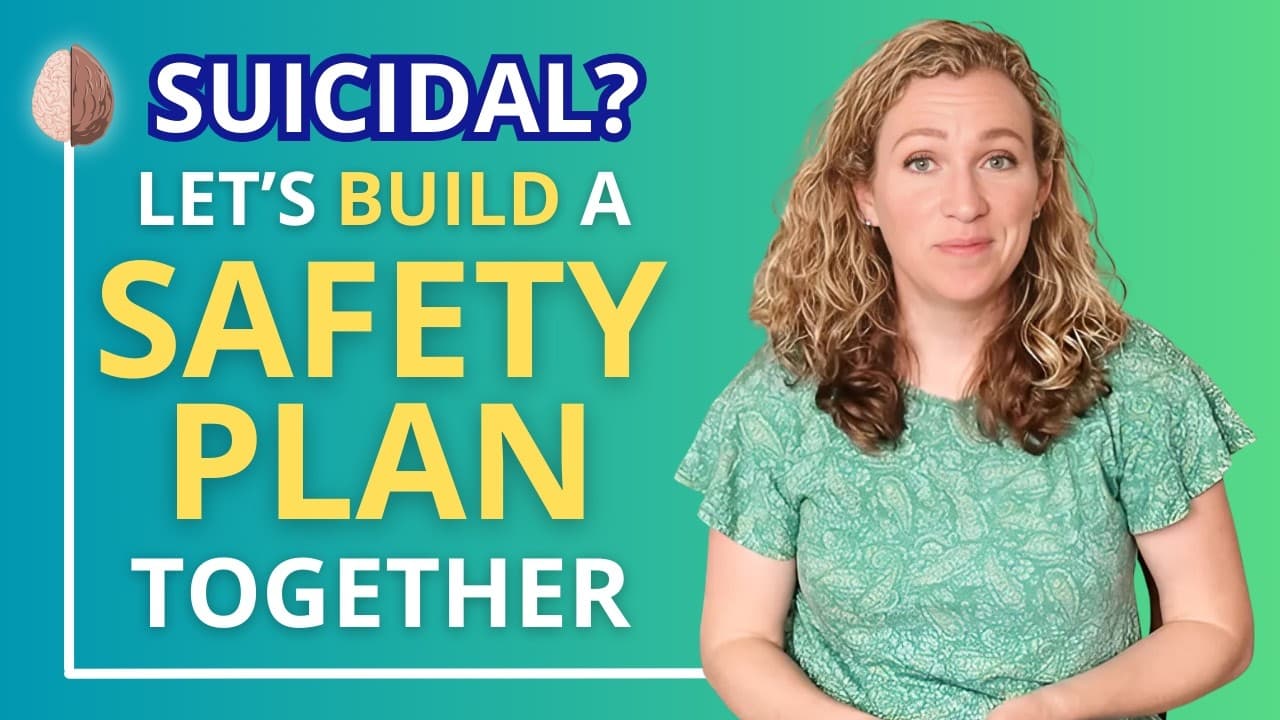
TL;DR
A safety plan is a structured, written plan that helps you manage suicidal thoughts and stay safe during a crisis by recording seven things in advance: your warning signs, personal coping strategies, supportive people, professional contacts, ways to remove access to harmful means, reasons for living, and emergency steps. Writing it down matters because intense emotion makes it hard to think clearly or remember who and what can help.
Transcript
My wish for the world is that everyone who's in crisis can have someone in person to talk with them and to help them create a safety plan but I understand that this isn't reality. So, in this video, I'm going to walk you through the steps for creating a safety plan. We're going to figure out some resources you can use if you're having a crisis ... Read More
Key Insights
- A safety plan is a structured plan that helps someone manage suicidal thoughts and stay safe during a crisis by writing down warning signs, coping strategies, and support contacts before that crisis hits.
- Writing the plan down matters because when you are highly emotional you do not think clearly, making it hard to remember the people who love you or the things that make you feel better.
- Personal warning signs to watch for include feeling hopeless, numb, or worthless, withdrawing from family and friends, increased thoughts of death, feeling like a burden, neglecting basic needs, and using drugs or alcohol to cope.
- Behavioral activation means taking action first rather than waiting to feel motivated, because research shows doing something kind, connecting, or self-caring can help you feel better afterward instead of before.
- 478 breathing is a coping technique where you breathe in for 4 seconds, hold for 7 seconds, and breathe out slowly for 8 seconds to help calm yourself during distress.
- Reaching out to a struggling friend is not a burden, and connecting with supportive people before a crisis, arranging things like nightly check-ins, makes it easier to ask for help in the moment.
- Removing access to harmful means delays impulsive action long enough to calm down and get support, illustrated by England changing its stove gas over 60 years ago, which cut suicides by 30% without other methods rising proportionally.
- In the US, crisis support is available by calling or texting 988, texting Hello to 741741, or calling 911 for immediate emergency services, and these numbers should be written directly into the safety plan.
Install to Summarize YouTube Videos and Get Transcripts
Explore YouTube Video Summarizer or Get YouTube Transcript Extractor
Questions & Answers
Q: What is a crisis safety plan for suicidal thoughts?
A safety plan is a structured plan that helps someone manage suicidal thoughts and stay safe during a crisis. It involves writing down your warning signs, coping strategies, and support contacts ahead of time. Writing it down is important because when you are highly emotional you do not think clearly, and it becomes hard to remember the people who love you, who want to help you, or the things that make you feel better. You can complete it using the free anonymous app called Suicide Safety Plan or by printing out a document.
Q: How do I identify my personal warning signs?
Warning signs are the personal signals that you are struggling and need to take action, and noticing them earlier lets you respond in a way that helps rather than harms. Common signs include feeling hopeless, numb, or worthless, withdrawing from family and friends, increased thoughts of death or self-harm, feeling like a burden to others, not taking care of basic needs like eating, sleeping, or hygiene, and thoughts like 'I can't do this anymore' or 'everyone would be better off without me.' Using drugs or alcohol to cope is also a warning sign.
Q: What coping strategies can I use on my own during a crisis?
Solo coping strategies work through behavioral activation, which means taking action first instead of waiting until you feel motivated, because research shows action can help you feel better later. Options include taking a warm shower or bath, going for a short walk or stretching, doing yoga, listening to calming or uplifting music, and using 478 breathing (in for 4 seconds, hold for 7, out for 8). You can also journal your thoughts, use short-term distraction with a book or movie, go to a coffee shop or library, spend time with a pet, or call a friend about something unrelated.
Q: Why is reaching out to friends not a burden when you are struggling?
Keeping a struggling friend safe in the moment is not a burden, and depression's message that you are a burden is a lie. The video shares that many people who love someone would gladly support them if that person said they were not feeling safe. People who have lost someone to suicide often wish their person had reached out and allowed them to help. Connecting with supportive people before a crisis, such as arranging nightly check-ins as one person in the video did, makes it easier to ask for help when you need it most, even though being vulnerable feels uncomfortable.
Q: What professional support and crisis numbers should I include in my safety plan?
Because it is hard to think clearly and look up information when you are upset, you should write down professional contacts in advance. Include your therapist's name and phone number, your doctor or psychiatrist's name and number, and whether they have an emergency line you can use. Also record the crisis hotlines: in the US you can call or text 988, or text Hello to 741741. If you are on the verge of something very dangerous, you can always call local emergency services, which in the United States is 911. Write all of these directly into your plan or app.
Q: Why does removing access to harmful means help prevent suicide?
Removing access to harmful means slows things down and delays impulsive action until you have had time to calm down, think clearly, and get support. The video gives an example: over about 60 years ago in England, the gas used in stoves made it easy for people to end their lives, but when the type of gas was changed, suicides decreased by 30% and other methods did not increase proportionally. This shows that delaying an attempt gives people a chance to start feeling better. Practical steps include giving a trusted person your medications or sharp objects, avoiding alcohol and drugs, and staying around other people.
Q: What are reasons for living and why write them in a safety plan?
Reasons for living are the things, even small ones, that make life worth staying for, and writing them down gives you something to hold onto when your brain is telling you lies. These might include pets who rely on you, a favorite place that brings you peace, and the people who care about you even if your brain tells you they don't. They can also be the possibility of feeling better even if you can't see it right now, or small joys like sunsets, music, and laughter. Recording them ahead of time helps you remember them during a crisis.
Q: What should my emergency plan be if I feel in immediate danger?
If you feel you are in immediate danger, your emergency plan lays out your next steps in advance. This usually means calling your crisis contact or 988 for immediate support, reaching out to a trusted friend or family member, or going to a safe place like a friend's house, the emergency room, or a crisis center. You can also write a commitment to yourself, such as 'if I can't keep myself safe, I will call [fill in the blank] or go to the nearest emergency room.' Having this plan can help keep you here until you can get the help to start feeling better.
Summary & Key Takeaways
-
A safety plan is a structured document, completed through the free anonymous app Suicide Safety Plan or a printable sheet, that records warning signs, coping strategies, and support contacts so you can remember and act on them during a crisis when emotion makes clear thinking difficult.
-
The plan's early steps cover recognizing personal warning signs like hopelessness, withdrawal, and substance use, then building solo coping strategies through behavioral activation such as a warm shower, a short walk, calming music, 478 breathing, journaling, or brief distraction.
-
Later steps list supportive people and professionals with phone numbers, remove access to harmful means to delay impulsive action, name concrete reasons for living, and set an emergency plan including calling 988 or going to an emergency room, keeping you safe until help improves things.
Read in Other Languages (beta)
Share This Summary 📚
Summarize YouTube Videos and Get Video Transcripts with 1-Click
Try YouTube Summary with ChatGPT & Claude or YouTube Transcript Generator
Explore More Summaries from Therapy in a Nutshell 📚




Summarize YouTube Videos and Get Video Transcripts with 1-Click
Try YouTube Summary with ChatGPT & Claude or YouTube Transcript Generator