What Are the Current Impacts of AI Today?
TL;DR
AI has transitioned from academic research to real-world applications, significantly improving fields like speech recognition, healthcare, and autonomous driving. While AI offers remarkable benefits such as enhanced accessibility and efficiency, it also raises critical concerns regarding energy use, privacy, security risks, and the propagation of societal biases.
Transcript
so if i had to use one word to describe ai today it would be surreal it's kind of hard for me to imagine that 10 years ago it was very much an academic endeavor and now countries are forming national strategies around they are what so the ai index is a project that aims to track the status of ai and each year they release an annual report um here a... Read More
Key Insights
- 🌍 AI has transformed from an academic pursuit to real-world deployment, with various applications showing significant promise.
- ♿ Positive impacts of AI include improved accessibility, efficiency, disease detection, poverty prediction, and visual assistive technology.
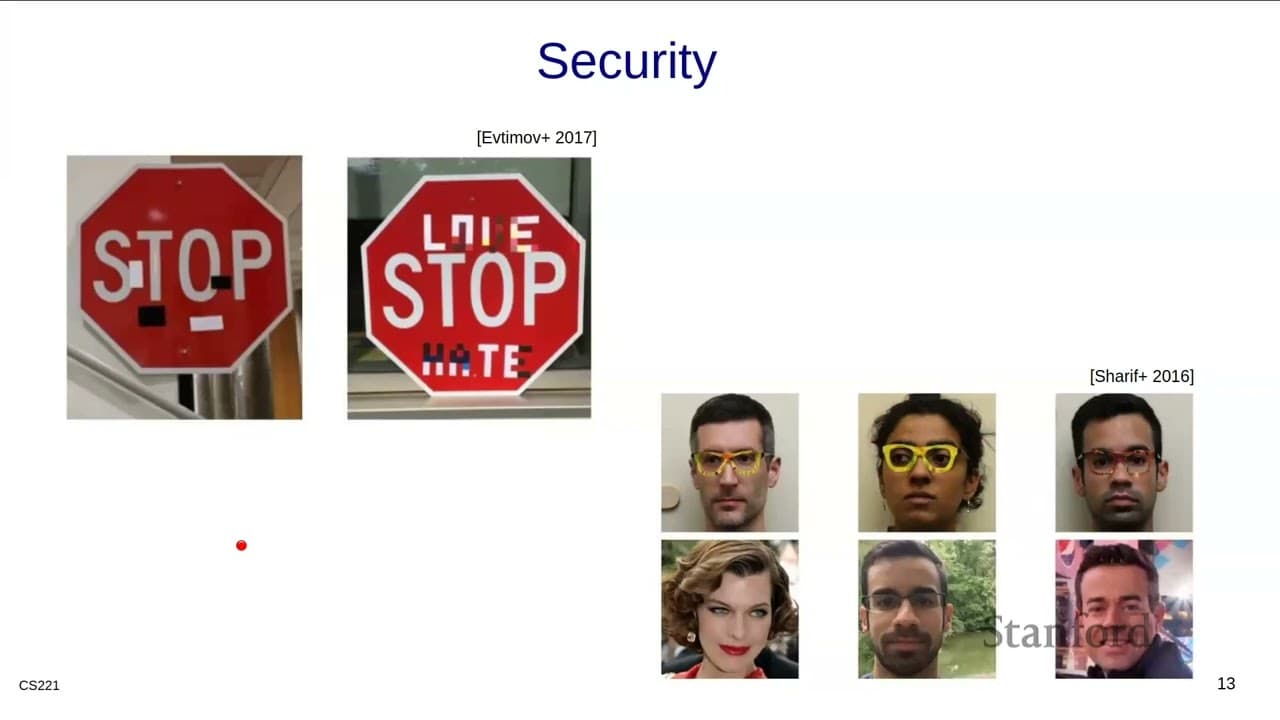
- 🔒 Concerns related to AI include energy consumption, privacy, security, biases, generating fake content, and unstable dynamics in AI systems.
Install to Summarize YouTube Videos and Get Transcripts
Explore YouTube Video Summarizer or Get YouTube Transcript Extractor
Questions & Answers
Q: What are some real-world applications of AI that have had positive impacts?
AI has been beneficial in various areas such as speech recognition, machine translation, autonomous driving, healthcare diagnosis, poverty prediction, and visual assistive technology for the visually impaired.
Q: What are the concerns related to AI?
There are several concerns surrounding AI, including high energy consumption for training models, privacy issues in data collection, security vulnerabilities in systems like autonomous driving, biases in machine learning algorithms, the ability to generate fake content, and unstable dynamics in AI systems.
Q: How has AI advanced in the past decade?
AI has transitioned from being limited to artificial environments in labs to real-world deployment. Advancements include improved speech recognition, more efficient and natural access to information, better machine translation, progress in recognizing objects through computer vision, and applications in healthcare and poverty prediction.
Q: What are the potential negative impacts of AI?
Some potential negative impacts of AI include high energy consumption for training models, privacy concerns in data handling, security vulnerabilities in high-stakes applications like autonomous driving, biases in machine learning algorithms, the ability to generate fake content, and unstable dynamics leading to biased and polarized behaviors.
Summary & Key Takeaways
-
AI has moved from an academic endeavor to real-world deployment, with advancements in speech recognition, machine translation, autonomous driving, and healthcare.
-
Positive impacts include improved accessibility, efficiency, disease detection, and poverty prediction through AI applications.
-
However, there are concerns related to energy consumption, privacy, security, biases, generating fake content, and unstable dynamics in AI systems.
Read in Other Languages (beta)
Share This Summary 📚
Summarize YouTube Videos and Get Video Transcripts with 1-Click
Try YouTube Summary with ChatGPT & Claude or YouTube Transcript Generator
Explore More Summaries from Stanford Online 📚






Summarize YouTube Videos and Get Video Transcripts with 1-Click
Try YouTube Summary with ChatGPT & Claude or YouTube Transcript Generator