How to Create and Sell an eBook With AI
TL;DR
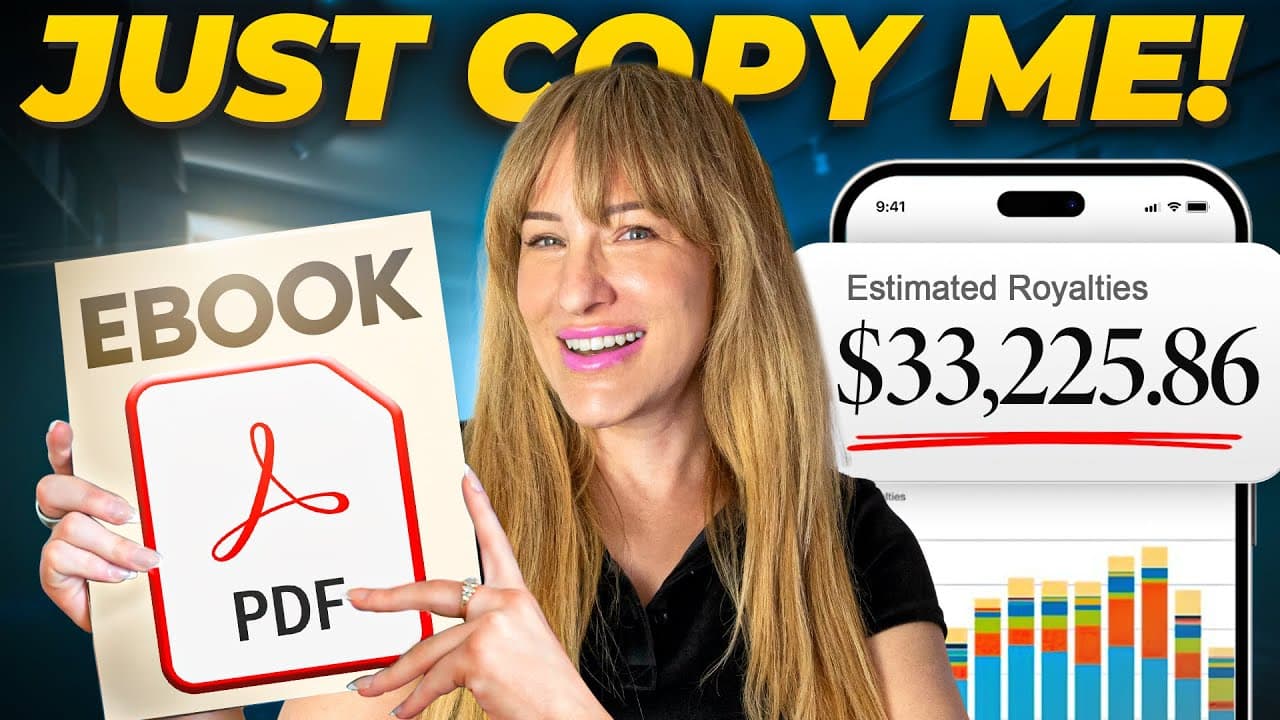
Validate a specific, actively searched problem before creating an eBook, then use AI as an assistant to organize your expertise and expand it one section at a time. Add personal stories, edit every chapter into your own voice, package the result around a clear benefit, and promote it through channels such as Etsy, Threads, and AI avatars.
Transcript
I'm going to show you how to actually create and sell an ebook using AI with real tested strategy that I've used myself. Because let's be honest, I've watched dozens of create an ebook with AI videos and they all end the same way. Congratulations, you have an ebook. Uh yeah, then what? You upload it somewhere and you just hope people buy it from yo... Read More
Key Insights
- Topic selection is a commercial decision made before writing begins. An author can build around proven expertise or research a subject where clear demand exists, even when their advantage is simply being somewhat further ahead than a complete beginner who needs guidance.
- Specific solutions are more compelling than broad subjects. Instead of addressing weight loss generally, the transcript recommends targeting defined needs such as keto for busy professionals, intermittent fasting for women over 40, or staying healthy while managing a demanding work schedule.
- Existing competition is evidence of demand rather than something to fear. Similar Kindle books with hundreds or thousands of reviews, relevant Etsy guides, and engaged Pinterest posts indicate that people already seek or purchase information about the problem an author plans to address.
- Demand validation works by combining marketplace and search signals. Amazon Kindle and Etsy reveal buying behavior, Pinterest saves and comments indicate genuine interest, Keywords Everywhere provides search-volume estimates and related keywords, and AnswerThePublic surfaces questions people ask about a subject.
- AI is a writing assistant, not a substitute for the author's knowledge. The recommended starting point is an unfiltered collection of tips, strategies, insights, examples, and personal stories captured in a Google document or voice memo before any automated drafting begins.
- Section-by-section drafting produces better results than requesting an entire eBook at once. Each prompt should include the relevant outline section, personal notes, target audience, preferred tone, key ideas, and an instruction not to invent facts beyond the supplied material.
- Different AI tools can serve specialized roles in the production process. The creator uses ChatGPT or DeepSeek to structure and organize ideas, then uses Claude.ai for more natural, flowing prose that reportedly needs less editing for readability and conversational tone.
- Quality control is an essential part of AI-assisted publishing. Authors should review every output, rewrite it in their own voice, add authentic experiences, check grammar with Grammarly, and read sections aloud to identify awkward language before packaging the finished material.
Install to Summarize YouTube Videos and Get Transcripts
Explore YouTube Video Summarizer or Get YouTube Transcript Extractor
Questions & Answers
Q: How do you choose a profitable eBook topic?
Choose a problem that people actively want solved and are ready to pay to understand. You can begin with an existing skill, such as coaching, graphic design, health, or home organization, or research a subject where you are somewhat ahead of a complete beginner. Narrow the subject to a defined audience and result, then validate demand before writing any pages.
Q: How can you validate demand for an eBook idea?
Search Amazon's Kindle store for similar books and examine their reviews, titles, and descriptions. Check Etsy for related digital guides, then study Pinterest posts for saves, comments, and other engagement. Use Google with Keywords Everywhere to inspect estimated search volume and related keywords. AnswerThePublic can add evidence by revealing the specific questions people ask about the subject.
Q: Why should an eBook target a specific audience?
A specific audience makes the promised solution clearer and more closely aligned with what people search for. The transcript contrasts a broad subject such as weight loss with narrower ideas such as keto for busy professionals or intermittent fasting for women over 40. Specific positioning helps communicate who the guide serves, what problem it addresses, and why that buyer should choose it.
Q: How should AI be used to write an eBook?
Use AI to organize and expand knowledge that you supply, not to generate an entire product from a vague instruction. First record everything you know, including tips, strategies, examples, and personal stories. Ask AI to arrange those materials into headings and supporting points. Then draft each chapter separately, review the output, correct it, and revise the wording until it reflects your voice.
Q: What information should an AI chapter prompt include?
A chapter prompt should contain one section of the outline, the author's notes and stories, the intended audience, the desired tone, and the main ideas requiring emphasis. The example prompt requests clear conversational writing, short paragraphs, relatable metaphors or storytelling, and language that feels personal rather than robotic or overly formal. It also explicitly tells AI not to invent new facts.
Q: Why should you write an AI-assisted eBook section by section?
Working section by section gives the AI focused context and allows the author to control each chapter's content, tone, and factual boundaries. The transcript warns against asking AI to write the whole eBook at once. A narrower workflow makes it easier to combine an outline with relevant personal notes, inspect every response, add authentic details, and correct problems before proceeding.
Q: Which AI tools are used for different eBook tasks?
The creator uses ChatGPT or DeepSeek when structuring and organizing ideas because those tools are presented as effective for outlines. Claude.ai is used for the main writing stage because its output is described as more natural and flowing, with less editing needed for readability. Grammarly is then used to catch grammatical errors and awkward phrasing during the polishing process.
Q: How do you make an AI-written eBook sound authentic?
Begin with your own experiences, advice, examples, and personal stories so the source material reflects genuine knowledge. After AI expands a section, edit the result to match the way you naturally communicate and add any missing personal details. Read every section aloud to test its flow, remove robotic or overly formal wording, check grammatical issues, and verify that no unsupported facts were invented.
Summary & Key Takeaways
-
A profitable eBook begins with a problem that people already want solved. Choose a subject based on your expertise or knowledge that puts you ahead of beginners, then narrow it to a specific audience and outcome. Validate demand through Amazon Kindle, Etsy, Pinterest, Google search data, and questions found through AnswerThePublic.
-
AI should support the author rather than replace their thinking. Start by recording personal knowledge, practical tips, strategies, examples, and stories in a document or voice memo. Use AI to organize those materials into an outline, then expand one section at a time while supplying the intended audience, tone, emphasis, and factual boundaries.
-
Every AI-generated chapter requires human review, voice editing, and accuracy controls. Grammarly can identify grammatical problems, while reading the text aloud can reveal unnatural phrasing. After polishing the content, package it with a specific, benefit-focused title and professional design, sell it through Etsy, promote it with Threads and AI avatars, and consider later expansion.
-
Key Insights are unsupported in Summary array due schema mismatch placeholder
Read in Other Languages (beta)
Share This Summary 📚
Summarize YouTube Videos and Get Video Transcripts with 1-Click
Try YouTube Summary with ChatGPT & Claude or YouTube Transcript Generator
Explore More Summaries from Luna Vega 📚



Summarize YouTube Videos and Get Video Transcripts with 1-Click
Try YouTube Summary with ChatGPT & Claude or YouTube Transcript Generator