What Are the Key Themes in Crime and Punishment?
TL;DR
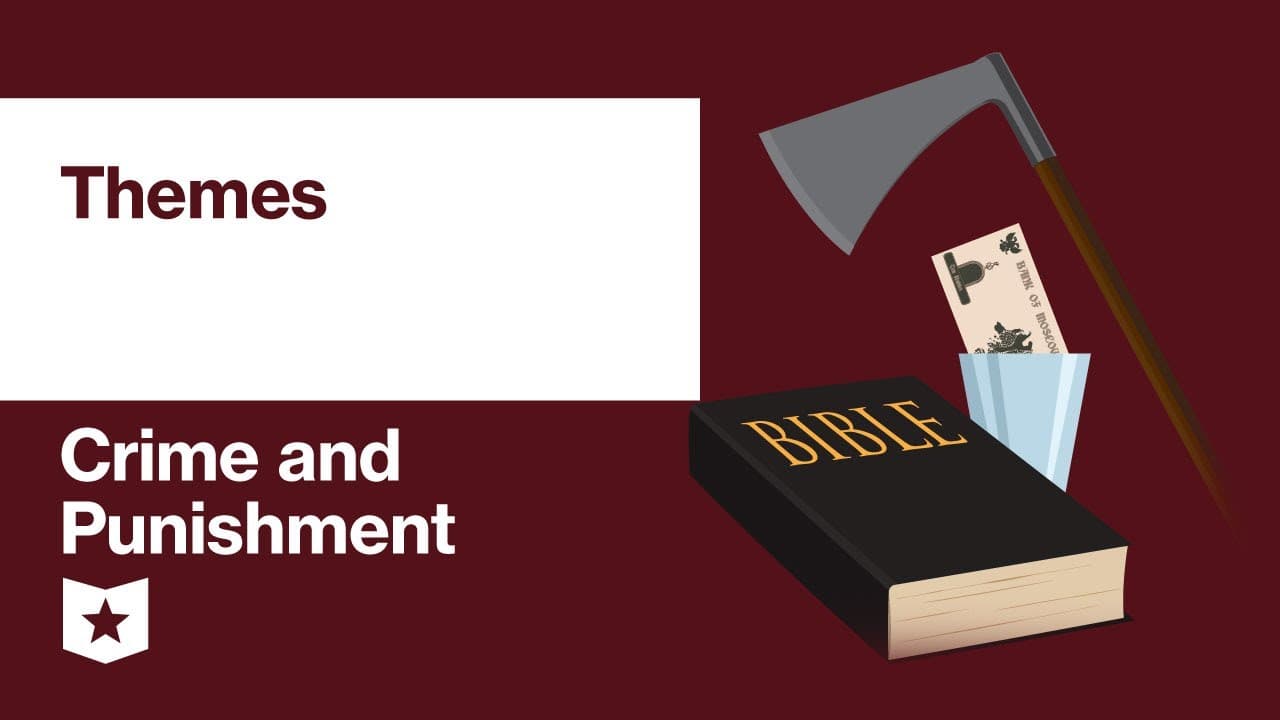
Key themes in 'Crime and Punishment' include alienation, the nature of crime, suffering, and moral conflict. Alienation affects many characters, leading to isolation and disconnection. The novel challenges the idea that extraordinary individuals can commit crimes without repercussions, demonstrating that suffering often results from crime and moral choices. Finally, it explores the tension between traditional Christian values and rational morality.
Transcript
alienation crime suffering and morality powerful themes that underscore crime and punishment and the novel's enduring legacy alienation takes many forms and several characters struggle with being isolated or cut off from themselves or from others Raskolnikov alienates himself from those around him physically mentally and socially as a student and a... Read More
Key Insights
- 🤑 Alienation takes various forms and impacts multiple characters, resulting in isolation and disconnection from society and loved ones.
- 💅 Crime exposes the flaws in the theory that extraordinary men can commit crimes without penalty, and its consequences bring about suffering and moral turmoil.
- 🖐️ Suffering, originating from a multitude of sources, plays a significant role in the characters' development and moral choices.
- 👶 The novel portrays the conflict between the traditional Orthodox Christian beliefs and the new rational concepts of morality embraced by the protagonist.
- 🎙️ More videos with Fyodor Dostoevsky:
Install to Summarize YouTube Videos and Get Transcripts
Explore YouTube Video Summarizer or Get YouTube Transcript Extractor
Questions & Answers
Q: How does Raskolnikov's isolation and alienation contribute to his crimes?
Raskolnikov's physical, mental, and social isolation in his tiny room fuels his delusions and monomania, ultimately leading him to commit the murders. His alienation both contributes to and results from his crimes.
Q: How does crime bring suffering upon the characters in the novel?
Crime in the novel brings about needless suffering for both the perpetrators and the victims. Raskolnikov's theory that extraordinary men can commit crimes without penalty proves flawed when his conscience torments him, becoming his psychological punishment.
Q: What are some sources of suffering depicted in the novel?
Suffering in the novel arises from various sources such as crime, illness, poverty, cruelty, self-hatred, alienation, rejection, and failure. Characters' responses to their suffering often define them and determine their moral consequences.
Q: What is the conflict between morality and religion in the novel?
The novel explores the conflict between the new rational concepts of morality favored by Raskolnikov, based on reason and logic, and the traditional Orthodox Christian beliefs prevalent in Russia. Raskolnikov's conscience is torn between the new and old morality, leading to his mental instability.
Summary & Key Takeaways
-
Alienation is a prevalent theme in the novel, with multiple characters experiencing isolation and disconnection from themselves and others.
-
The destructive nature of crime and its consequences on oneself and others is explored in the novel, challenging the idea that great men can commit crimes without penalty.
-
Suffering, stemming from various sources such as illness, poverty, and rejection, plays a pivotal role in shaping the characters and their actions.
-
The conflict between traditional Christian beliefs and rational concepts of morality is portrayed through the protagonist's struggle with his conscience.
Read in Other Languages (beta)
Share This Summary 📚
Summarize YouTube Videos and Get Video Transcripts with 1-Click
Try YouTube Summary with ChatGPT & Claude or YouTube Transcript Generator
Explore More Summaries from Course Hero 📚


Summarize YouTube Videos and Get Video Transcripts with 1-Click
Try YouTube Summary with ChatGPT & Claude or YouTube Transcript Generator