What Are the Key Themes in Dostoevsky's Crime and Punishment?
TL;DR
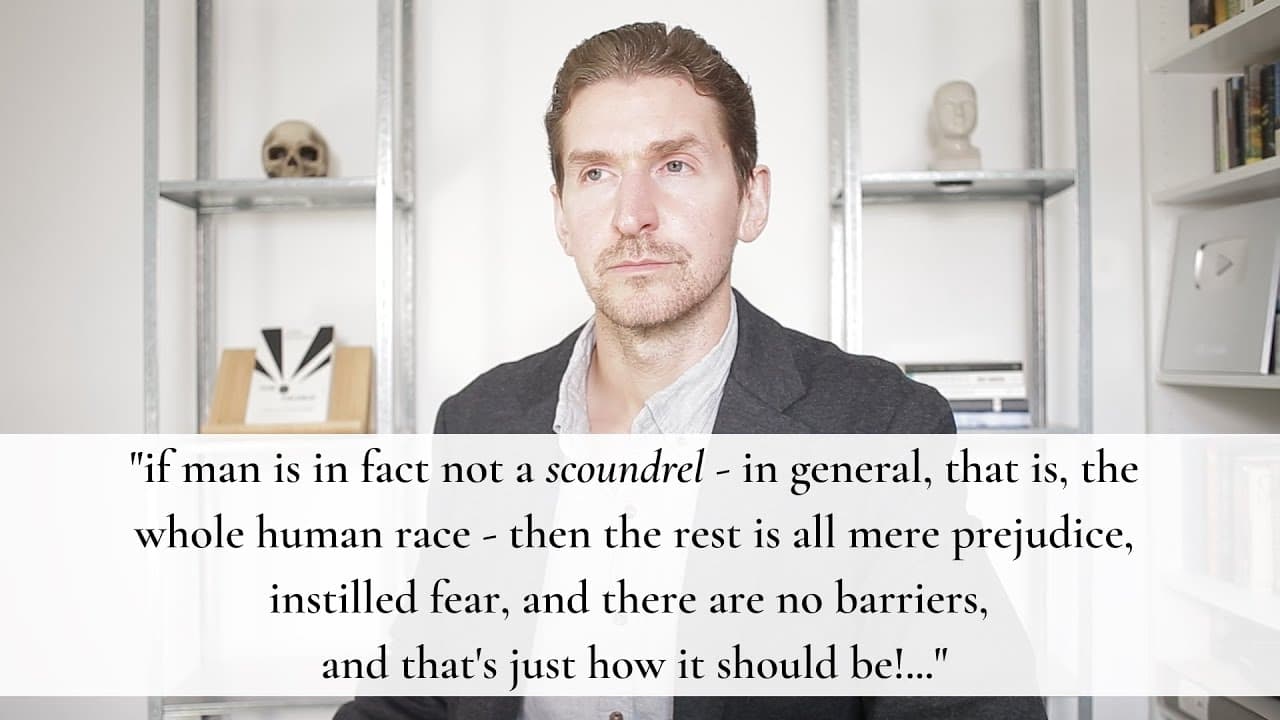
Dostoevsky's 'Crime and Punishment' explores profound themes such as morality, guilt, and the psychological consequences of committing a crime. The protagonist, Raskolnikov, experiences a harrowing descent into madness and paranoia after committing murder, forcing readers to confront moral dilemmas and societal norms in 19th-century Russia.
Transcript
I just killed a Laos good afternoon everyone welcome to better than food book reviews I'm your host Clifford Lee Sergeant great to see you as always hope you're doing well get that coffee really quick I released a Halloween review of HP lovecraft's to call it Cthulhu for patrons only if you want to check that out link below I was pretty happy with ... Read More
Key Insights
- ❓ Dostoyevsky's "Crime and Punishment" delves into themes of morality, guilt, and the consequences of committing a crime.
- ❓ The novel showcases the psychological turmoil of the protagonist, Raskolnikov, as he grapples with his actions and justifications.
- 🕶️ Clifford's review highlights the dark and complex nature of the novel, exploring the protagonist's descent into madness and moral ambiguity.
- 🍽️ The setting of 19th-century Russia adds to the oppressive and claustrophobic atmosphere of the novel, reflecting the inner turmoil of the characters.
- 🎙️ More videos with Fyodor Dostoevsky:
Install to Summarize YouTube Videos and Get Transcripts
Explore YouTube Video Summarizer or Get YouTube Transcript Extractor
Questions & Answers
Q: What are the main themes explored in "Crime and Punishment"?
"Crime and Punishment" delves into the themes of crime, punishment, guilt, morality, societal norms, and the psychological consequences of committing a heinous act like murder.
Q: How does the protagonist, Raskolnikov, justify his crime in the novel?
Raskolnikov justifies his murder based on his theory of superiority, believing that certain individuals, like Napoleon, have the right to commit crimes for the greater good.
Q: How does Dostoyevsky portray the setting and atmosphere in the novel?
The novel portrays a bleak and oppressive atmosphere in 19th-century St. Petersburg, filled with poverty, sickness, and moral decay, reflecting the inner turmoil of the characters.
Q: What role does paranoia play in Raskolnikov's mental state?
Paranoia is a central element in Raskolnikov's mental state, with his constant sickness and manic behavior reflecting his deteriorating psychological condition after committing murder.
Summary & Key Takeaways
-
Clifford reviews Dostoyevsky's "Crime and Punishment" in two parts, highlighting the protagonist's descent into madness after committing murder.
-
The novel delves into themes of crime, punishment, guilt, paranoia, and societal norms in 19th-century Russia.
-
Clifford discusses the psychological turmoil faced by the protagonist, Raskolnikov, as he grapples with moral dilemmas and justifications.
Read in Other Languages (beta)
Share This Summary 📚
Summarize YouTube Videos and Get Video Transcripts with 1-Click
Try YouTube Summary with ChatGPT & Claude or YouTube Transcript Generator
Explore More Summaries from Better Than Food 📚





Summarize YouTube Videos and Get Video Transcripts with 1-Click
Try YouTube Summary with ChatGPT & Claude or YouTube Transcript Generator