How to Build Deep and Lasting Self-Esteem
TL;DR
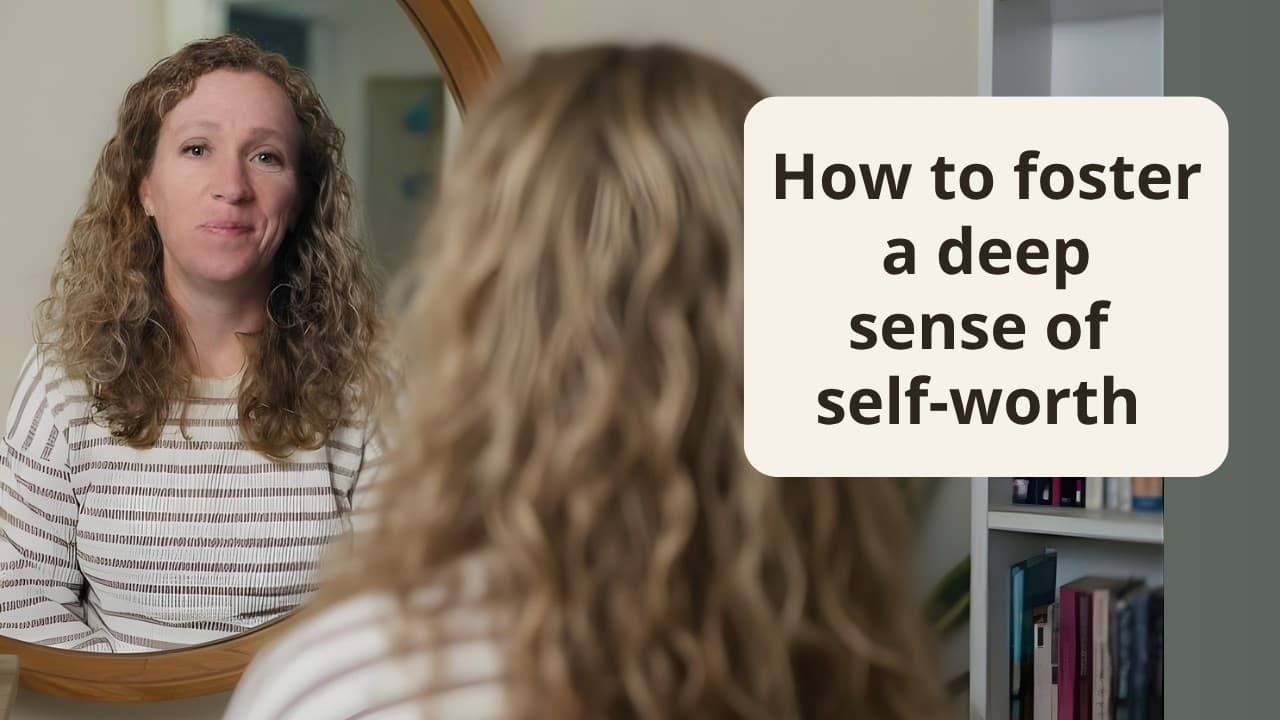
Lasting self-esteem grows from living according to your values, keeping promises to yourself, and taking small, purposeful actions. Replace personal putdowns with growth-focused language, record three good things you do each day, recognize your unusual strengths, use those gifts to help others, and accept compliments instead of dismissing them.
Transcript
Getting stuck in a cycle of negative self-esteem is like trying to balance a bicycle when you're not moving. Maybe you beat yourself up over every little thing you say, or that sneaky inner critic keeps telling you how stupid and worthless you are. Maybe you're like desperately seeking approval from other people. Or you're trying to people plea... Read More
Key Insights
- Deep and lasting self-esteem comes from doing esteemable things, seeing yourself clearly, keeping promises to yourself, and acting with courage and intention. Positive self-talk alone cannot restore self-respect when daily behavior repeatedly conflicts with the values a person claims to hold.
- Values are directions for present action rather than destinations that must be achieved. Clarifying whether you value kindness, connection, music, learning, service, or self-improvement makes it possible to choose actions that align your life with what genuinely matters to you.
- The practical response to regret is one small valued action today. Someone who values friendship might text a friend, while someone seeking employment might learn a new job skill. Redirecting attention from past failures toward purposeful movement helps rebuild self-trust and momentum.
- Personal name-calling is a damaging habit that can be replaced with a growth mindset. Statements such as "I'm so stupid" become "I'm still learning," while condemnation after a mistake becomes recognition that mistakes are human and can guide another attempt.
- Negative mental filtering makes mistakes and criticism feel more important than positive evidence. A person may receive nine expressions of appreciation and one criticism, yet dwell on the criticism at night because the brain has become conditioned to notice and repeatedly rehearse what went wrong.
- The three good things exercise retrains attention by requiring three positive actions to be written down before bed each day for two weeks. The transcript states that research connects this practice with positive mood for six months and measurable reductions in anxiety and depression.
- Unique traits can become strengths when opportunities match them. Quietness may feel inferior beside outgoing behavior, but it can support empathy, thoughtful questions, emotional safety, and deep one-on-one conversations. Exploring personal differences can reveal gifts that comparison previously disguised as defects.
- Using personal gifts to serve another person turns strengths into concrete evidence of value. Examples include sharing flowers from a garden, recommending a meaningful book, posting a thoughtful review, creating a group around an interest, or offering friendliness to someone who feels excluded.
Install to Summarize YouTube Videos and Get Transcripts
Explore YouTube Video Summarizer or Get YouTube Transcript Extractor
Questions & Answers
Q: How can I build deep and lasting self-esteem?
Build self-esteem by clarifying the values that you want your life to express, then take small actions that move in that direction. Keep promises to yourself, replace cruel self-labels with language focused on learning, record three good things you do each day, recognize your distinctive gifts, use those gifts to serve others, and accept compliments rather than brushing them aside.
Q: Why are values important for self-esteem?
Values give your life direction and provide a standard for meaningful action. If you value kindness but repeatedly act harshly, positive affirmations will not resolve that conflict. When you learn better communication and strengthen a relationship, your behavior begins matching your values. That integrity creates self-trust because you can see yourself actively becoming the kind of person you want to be.
Q: What should I do when regrets damage my self-worth?
Redirect attention from regret toward one small action that reflects your values today. If relationships matter, text a friend. If hard work and employment matter, practice a new job skill. The goal is not to erase the past or immediately reach an ideal result. It is to restore movement, purpose, and integrity through a manageable action in the right direction.
Q: How do I stop negative self-talk and personal putdowns?
Create a rule that personal name-calling is not allowed, then prepare growth-focused replacements in advance. Write down the labels you commonly use and pair each one with a helpful response. "I'm so stupid" can become "I'm still learning." After a mistake, acknowledge that mistakes are human, identify what can be learned, and commit to trying again with compassion rather than condemnation.
Q: How does the three good things exercise improve self-esteem?
Before bed, write down three good things you did that day and continue the practice every day for two weeks. The exercise counters the habit of ignoring positive behavior while magnifying flaws, criticism, and awkward moments. According to the transcript, research shows that two weeks of this practice can support a positive mood for six months and measurably decrease anxiety and depression.
Q: How can I recognize my unique strengths?
Journal about what excites you, what comes naturally, and what seems different or wonderfully unusual about you. Consider whether a trait you dislike only appears negative because you compare yourself with people who have different gifts. Quietness, for example, may support empathy, thoughtful questions, emotional safety, and deep conversations when opportunities are aligned with those strengths.
Q: Why does helping others with my gifts build confidence?
Serving another person turns an abstract strength into purposeful, visible action. A gardener can share a flower or part of a harvest, a reader can recommend a book or write a thoughtful review, and someone with a specialized interest can form a group. These actions connect personal gifts with contribution, reinforcing a sense of meaning, usefulness, and authentic self-worth.
Q: How should I respond when someone gives me a compliment?
Accept the compliment and allow it to contribute to a more balanced view of yourself instead of immediately brushing it off. The description identifies accepting compliments as one of the practices for building self-worth. This supports the broader goal of challenging mental filtering, which causes people to ignore positive evidence while giving disproportionate attention to criticism, mistakes, flaws, and shortcomings.
Summary & Key Takeaways
-
Healthy self-esteem is rooted in purpose and integrity rather than positive affirmations alone. Clarifying what matters most gives life a direction, while taking one small action toward those values creates momentum. You do not need to reach a final destination. You need to keep moving in a personally meaningful direction.
-
Cruel self-labels and negative mental filtering reinforce insecurity. Personal putdowns can be replaced with compassionate phrases that emphasize learning, effort, and another attempt. Writing three good things you did before bed for two weeks also trains attention to notice positive evidence that negativity bias would otherwise filter out.
-
Self-esteem strengthens when people identify their distinctive gifts and put them to constructive use. A trait that seems undesirable in comparison with others may become a valuable strength in the right setting. Serving someone through that gift, and allowing sincere compliments to register, helps build confidence from observable actions and contributions.
Read in Other Languages (beta)
Share This Summary 📚
Summarize YouTube Videos and Get Video Transcripts with 1-Click
Try YouTube Summary with ChatGPT & Claude or YouTube Transcript Generator
Explore More Summaries from Therapy in a Nutshell 📚


Summarize YouTube Videos and Get Video Transcripts with 1-Click
Try YouTube Summary with ChatGPT & Claude or YouTube Transcript Generator