How to Avoid or End an Unwanted Conversation
TL;DR
Avoid an unwanted conversation by withholding eye contact, reciprocal questions, attentive body language, and encouraging facial expressions. Looking elsewhere, checking a phone, speaking unclearly, using mismatched vocabulary, or adopting an angry tone can also discourage interaction, while reversing these behaviors helps create a positive conversation.
Transcript
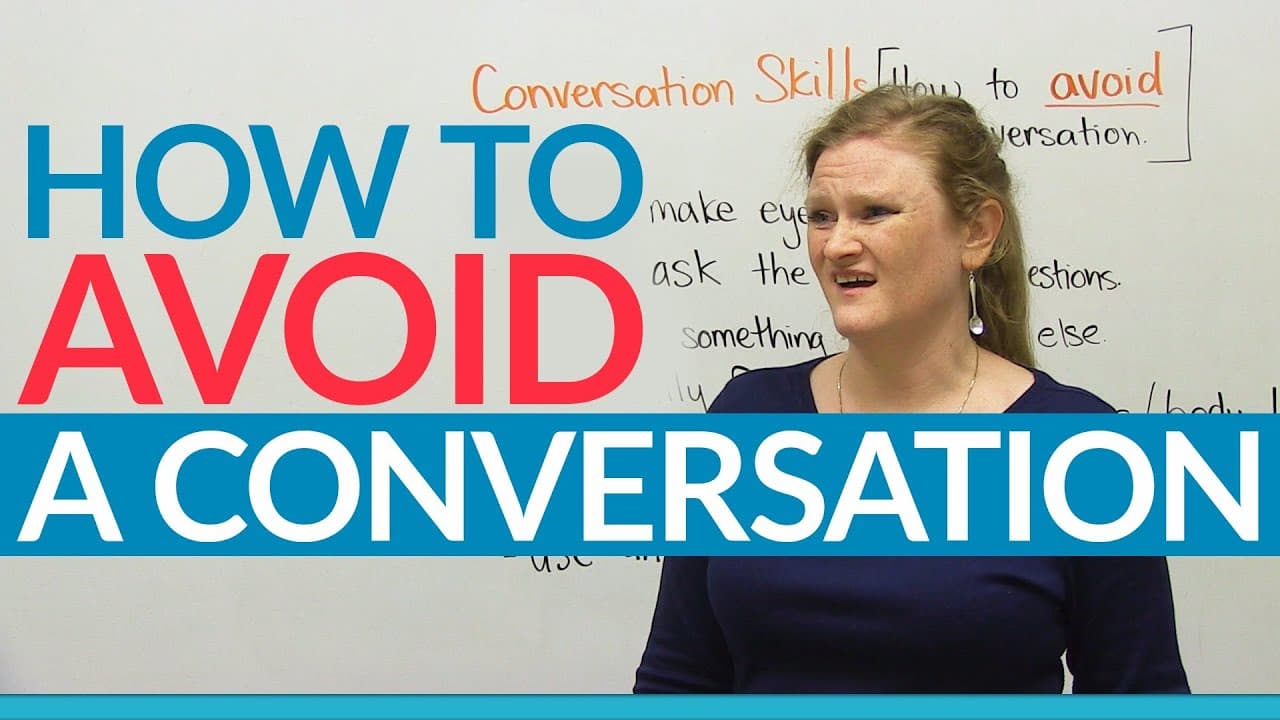
Hi. Ronnie. Video. Conversation skills. How to avoid them? So maybe you don't want to talk to someone. This lesson is called "Conversation Skills: How to avoid a conversation." "Avoid" means you want to stop having or not have something. So all of your life, probably, when you have been learning English, you've learned many lessons about how to hav... Read More
Key Insights
- Eye contact is a primary signal of conversational interest. Avoiding another person's eyes can communicate that an interaction is unwelcome, while looking directly at the person helps establish attention and encourages a genuine exchange.
- Reciprocal questions keep a conversation moving. Giving brief answers without asking the same or a related question prevents the other person from expanding the exchange and clearly reduces opportunities for continued discussion.
- A phone can function as a conversation-avoidance signal. Pretending to receive a call, appearing to read a message, or simply looking at the screen indicates divided attention, while putting the phone away shows respect for a face-to-face conversation.
- Clear speech is essential for mutual understanding. Talking extremely quickly, mumbling, covering the mouth, or failing to pronounce words properly makes the message difficult to follow and can cause the other person to abandon the conversation.
- Facial expressions communicate engagement before words do. Smiling and nodding suggest interest, while strange expressions or behaviors such as picking the nose or ear suggest indifference and can quickly discourage another person from continuing.
- Body language reveals openness or resistance. Folding the arms, looking toward the ground, and turning attention away can suggest unwillingness to interact, while gestures and direct attention make spoken meaning easier to understand.
- Shared vocabulary supports successful communication. Slang that feels unfamiliar to another person, or educated words beyond the listener's vocabulary, can create a communication breakdown and make the interaction intimidating or confusing.
- Vocal tone can change how a simple question is interpreted. A loud or angry delivery may make someone nervous even when anger was not intended, so a positive conversation requires careful control of voice projection and tone.
Install to Summarize YouTube Videos and Get Transcripts
Explore YouTube Video Summarizer or Get YouTube Transcript Extractor
Questions & Answers
Q: How can I avoid an unwanted conversation?
Avoid eye contact, do not ask reciprocal questions, and direct your attention toward something else, such as a phone. You can also use closed body language by folding your arms and looking at the ground. These behaviors signal that you are not interested, although the lesson notes that the other person will stop only hopefully.
Q: Why does avoiding eye contact discourage conversation?
Avoiding eye contact signals that your attention is not available to the other person. The lesson contrasts this with successful conversation, where looking directly into someone's eyes shows engagement. Looking down, looking elsewhere, or refusing to meet the speaker's gaze can therefore communicate that you do not want the interaction to continue.
Q: Why do reciprocal questions keep a conversation going?
Reciprocal questions give the other person an opportunity to share information and extend the exchange. If someone asks about your dog and you answer briefly without asking about their dog, the interaction has less material to continue. Asking the same question back shows interest and turns a one-sided inquiry into a mutual conversation.
Q: How does phone use affect face-to-face conversation?
Looking at a phone can tell the speaker that you do not want to talk. The lesson suggests that someone avoiding conversation might pretend to answer a call, pretend to receive a text, or simply focus on the screen. During a desired conversation, putting the phone away shows attention to the real person who is present.
Q: Why do fast speech and mumbling cause communication problems?
Fast speech and mumbling make words harder to understand. Covering the mouth can further muffle the voice, preventing the listener from hearing clearly. Someone who is excited may naturally speak quickly, but slowing down, lowering the hand, and pronouncing words properly gives the other person a better chance to follow the message.
Q: What body language shows that someone does not want to talk?
Folded arms, attention directed toward the ground, and a refusal to look at the speaker can indicate that conversation is unwelcome. Strange facial expressions may reinforce the same message. By contrast, direct attention, natural hand gestures, smiling, and nodding suggest that the listener understands, feels positive, and wants the exchange to continue.
Q: How can slang or difficult vocabulary stop a conversation?
Unfamiliar slang can confuse someone who does not use the same expressions, while educated or unusually difficult words can intimidate a listener with a smaller vocabulary. In both cases, the participants lose shared meaning. Successful conversation depends on choosing words that both the speaker and listener know well enough to understand.
Q: How does tone of voice influence a conversation?
Tone determines whether ordinary words sound friendly, angry, or threatening. A loud response to a simple question may make the other person nervous because it sounds like yelling. The lesson advises speakers to monitor voice projection, smile when appropriate, and avoid an angry tone unless they genuinely intend to communicate that they are angry.
Summary & Key Takeaways
-
The lesson presents poor conversation habits as practical ways to discourage an unwanted interaction. Avoiding eye contact, refusing to ask questions in return, and directing attention toward a phone or another person signal that the listener is not interested in continuing the exchange.
-
Speech patterns can also interrupt communication. Talking too quickly, mumbling, covering the mouth, using unfamiliar slang, or choosing vocabulary beyond the listener's knowledge makes understanding difficult. The lesson recommends reversing these habits when the actual goal is to maintain a clear and friendly conversation.
-
Nonverbal behavior and vocal tone strongly affect whether an interaction continues. Strange facial expressions, closed body language, looking at the ground, and an angry-sounding voice can make another person uncomfortable or unwelcome. Positive expressions, open gestures, direct attention, clear speech, and an appropriate tone support conversation instead.
Read in Other Languages (beta)
Share This Summary 📚
Summarize YouTube Videos and Get Video Transcripts with 1-Click
Try YouTube Summary with ChatGPT & Claude or YouTube Transcript Generator
Explore More Summaries from English with Ronnie · EnglishLessons4U with engVid 📚





Summarize YouTube Videos and Get Video Transcripts with 1-Click
Try YouTube Summary with ChatGPT & Claude or YouTube Transcript Generator