How to Grow an Expert Business With YouTube
TL;DR
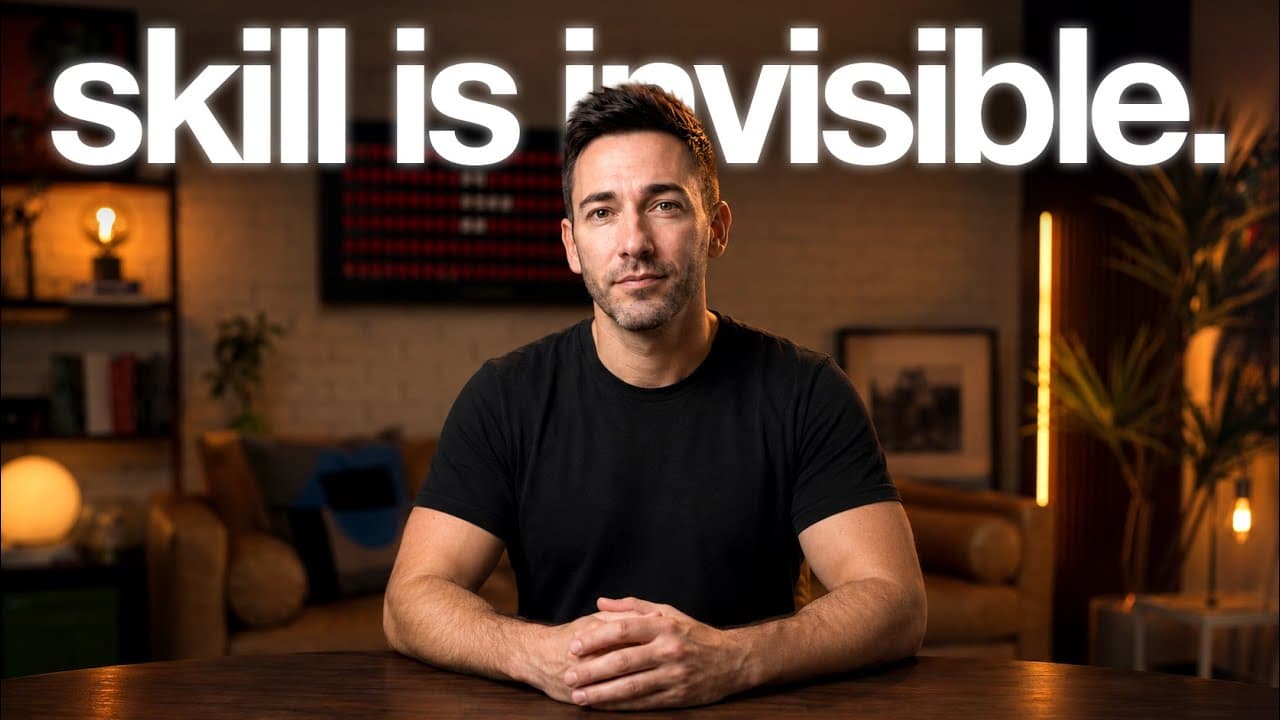
Publish useful YouTube explanations so your expertise keeps attracting prospects after each client engagement ends. Long-form video helps potential buyers discover how you think, builds familiarity more efficiently than brief posts or emails, and can turn skeptical discovery calls into conversations with people who already trust you and want to get started.
Transcript
If you're the smartest person no one's ever heard of, this video is for you. So, you're genuinely good at what you do. Your clients get results. You know your stuff. Yet, somehow, you're still losing deals to people who charge more and know less. You're still starting from scratch with every new client. You're still invisible to the people who need... Read More
Key Insights
- Expertise becomes a reusable business asset when explanations are published publicly. A framework or answer delivered privately helps one client once, but a YouTube video can continue attracting and educating prospective clients after the original work has ended.
- Public educational videos can increase demand for professional help instead of eliminating it. Kyle Caggraves turned repeated mortgage explanations into content for the Win the House You Love channel, which grew beyond 190,000 subscribers, while he reported losing only three clients to competitors.
- The trust gap is the distance between recognizing that an expert is qualified and feeling safe enough to hire that person. Clear proposals and logical explanations may establish competence, but repeated exposure to an expert's voice, face, and reasoning builds familiarity.
- Higher-priced services require more interactions before a purchase. The presented table estimates five to eight touch points for a $500 offer, 15 to 30 for $5,000, 30 to 50 for $10,000, and potentially 100 or more above $50,000.
- Touch point density measures how much trust a single interaction creates. A brief LinkedIn post and a 15-minute YouTube video each count as one interaction, but the video gives a prospect much more time to evaluate the expert's personality and thinking.
- YouTube can make discovery calls feel like formalities rather than auditions. James Canol's prospects reportedly watched hours of videos before speaking with him, helping produce a 90 to 97% hiring rate from a single 30-minute call and $1.3 billion in assets under management.
- Visibility often matters more than skill during provider selection. The transcript states that 81% of service buyers have chosen whom they want before making contact, while 73% trust a person's content more than credentials when deciding whom to hire.
- Referral pipelines lose prospects at multiple stages. Although 83% of happy clients reportedly say they would provide referrals, only 29% actually do, and more than half of referred prospects may search online, find nothing distinctive, and choose someone else.
- More videos from this channel:
- More from this channel: Wes McDowell
Install to Summarize YouTube Videos and Get Transcripts
Explore YouTube Video Summarizer or Get YouTube Transcript Extractor
Questions & Answers
Q: How can YouTube help experts attract more clients?
YouTube lets experts publish useful explanations that remain available after individual client engagements end. When prospects search for a problem, they can discover those videos, observe the expert's reasoning, and become familiar with the person before making contact. This turns previously disposable client explanations into a searchable library that can attract and prepare future buyers between projects.
Q: Why is expertise alone not enough to win clients?
Buying decisions are influenced by visibility, familiarity, and perceived safety, not simply by who has the strongest skills. A highly capable expert can lose to a more familiar competitor if prospective clients never encounter the expert's work. The transcript states that 81% of service buyers have already selected their preferred provider before speaking with anyone, making early visibility essential.
Q: What is the trust gap in an expertise-based business?
The trust gap is the distance between believing that someone is qualified and feeling comfortable enough to pay that person. Credentials, a clear process, and a strong proposal can demonstrate competence without fully closing this gap. Repeated video exposure helps because prospects can hear the expert's voice, see their face, and judge how they approach problems before a sales call.
Q: What does touch point density mean in marketing?
Touch point density describes how much trust a single interaction builds. Reading a short social post and watching a 15-minute YouTube explanation can both count as one touch point, but they do not create equal familiarity. Video gives viewers sustained access to an expert's voice, appearance, personality, and reasoning, so one interaction can contribute more to trust.
Q: How many touch points are needed to sell an expensive service?
The table presented in the transcript estimates that a $500 purchase requires about five to eight touch points. A $5,000 purchase requires 15 to 30 interactions over one to three months, while a $10,000 decision requires 30 to 50 over three to six months. Offers above $50,000 may require 100 or more interactions across a year.
Q: How can YouTube improve a professional discovery call?
Prospects who watch several videos before booking a call may already understand the expert's ideas, communication style, and approach to solving problems. Instead of using the call primarily to test qualifications or compare prices, they can arrive with established trust and ask how to begin. James Canol's prospects reportedly hired at a 90 to 97% rate after one 30-minute call.
Q: Why are referrals insufficient for maintaining client flow?
Referrals can leak at several points. The transcript states that 83% of happy clients say they would gladly refer a provider, yet only 29% actually make a referral. More than half of referred prospects then search for the provider online and may move on if they find nothing distinctive. Public videos give those prospects substantive evidence to evaluate.
Q: What kind of YouTube videos should a service expert publish?
A service expert can begin with explanations already repeated for clients, including answers to common questions, walkthroughs, frameworks, and breakdowns of confusing decisions. Kyle Caggraves used this approach after recording about a thousand personalized mortgage videos each year. Publishing similar explanations publicly allowed the same thinking to serve many viewers instead of disappearing after one client watched it.
Summary & Key Takeaways
-
Expertise-based businesses waste valuable thinking when customized explanations disappear after a single client engagement. Publishing recurring questions, frameworks, and problem-solving demonstrations on YouTube allows that knowledge to keep working between projects. Instead of repeatedly delivering the same insight privately, an expert can create a searchable library that attracts future prospects.
-
Trust is not created by credentials and logical evidence alone. Buyers often choose the person who feels safest and most familiar. Because viewers can hear an expert's voice, see their face, and observe their reasoning for 10 to 30 minutes, YouTube videos can build more familiarity than brief posts or emails.
-
Visibility affects whether expertise is considered at all. Many buyers select a preferred provider before speaking with anyone, while referrals can fail when satisfied clients never recommend the expert or referred prospects find nothing distinctive online. Searchable YouTube content helps experts appear when people investigate the problems they solve.
Read in Other Languages (beta)
Share This Summary 📚
Summarize YouTube Videos and Get Video Transcripts with 1-Click
Try YouTube Summary with ChatGPT & Claude or YouTube Transcript Generator
Explore More Summaries from Wes McDowell 📚
Summarize YouTube Videos and Get Video Transcripts with 1-Click
Try YouTube Summary with ChatGPT & Claude or YouTube Transcript Generator