How to automate software engineering with Factory droids
TL;DR
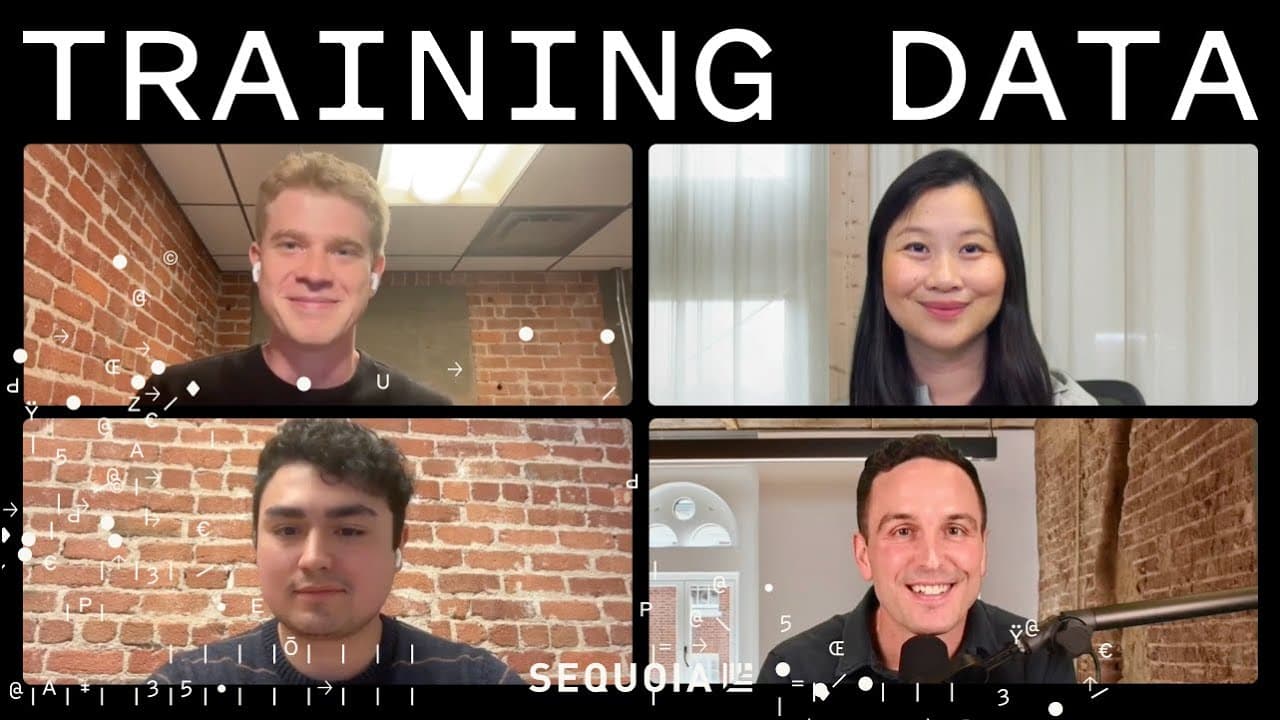
Factory builds autonomous software engineering agents, called Droids, to automate tasks across the software development lifecycle. They aim to provide practical value today by leveraging evolving models rather than training their own foundation model. The founders describe their background, the concept of the compound lever, and how Factory targets enterprise engineering teams to boost productivity and code quality.
Transcript
I would have thought this would be different 13 months later, but this is still very much the case where agent is synonymous with unreliable, stochastic, demoware, vaporware, and I think something very important for us is we want to build these systems that aren’t just like cool examples of what is to come, but rather valuable today and not just va... Read More
Key Insights
- Droids are autonomous dev agents designed to automate tasks in the software development lifecycle.
- The concept of a compound lever suggests combining AI with software engineering to amplify productivity beyond traditional methods.
- Factory focuses on practical usefulness for engineering teams today, not just future capabilities.
- The company differentiates by not building a new foundation model and instead leveraging existing models.
- The founders trace their paths from academia and ML to entrepreneurship to explain their approach.
- An emphasis on execution speed and obsession is central to their advice for founders.
- The collaboration between Matan and Eno stems from shared backgrounds and a LangChain hackathon connection.
- OpenAI style margins are discussed as part of their scaling and efficiency considerations.”],
- Q_and_A (8 pairs)
Install to Summarize YouTube Videos and Get Transcripts
Explore YouTube Video Summarizer or Get YouTube Transcript Extractor
Questions & Answers
Q: What is Factory and what do its Droids do in software development?
Factory sells autonomous development agents called Droids that automate tasks across the software development lifecycle, including code writing, code review, testing, and pull requests. The approach uses existing AI models layered on top of current tools to deliver practical value for engineering teams today, focusing on automation to reduce drudgery and accelerate delivery rather than relying on a single new foundation model.
Q: Why did Matan Grinberg choose to leave academia for AI startups?
Matan decided to pursue AI and startups after realizing his PhD path in theoretical physics was driven by difficulty rather than passion. He considered options like quantitative finance or big tech, and the encounter with Shaun Maguire showed him a path toward building and investing in AI ventures. This led to a shift toward practical, team-based development in software engineering.
Q: How did Eno Reyes’ background influence Factory’s direction?
Eno’s background includes a Mexican immigrant family story and a drive to create opportunities in America. This upbringing shaped a practical, outcome-focused mindset that aligns with building tools that have real-world impact for developers. He paired with Matan after reconnecting at a LangChain hackathon to pursue a software engineering focused project.
Q: What does the term compound lever mean in Factory’s context?
The compound lever concept refers to using AI as a lever to amplify the effectiveness of software engineering. By combining AI code generation with existing developer workflows, Factory aims to achieve exponential improvements in productivity and software quality, extending the leverage of each engineer and scaling impact across teams.
Q: Why did Factory choose not to train a new foundation model?
Factory chose not to train a new foundation model because their strategy is to build something useful for engineering organizations today by leveraging rapidly improving existing models. This approach aligns with developers and evolves with them, rather than waiting for a bespoke model to mature, enabling faster practical impact.
Q: What is the significance of the LangChain hackathon in their story?
The LangChain hackathon acted as a catalyst that reconnected Matan and Eno and helped crystallize their collaboration. The event bridged their mutual interest in code generation and practical AI tools, accelerating the formation of Factory and aligning their visions around building autonomous software tools.
Q: How do the founders view autonomy in software development?
They are optimistic about autonomy enabling software development with greater efficiency and consistency. Autonomy is seen as a way to reduce repetitive drudgery and defer to intelligent systems for routine tasks, while humans focus on higher-level design and decision making, thereby enhancing overall engineering output.
Q: What guidance do Matan and Eno offer to other founders?
Their core advice is that the only way to win is by executing faster and being more obsessed. They emphasize rapid iteration, relentless focus on delivering value to engineers today, and building a product that complements human developers rather than trying to surpass them with a single breakthrough.
Summary & Key Takeaways
-
Factory creates autonomous dev agents or Droids to automate software tasks and code writing, aiming for value today rather than demoware.
-
The founders emphasize a compound lever where AI code generation multiplies the impact of software engineering work.
-
Factory’s strategy is to build on top of improving models instead of training a bespoke model, targeting enterprise engineers today.
Read in Other Languages (beta)
Share This Summary 📚
Summarize YouTube Videos and Get Video Transcripts with 1-Click
Try YouTube Summary with ChatGPT & Claude or YouTube Transcript Generator
Explore More Summaries from Sequoia Capital 📚

Summarize YouTube Videos and Get Video Transcripts with 1-Click
Try YouTube Summary with ChatGPT & Claude or YouTube Transcript Generator