How to Build an AI-Powered Social Media System
TL;DR
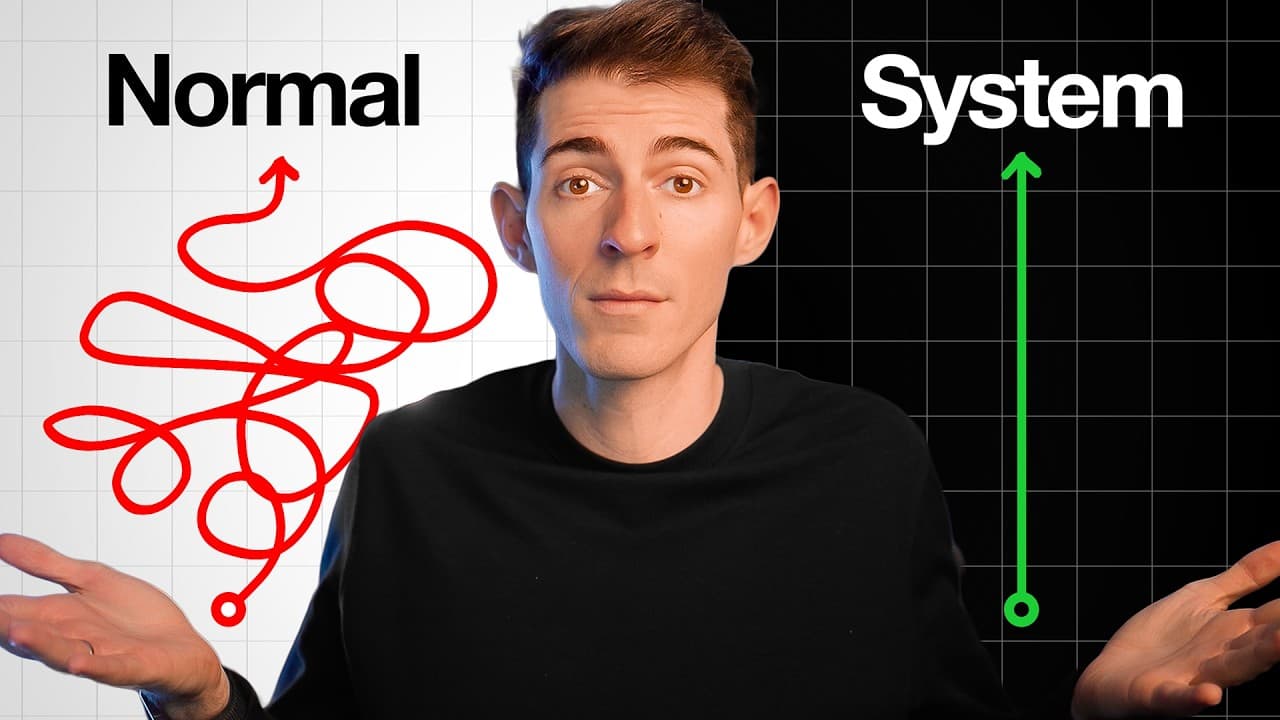
Build content through six repeatable stages: topic, format, substance, hook, script, and edit. Use performance data and AI to accelerate repetitive research and analysis, while reserving human creativity for original substance, hooks, scripting, and selected editing decisions. Begin with proven topics, then proceed only when you can contribute a distinct perspective.
Transcript
Today we're talking about content systems. If you want to learn how to make great content faster without sacrificing originality, this is going to be one of the best workflows you ever learn. Now, I know this works because this is the exact same system I'm personally running every single day. I have a million followers. I've done billions of views.... Read More
Key Insights
- The content workflow has six stages: topic, format, substance, hook, script, and edit. Applying the same sequence to every video makes production repeatable, while AI can accelerate work at each stage without replacing the creator's originality.
- Topic selection is driven primarily by performance data because some subjects consistently outperform others within each niche. The creator saves original thinking for substance, hooks, scripting, and occasional editing decisions instead of trying to invent every topic without evidence.
- A focused watch list contains 20–30 leading channels in the relevant niche. Accounts with approximately 10,000 to one million followers form the preferred range, helping the research process surface useful signals without relying on larger accounts.
- High-performing videos are isolated by sorting for outlier score, limiting the posting window to three or six months, and setting a minimum engagement rate of 2%. This filtering removes much of the noise associated with browsing social feeds.
- Deep analysis captures each video's transcript, topic, idea, hook format, exact hook, and storytelling format. Analyzing up to 100 videos at once creates a broader dataset for identifying recurring patterns across successful content rather than judging isolated examples.
- Automated monitoring can flag future videos that exceed a 5x outlier score and 2% engagement. Once configured, the rule processes qualifying posts from watched channels, reducing the need to repeat the initial bulk-analysis workflow during later research sessions.
- Claude can turn an exported CSV into two useful views: a ranked list of individual opportunities and a clustered analysis of approximately 8–15 topic categories. Both views connect performance evidence with the creator's niche, audience, authority statement, and potential content angle.
- A proven topic is only a starting point, not an instruction to copy another creator. The final selection depends on whether the creator has something unique to contribute during the substance stage. If no original perspective exists, the recommended action is to pass.
Install to Summarize YouTube Videos and Get Transcripts
Explore YouTube Video Summarizer or Get YouTube Transcript Extractor
Questions & Answers
Q: How do you build an AI-powered content system?
Build the system around six recurring stages: topic, format, substance, hook, script, and edit. Use AI to accelerate repetitive research and processing within each stage, while keeping creative judgment focused on substance, hooks, scripting, and selected editing choices. Following the same sequence for every video makes premium short-form production more repeatable without depending on clips or low-quality automated material.
Q: How do you find proven social media video topics?
Create a watch list of 20–30 top-performing channels in your niche, preferably accounts with roughly 10,000 to one million followers. Sort their videos by outlier score, use a three-month or six-month posting window, and require at least 2% engagement. Deep-analyze the strongest results, export their information, and use AI to rank and cluster the opportunities.
Q: Why should content topic selection use performance data?
Performance data reveals which subjects already attract disproportionate attention within a niche. Starting with those signals reduces the guesswork involved in choosing topics and avoids the noise of aimless feed scrolling. Data does not determine the final creative treatment. It provides a validated starting point, after which the creator decides whether there is enough original substance to justify making the video.
Q: What social media accounts should you include in a research watch list?
The recommended watch list contains 20–30 strong channels serving the same or a closely related niche. The preferred account-size range is approximately 10,000 to one million followers, covering micro, small, and medium creators. Sandcastles can also suggest relevant channels after the user describes the type of content being made, which helps when the leading accounts are not already known.
Q: How do you filter videos for content research?
Open the videos associated with the selected watch list, sort them by outlier score, and restrict the posting date to either the previous three months or six months. Then set the minimum engagement rate to 2%. Depending on the channels and their results, this process may surface a small set or hundreds of videos for deeper analysis.
Q: What information should AI extract from successful short-form videos?
The analysis should capture the transcript, specific topic, underlying idea, hook format, exact hook, storytelling format, and other available structural information for each successful video. Exporting these fields across a large group, such as 100 videos, gives Claude enough material to compare examples, identify patterns, rank opportunities, and organize related videos into meaningful topic categories.
Q: How should Claude analyze a CSV of top-performing videos?
First, Claude should remove videos that do not fit the creator's subject area, including irrelevant trends or personal stories. It should then rank the remaining videos by outlier score and provide each specific topic, original link, and a brief case for making it. A second analysis should cluster the videos into approximately 8–15 categories ranked by average outlier score.
Q: How do you stay original when using proven content topics?
Treat a proven topic as evidence of audience interest, not as content to duplicate. After selecting an opportunity from the data, ask whether you can add a unique perspective during the substance stage. If you have something distinct to say, continue through format, hook, script, and edit. If you do not have an original contribution, pass on that topic.
Summary & Key Takeaways
-
The content system divides short-form video production into six repeatable stages: topic, format, substance, hook, script, and edit. AI accelerates repetitive tasks throughout the workflow, while the creator concentrates original thinking on substance, hooks, scripting, and sometimes editing. This structure supports higher output without defaulting to clips or low-quality automation.
-
Topic research begins with a watch list of 20–30 strong channels containing roughly 10,000 to one million followers. Their recent videos are filtered by outlier score, posting date, and engagement rate. Deep analysis then captures transcripts, topics, hooks, storytelling formats, and other information that can be exported for further analysis.
-
Claude analyzes the exported report in two ways: it ranks individual videos by outlier score and groups them into approximately 8–15 topic categories. Each result includes the specific topic, original link, and a reason it fits the creator's authority statement. The creator then selects only topics that support an original contribution.
Read in Other Languages (beta)
Share This Summary 📚
Summarize YouTube Videos and Get Video Transcripts with 1-Click
Try YouTube Summary with ChatGPT & Claude or YouTube Transcript Generator
Explore More Summaries from Kallaway 📚




Summarize YouTube Videos and Get Video Transcripts with 1-Click
Try YouTube Summary with ChatGPT & Claude or YouTube Transcript Generator