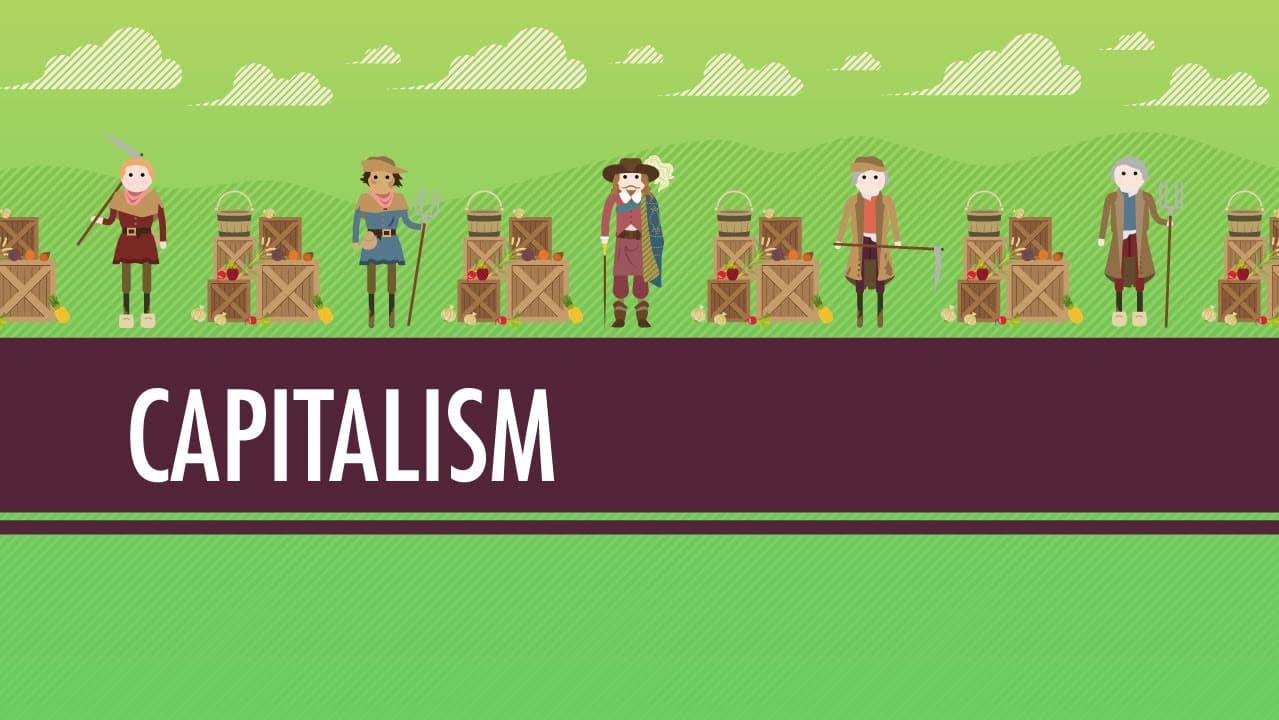
How Do Capitalism and Socialism Compare?, Crash Course World History #33
TL;DR
Industrial capitalism relies on investment in machines and technology to increase production, while socialism advocates collective ownership and planned economies to address capitalism’s inequalities. First developed in 19th-century Britain, industrial capitalism expanded mass production and consumer culture but brought long hours, low wages, child labor, and miserable working conditions. Read on to understand mercantile capitalism, Britain’s agricultural transformation, Marx’s class struggle, and the continuing debate over regulating markets.
Transcript
Hi, I'm John Green, this is Crash Course World History, and today we're going to talk about capitalism. Yeah, Mr. Green, capitalism just turns men into wolves. Your purportedly free markets only makes slave of us all.. Oh god Stan, it's me from college. Me from the past has become me from college. This is a disaster! The reason he's so unbearable, ... Read More
Key Insights
- Capitalism is both an economic and cultural system, defined by innovation and investment to increase wealth.
- Mercantile capitalism involved borrowing money to buy and sell goods, evolving into joint stock companies for shared risk.
- Industrial capitalism relies on investments in machines and technology to increase production, leading to mass production and consumer culture.
- The British agricultural revolution increased productivity, leading to lower food prices and disposable income, fueling industrial capitalism.
- Enclosure in Britain increased agricultural efficiency but displaced tenant farmers, highlighting capitalism's social costs.
- Socialism, originating in France, critiques capitalism's inequalities, advocating for planned economies and collective ownership.
- Marx's theory of class struggle emphasizes that conflict between workers and capitalists shapes class consciousness.
- The ongoing debate questions whether capitalist competition is natural or if socialist principles should regulate markets for collective well-being.
Install to Summarize YouTube Videos and Get Transcripts
Explore YouTube Video Summarizer or Get YouTube Transcript Extractor
Questions & Answers
Q: How do capitalism and socialism compare?
Capitalism is characterized by innovation and investment intended to increase wealth, with industrial capitalism directing capital toward machines and technology that increase production. Socialism critiques the inequalities created by capitalism and favors collective ownership and planned economies to promote equitable distribution and collective well-being.
Q: What is industrial capitalism?
Industrial capitalism is an economic system that invests capital in machines and technology to increase the production of marketable goods. Unlike mercantile capitalism, it transformed production on a broad scale and helped create mass production and consumer culture.
Q: How did industrial capitalism begin in Britain?
Industrial capitalism developed first in Britain in the 19th century. Britain benefited from naval dominance, profitable colonial trade including the slave trade, freer markets during civil unrest, and rising agricultural productivity.
Q: What is mercantile capitalism?
Mercantile capitalism involves borrowing money to buy goods, reselling those goods for profit, and repaying the loan, often with interest. By the 17th century, merchants in the Netherlands and Britain used joint stock companies to finance larger trade missions and spread risk.
Q: How did joint stock companies reduce the risks of trade?
Joint stock companies allowed merchants to divide their investments among multiple trading ventures instead of risking everything on one ship. The transcript illustrates this with ownership of one-tenth of ten boats, which reduced the financial damage if a boat sank or was taken by pirates.
Q: How did Britain’s agricultural revolution support capitalism?
Investment in agricultural technology improved crop yields and increased productivity. Lower food prices, combined with high English wages, gave workers more disposable income, increasing demand for consumer goods and encouraging cheaper, more efficient production.
Q: What problems did industrial capitalism create for workers?
The transcript associates industrial capitalism with long hours, low wages, miserable working conditions, child labor, and unemployment. It also produced income disparities and helped inspire socialist critiques focused on collective ownership and economic planning.
Q: What are Karl Marx’s main ideas about capitalism?
Marx’s theory emphasizes class struggle between workers and capitalists and argues that this conflict shapes class consciousness. He rejected the idea that capitalism is a natural system and supported empowering workers through collective ownership and revolutionary change.
Summary & Key Takeaways
-
Capitalism, as both an economic and cultural system, is driven by innovation and investment aimed at increasing wealth. Industrial capitalism, which began in Britain, transformed production through technological investments, leading to mass production and consumer culture. However, it also resulted in harsh working conditions and income disparities.
-
Socialism emerged as a critique of capitalism, advocating for collective ownership and planned economies to address capitalism's social inequalities. It proposes that economic systems should be designed through human choice rather than being left to market forces, challenging the notion that capitalism is a natural system.
-
The debate between capitalism and socialism continues, with countries implementing varying degrees of socialist principles to regulate capitalism. This ongoing discourse addresses whether capitalist competition should be unchecked or if systems should be in place to ensure collective well-being and equitable resource distribution.
Read in Other Languages (beta)
Share This Summary 📚
Summarize YouTube Videos and Get Video Transcripts with 1-Click
Try YouTube Summary with ChatGPT & Claude or YouTube Transcript Generator
Explore More Summaries from CrashCourse 📚

Summarize YouTube Videos and Get Video Transcripts with 1-Click
Try YouTube Summary with ChatGPT & Claude or YouTube Transcript Generator