What Is Unsupervised Learning in Machine Learning?
TL;DR
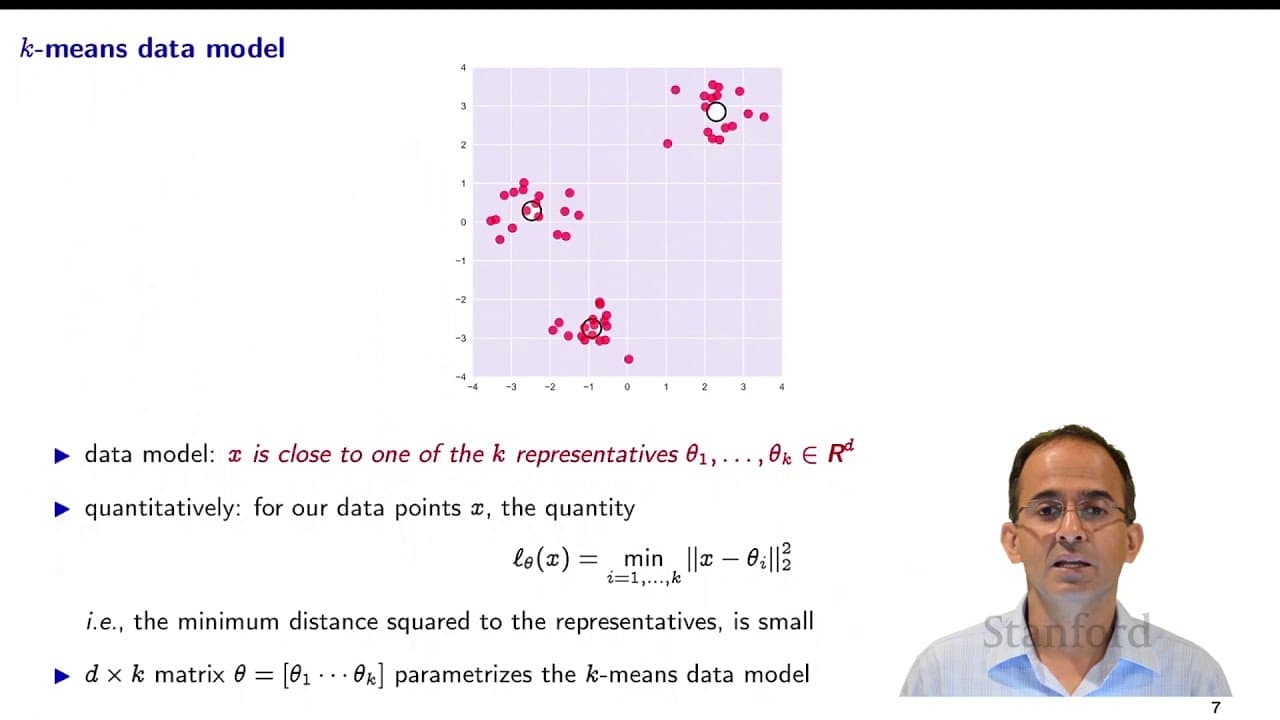
Unsupervised learning involves analyzing unlabeled data to uncover patterns and relationships without predefined outcomes. Its primary purposes include detecting anomalies, revealing data structures, and imputing missing values. Key techniques encompass model fitting and loss function optimization to enhance data understanding.
Transcript
hello and welcome to the section on unsupervised learning so this is really a sudden shift in topic we're moving on to a new section within the class so far everything we've talked about in the class has been supervised learning and now we're going to start talking about unsupervised learning and the idea in supervised learning is that we have pair... Read More
Key Insights
- ❓ Unsupervised learning is a shift from supervised learning, focusing on learning from unlabeled data.
- 🕵️ The goal of unsupervised learning is to reveal the structure of the data, detect anomalies, and impute missing entries.
- 🌸 Common methods in unsupervised learning include embedding data into feature vectors, using loss functions to characterize data, and fitting data models.
- 🤩 Anomaly detection and imputation are key applications of unsupervised learning.
- 🎟️ Imputation involves filling in missing data entries based on the patterns and structure of the data.
- 🫚 The performance of an unsupervised learning model can be evaluated using metrics such as average error or root mean squared error.
- #️⃣ Choosing the number of archetypes in a k-means model can be done by examining the training and test loss, as well as the natural clustering in the data.
Install to Summarize YouTube Videos and Get Transcripts
Explore YouTube Video Summarizer or Get YouTube Transcript Extractor
Questions & Answers
Q: What is the main difference between supervised and unsupervised learning?
The main difference is that supervised learning requires labeled data with a given target variable, while unsupervised learning focuses on learning patterns and structures from unlabeled data.
Q: What are some applications of unsupervised learning?
Unsupervised learning can be used for anomaly detection, imputation of missing data entries, network traffic monitoring, and recommendation systems, among others.
Q: How is imputation used in unsupervised learning?
Imputation is used to fill in missing entries in a dataset. It involves finding the most likely values for the missing entries based on the structure and patterns of the data.
Q: How is the performance of an unsupervised learning model evaluated?
The performance of an unsupervised learning model can be evaluated by splitting the data into a training set and a test set. The model's performance is then measured using metrics such as the average error or root mean squared error.
Summary & Key Takeaways
-
Unsupervised learning focuses on learning patterns and structures from unlabeled data without a given target variable.
-
The goal of unsupervised learning is to reveal the structure of the data, detect anomalies, and impute missing entries.
-
Common methods in unsupervised learning include embedding data into feature vectors, using loss functions to characterize data, and fitting data models.
Read in Other Languages (beta)
Share This Summary 📚
Summarize YouTube Videos and Get Video Transcripts with 1-Click
Try YouTube Summary with ChatGPT & Claude or YouTube Transcript Generator
Explore More Summaries from Stanford Online 📚

Summarize YouTube Videos and Get Video Transcripts with 1-Click
Try YouTube Summary with ChatGPT & Claude or YouTube Transcript Generator