How to Identify and Reduce Enterprise Security Debt
TL;DR
Security debt grows when organizations repeatedly postpone patches, tolerate unsafe configurations, retain unnecessary access, and fail to document critical systems. Reduce it by identifying risks, protecting assets, deploying detective controls, responding promptly, segmenting networks, strengthening authentication, limiting privileges, and calculating the financial effect of outages lasting a minute, an hour, or a day.
Transcript
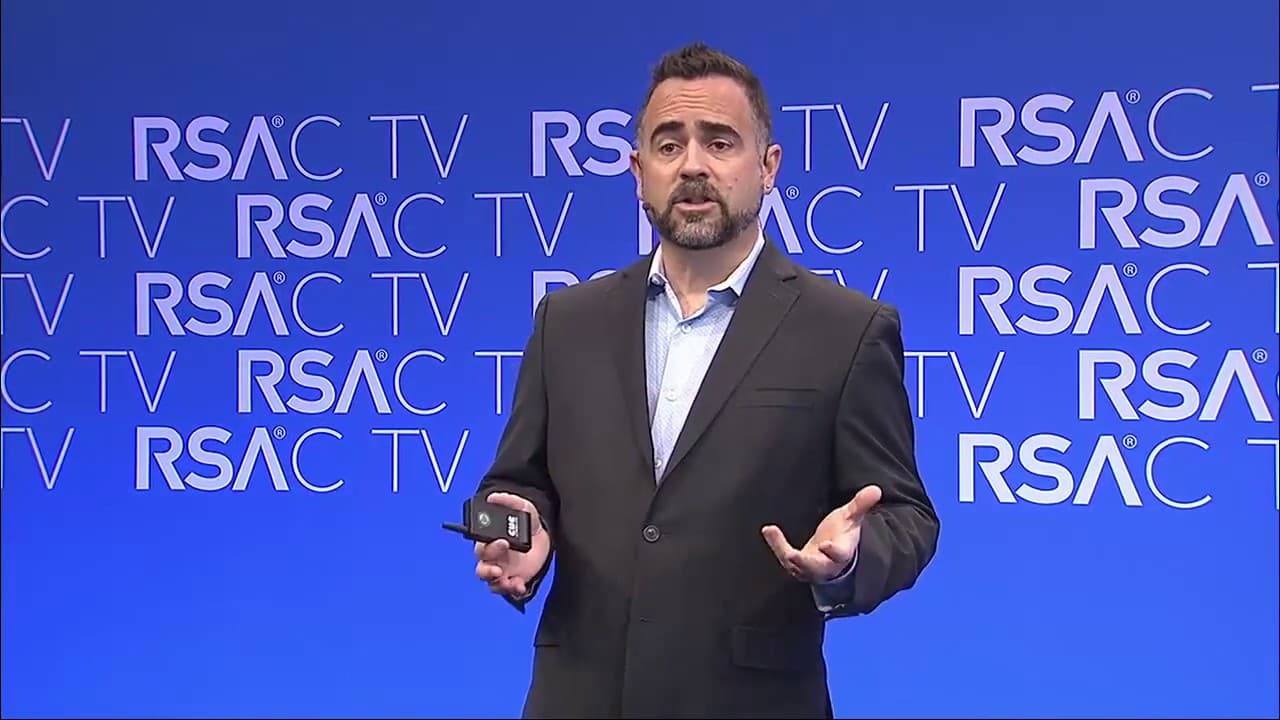
Good morning, and thank you for joining me here on RSA TV in 2018 from wonderful San Francisco. I am really pleased to be able to be here today to talk to you about something that has been bothering me for the better part of the last couple of decades. Now, I've been with Akamai Technologies for the last five years, and while I've been there, it ha... Read More
Key Insights
- Security debt is the accumulation of unresolved weaknesses created by missed patches, accepted risks, unsafe configurations, undocumented systems, and technology deployed without sufficient security consideration. These weaknesses become harder and potentially more damaging when organizations allow them to remain across years of operational change.
- Repeated risk acceptance creates compound exposure because each deferred patch or unresolved weakness adds to earlier decisions. A risk judged unlikely in isolation can become part of a much larger problem after organizations accept similar risks repeatedly without returning to remediate them.
- Legacy systems can become mission-critical without receiving appropriate governance. An intern-built application left running on an old desktop represents a serious risk when the organization depends on it but lacks proper maintenance, documentation, security controls, or a clear understanding of its operational importance.
- Heartbleed was introduced into the OpenSSL library in 2012 and discovered in 2014. Its widespread impact reflected the library's extensive use and demonstrated the consequences of insufficient code review and security auditing across software that defenders collectively depend upon.
- IoT insecurity can convert avoidable design failures into large-scale attack infrastructure. The Mirai botnet used poorly managed devices with hard-coded default credentials, including predictable usernames and passwords, even though forcing users to change passwords during initial login was a straightforward preventive measure.
- The Memcache attack exploited systems that were never intended to face the internet. Roughly 100,000 exposed systems supported a reflected denial-of-service attack producing 1.3 terabits of traffic, years after researchers had publicly highlighted security problems associated with Memcache.
- Institutional knowledge is a security control because undocumented decisions and configurations may become incomprehensible when employees change jobs. Proper documentation and repeatable processes help organizations recognize why systems exist, how they should be configured, and which exposures must be corrected.
- Zero trust depends on controlled access through network segmentation, appropriate authentication, and removal of unnecessary privileges. Senior leaders do not automatically need administrative credentials, and tested emergency access procedures can preserve operational resilience without granting standing access that attackers might steal.
Install to Summarize YouTube Videos and Get Transcripts
Explore YouTube Video Summarizer or Get YouTube Transcript Extractor
Questions & Answers
Q: What is security debt in an enterprise environment?
Security debt is the accumulated set of unresolved security weaknesses created as organizations build and change their technology environments. It includes missed patches, accepted risks, unsafe configurations, deprecated libraries, undocumented systems, and unnecessary access. The debt grows over time when teams repeatedly postpone remediation, allowing individual weaknesses to combine into a larger operational and financial threat.
Q: How can an organization reduce accumulated security debt?
An organization can reduce security debt by following a continuing cycle: identify risks, protect the relevant assets, deploy detective controls, and respond promptly when problems appear. It should also maintain documentation, patch systems, correct unnecessary internet exposure, segment networks, strengthen authentication, and restrict privileges. Simply signing off on a risk without later addressing it allows the debt to continue growing.
Q: Why does repeated risk acceptance increase security exposure?
Repeated risk acceptance increases exposure because unresolved issues accumulate like compound interest. A team may decide that one weakness has a low likelihood of causing harm, but making that decision again and again leaves years of missed patches, insecure configurations, and unmanaged systems in place. Eventually, several accepted risks can combine into a significant incident or service outage.
Q: What does Heartbleed show about security debt?
Heartbleed shows how a weakness in widely used shared software can remain unnoticed and then create urgent remediation work across many environments. The problem entered the OpenSSL library in 2012 and was discovered in 2014. The speaker argues that more consistent code examination and security auditing by defenders could have helped prevent this type of accumulated exposure.
Q: How did insecure IoT devices enable the Mirai botnet?
The Mirai botnet was assembled from many IoT-related devices that could not be properly managed and contained hard-coded default credentials. Predictable combinations such as an administrator username with a simple password allowed attackers to bypass security and use the devices as a denial-of-service platform. Requiring a password change during first login could have prevented part of this avoidable problem.
Q: Why were internet-facing Memcache systems dangerous?
Memcache was created in 2003 as a memory caching system to accelerate a website, and it was not intended to be publicly exposed. Over time, roughly 100,000 Memcache systems became internet-facing. Attackers used those systems to reflect a denial-of-service attack producing 1.3 terabits of traffic, despite security issues having been highlighted by researchers in 2010.
Q: How does zero trust help address security debt?
Zero trust helps address security debt by limiting access to systems according to actual need. The practices described include network zone segmentation, proper authentication, and removal of unnecessary administrative privileges. A senior manager, for example, avoided administrative access because a team handled those duties, while a tested emergency access process remained available if the team could not respond.
Q: How should businesses assess the financial risk of security debt?
Businesses should calculate what operational disruption would cost if security debt caused an outage lasting a minute, an hour, or a day. Considering these time periods connects technical weaknesses to expected financial loss and business impact. That assessment helps decision-makers understand that deferred patches, unmanaged systems, and unsafe configurations are not merely technical issues, but risks to continuing operations.
Summary & Key Takeaways
-
Security debt consists of accumulated weaknesses such as missed patches, accepted risks, undocumented systems, deprecated libraries, and unsafe configurations. Like compound interest, the danger increases when organizations repeatedly defer remediation. A forgotten desktop supporting a mission-critical application illustrates how an improvised system can become a serious operational and security liability.
-
Heartbleed, the Mirai botnet, and the Memcache attack illustrate different forms of accumulated security debt. OpenSSL contained an unnoticed problem for two years, IoT devices shipped with hard-coded default credentials, and roughly 100,000 Memcache systems were unnecessarily internet-facing, enabling a reflected denial-of-service attack measuring 1.3 terabits of traffic.
-
Organizations should manage security debt through a continuing cycle of identifying risks, protecting assets, establishing detective controls, and responding promptly to discovered problems. Network segmentation, strong authentication, minimal access, documented procedures, and tested emergency credentials reduce exposure. Leaders should also quantify the financial consequences of outages lasting a minute, an hour, or a day.
Read in Other Languages (beta)
Share This Summary 📚
Summarize YouTube Videos and Get Video Transcripts with 1-Click
Try YouTube Summary with ChatGPT & Claude or YouTube Transcript Generator
Explore More Summaries from RSAC Cybersecurity 📚






Summarize YouTube Videos and Get Video Transcripts with 1-Click
Try YouTube Summary with ChatGPT & Claude or YouTube Transcript Generator