How to Draw Electric Field Lines for Point Charges
TL;DR
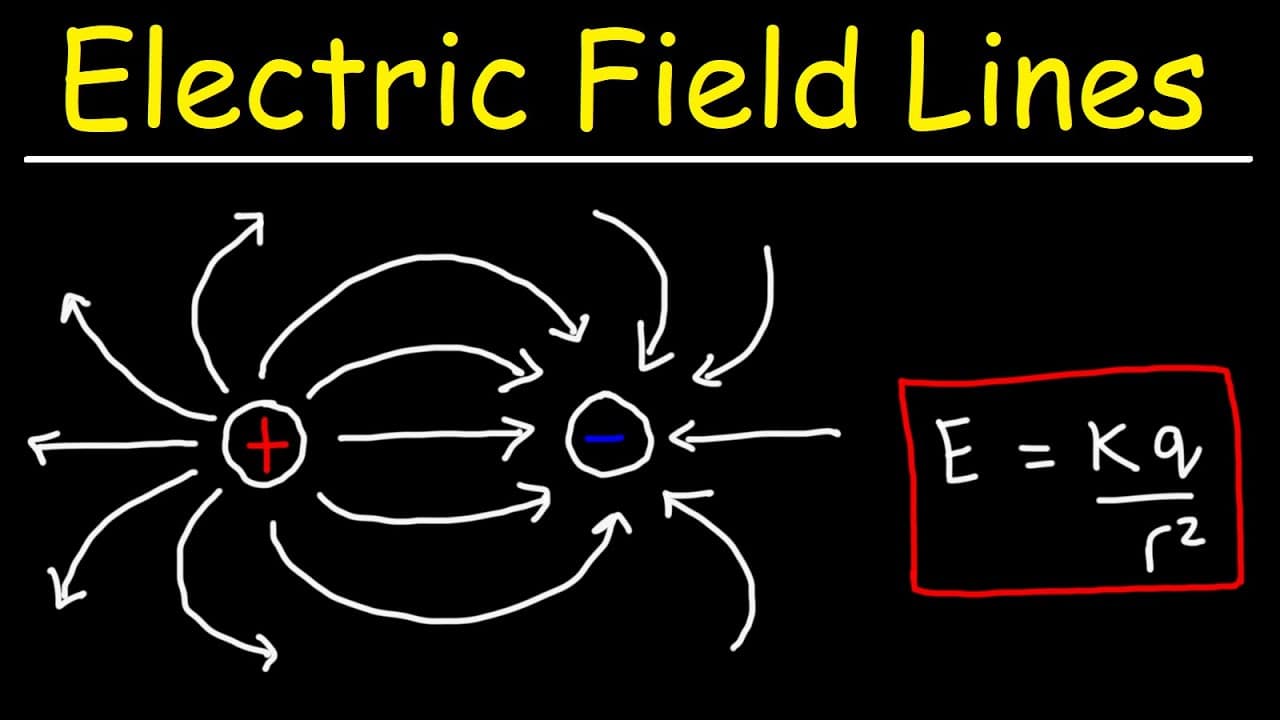
To draw electric field lines for point charges, remember that lines emanate from positive charges and point toward negative charges. The density of these lines indicates the strength of the electric field: more lines mean a stronger field. Use the equation E = k q / R² to calculate the magnitude of the electric field produced by a point charge.
Transcript
let's talk about electric field lines so let's say we have a positive charge or more specifically a positive Point charge the electric field lines they will always emanate away from the positive charge now if we have a negative charge the electric field lines will Point toward a negative charge so that's the first thing you want to know when studyi... Read More
Key Insights
- 🈂️ The direction of electric field lines indicates the type of charge present: away from positive charges and towards negative charges.
- 😝 The equation E = k q / R^2 can be used to calculate the magnitude of the electric field.
- 🏑 The density of electric field lines reflects the strength of the electric field, with more lines representing a stronger field.
- 🫥 Electric field lines do not intersect with each other.
- 🈂️ Drawing electric field lines for combinations of charges requires considering the direction and magnitude of the charges.
- 🈂️ Electric field lines between a point charge and a charged plate will be directed towards or away from the point charge, with some bending near the plate.
- 🫥 Understanding the direction and density of electric field lines can provide insight into the magnitude and sign of charges.
Install to Summarize YouTube Videos and Get Transcripts
Explore YouTube Video Summarizer or Get YouTube Transcript Extractor
Questions & Answers
Q: How do you determine the direction of the electric field from a charge?
The electric field lines point away from positive charges and towards negative charges. The direction of the lines indicates the type of charge present.
Q: How is the magnitude of the electric field calculated?
The magnitude of the electric field can be calculated using the equation E = k q / R^2, where E is the electric field, Q is the charge, R is the distance from the charge, and k is a constant.
Q: How does the density of electric field lines relate to the electric field strength?
The density of electric field lines represents the strength of the electric field. More lines in a given region indicate a stronger electric field, while fewer lines represent a weaker field.
Q: Can electric field lines intersect with each other?
No, electric field lines never intersect with each other. They always flow in a continuous path, either away from or towards charges.
Summary & Key Takeaways
-
Electric field lines emanate away from positive charges and point towards negative charges.
-
The equation to calculate the electric field is k q / R^2, where Q is the charge and R is the distance from the point charge.
-
The density of electric field lines indicates the strength of the electric field, with more lines in a region representing a stronger field.
Read in Other Languages (beta)
Share This Summary 📚
Summarize YouTube Videos and Get Video Transcripts with 1-Click
Try YouTube Summary with ChatGPT & Claude or YouTube Transcript Generator
Explore More Summaries from The Organic Chemistry Tutor 📚


Summarize YouTube Videos and Get Video Transcripts with 1-Click
Try YouTube Summary with ChatGPT & Claude or YouTube Transcript Generator