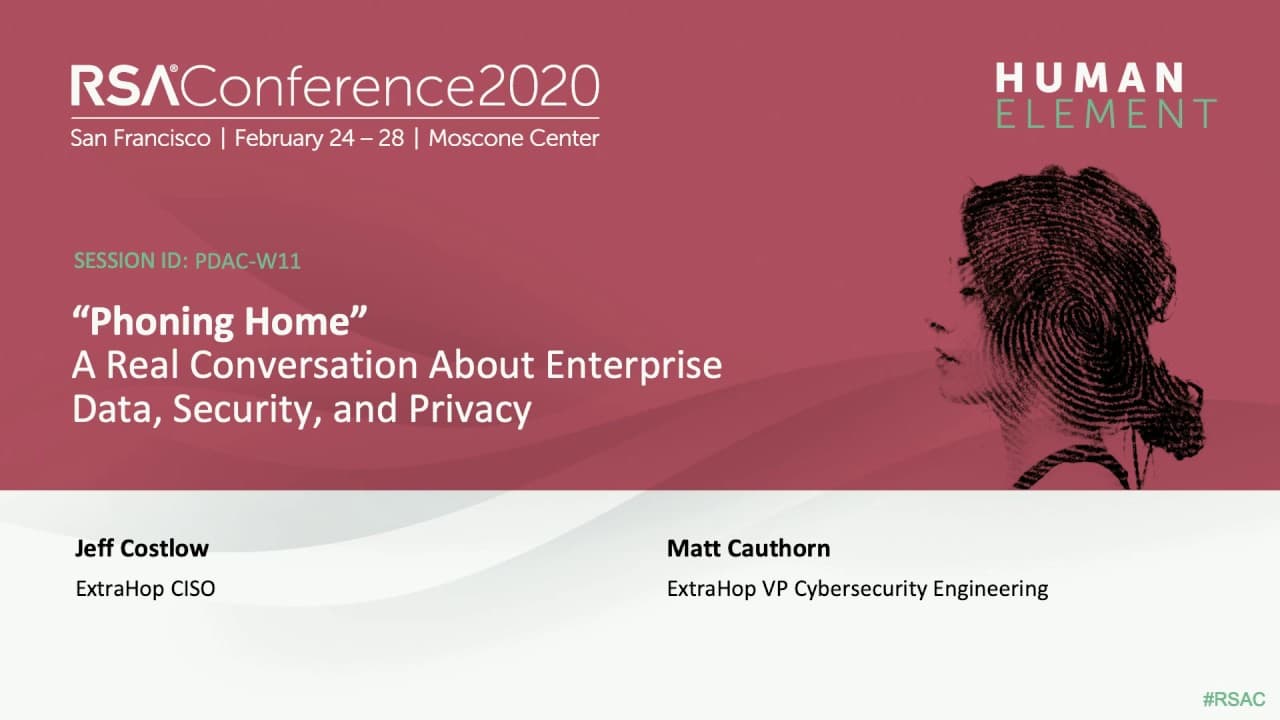
How to Assess Enterprise Phoning-Home Risks
TL;DR
Treat vendor phoning-home behavior as an extension of supply chain risk. Identify what data leaves the enterprise, classify its sensitivity, measure transfer volume, determine its destination, verify protections such as encryption in transit, and compare the activity with security policies, regulatory duties, and customer contracts. Legitimate uses include licensing, updates, analytics, and machine learning, but they require visibility, consent, and clear vendor communication.
Transcript
So this is the three o'clock hour, the witching hour. So, uh, thank you for making it. This is the difficult time in the schedule, we know that. Um, and when I look at the crowd, I think, you know, these-- you're itching for more slides, more PowerPoint for sure, so. And we're here to deliver. Hopefully, it'll be of interest to you, and hopefully e... Read More
Key Insights
- Vendor phoning-home activity is an enterprise supply chain risk because security and performance products can transmit organizational data to vendor-controlled systems. Buyers must understand these outbound relationships just as they would assess software libraries and the deeply nested dependencies embedded within enterprise applications.
- Enterprise tool sprawl increases hidden exposure because organizations may operate more than ten security or performance products, while the environments observed by the presenters commonly average around twenty tools in total. A material percentage of those products may exchange information with their vendor's systems.
- Phoning home is not inherently malicious because legitimate purposes include license check-ins, software updates, signature updates, runtime monitoring, cloud analytics, and machine learning. Risk depends on whether the organization understands the data, destination, timing, safeguards, and operational purpose of each connection.
- Cloud analytics increases the importance of outbound-data governance because meaningful analytics and machine learning may require cloud-scale computing. Products can therefore send enterprise data, or some representation of it, to external services, creating a need for precise visibility into what leaves the environment.
- Data classification is the first practical assessment step because the sensitivity and regulatory status of transmitted information shape its risk. The presenters favor a manageable high, medium, and low classification model while also considering whether data falls under GDPR, HIPAA, or internal classification policies.
- Transfer volume is a useful behavioral indicator because small outbound requests followed by larger downloads may represent signature or software updates. Large quantities of outbound data deserve closer examination, although volume alone does not establish whether the activity is legitimate, authorized, or adequately protected.
- Data destination is a contractual and security concern because enterprises may have obligations governing where customer information is processed. Teams should identify the geographic and organizational destination of vendor traffic, then determine whether that destination conforms to established data-domain policies and customer agreements.
- Encryption in transit is a fundamental vendor-assessment question because outbound enterprise data requires appropriate protection while moving between systems. The presenters specifically recommend determining whether current protocols such as TLS 1.2 or TLS 1.3 are used, rather than relying on very old cryptography.
Install to Summarize YouTube Videos and Get Transcripts
Explore YouTube Video Summarizer or Get YouTube Transcript Extractor
Questions & Answers
Q: What does phoning home mean for enterprise tools?
Phoning home describes an enterprise product exchanging information with a vendor-controlled environment, sometimes called the mothership. The behavior may involve outbound operational data, licensing information, analytics inputs, or requests for software and signature updates. The central issue is whether the customer understands what is transferred, where it goes, when communication occurs, and how the behavior fits its security and operational practices.
Q: Why is vendor phoning home a supply chain risk?
Vendor phoning home extends supply chain risk because purchased security and performance products become part of enterprise service delivery while also containing their own software dependencies. Those dependencies can be deeply nested and opaque, much like the dependency tree beneath a software module. Customers may therefore face risks originating from both the vendor relationship and components that are difficult to assess directly.
Q: How should enterprises assess phoning-home data?
Enterprises should identify the type of data being transmitted, classify its criticality, measure how much information moves in each direction, determine its destination, and verify the protections applied during transfer. They should then compare those findings with internal security practices, operational expectations, regulatory considerations such as GDPR or HIPAA, and contractual promises concerning where customer data will be processed.
Q: What are legitimate reasons for software to phone home?
Legitimate phoning-home purposes include license check-ins, software updates, signature updates, runtime monitoring, cloud-based analytics, and machine learning. The presenters describe a network-attached storage product whose recurring SSH connection was acceptable because the organization understood the collected runtime data, its destination, and the expected transfer schedule. Predictability and visibility allowed the activity to fit the operational risk model.
Q: How can data volume reveal a vendor connection's purpose?
Transfer volume can provide clues about what a connection is doing. A small amount of information sent outward followed by a larger inbound transfer may be consistent with signature or software updates. A large volume of enterprise data moving outward merits additional scrutiny. Volume is an assessment signal, so teams must still examine the transmitted content, destination, authorization, safeguards, and stated purpose.
Q: Why does the geographic destination of data matter?
The destination matters because enterprises can have data-domain policies and customer agreements that specify where information may be processed. A vendor sending information to an unexpected country could conflict with those commitments. Organizations should therefore identify where outbound traffic terminates, understand which entity receives it, and compare that location with applicable security policies, regulatory considerations, and contractual obligations.
Q: What should enterprises ask vendors about encryption?
Enterprises should ask what protections apply to transmitted information, beginning with encryption in transit. The presenters specifically suggest determining whether the connection uses TLS 1.2, TLS 1.3, or older cryptography. Encryption is one part of the assessment and should be considered alongside the type and criticality of data, transfer volume, destination, expected behavior, and the organization's contractual responsibilities.
Q: How should vendors improve transparency about phoning home?
Vendors should give prospective buyers a proactive view of what data their products transfer, how licensing mechanisms communicate, and what information is sent to cloud analytics or machine-learning services. Communication should provide meaningful consent and reciprocity rather than leaving customers to discover outbound behavior independently. Clear answers help customers determine whether the activity conforms to their security practices, operations, policies, and customer commitments.
Summary & Key Takeaways
-
Enterprise environments commonly contain numerous performance and security tools, and a material percentage may exchange data with vendor-controlled systems. Organizations often lack visibility into what is transferred, where it goes, and whether the activity matches their security practices. The resulting risk should be evaluated as part of the broader technology supply chain.
-
Phoning home can support legitimate functions, including license check-ins, signature downloads, software updates, operational monitoring, cloud analytics, and machine learning. Acceptability depends on understanding the transmitted data, expected timing, destination, and operational purpose. Known, predictable connections can fit an enterprise risk model when their behavior and safeguards are clearly documented.
-
A practical assessment begins with classifying data as high, medium, or low criticality while considering GDPR, HIPAA, and internal policies. Teams should then examine transfer volume, geographic destination, and protections such as encryption in transit. Vendor discussions should establish consent, reciprocity, licensing behavior, analytics requirements, and compliance with contractual data-processing obligations.
Read in Other Languages (beta)
Share This Summary 📚
Summarize YouTube Videos and Get Video Transcripts with 1-Click
Try YouTube Summary with ChatGPT & Claude or YouTube Transcript Generator
Explore More Summaries from RSAC Cybersecurity 📚





Summarize YouTube Videos and Get Video Transcripts with 1-Click
Try YouTube Summary with ChatGPT & Claude or YouTube Transcript Generator