What Are the Different Types of Chemical Reactions?
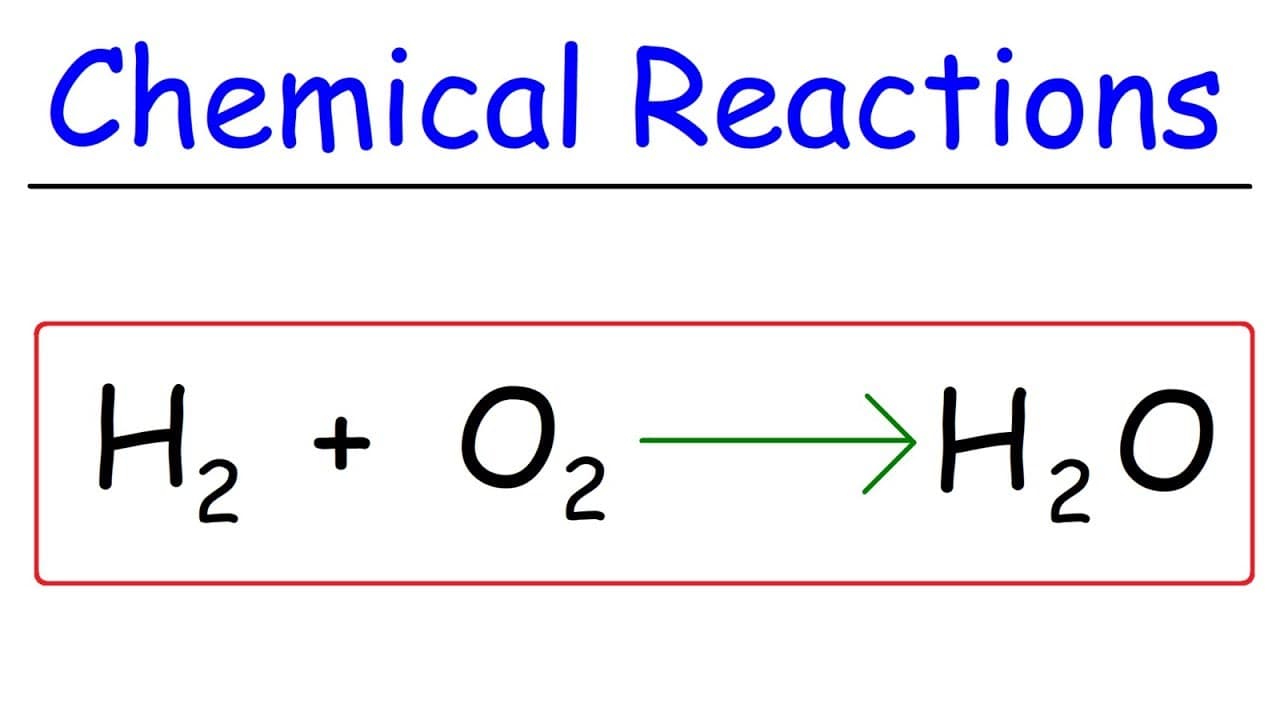
TL;DR
The main types of chemical reactions are synthesis, decomposition, combustion, single replacement, and double replacement. Synthesis combines reactants into one product, decomposition breaks down one reactant into multiple products, and combustion produces carbon dioxide and water from carbon-containing compounds. Single replacement involves one element displacing another, while double replacement exchanges ions between compounds.
Transcript
in this video we're going to talk about types of chemical reactions synthesis reactions decomposition reactions combustion reactions and then single and double replacement reactions so what is a synthesis reaction this is a reaction where you have multiple reactants combining to form a single product so a plus b turns into a b let me give you some ... Read More
Key Insights
- 💁 Synthesis reactions involve the combination of multiple reactants to form a single product.
- 🍳 Decomposition reactions break down a single reactant into multiple products.
- 💦 Combustion reactions release a large amount of thermal energy and produce carbon dioxide and water as products.
- 🔂 Single replacement reactions occur when one element displaces another element in a compound.
- 💁 Double replacement reactions involve the exchange of ions between two compounds to form two new compounds.
- 💁 Precipitation reactions occur during double replacement reactions when a solid product forms.
- 🫢 Gas evolution reactions occur during double replacement reactions when a gaseous product is formed.
Install to Summarize YouTube Videos and Get Transcripts
Explore YouTube Video Summarizer or Get YouTube Transcript Extractor
Questions & Answers
Q: What is a synthesis reaction?
A synthesis reaction is a type of chemical reaction where multiple reactants combine to form a single product. It involves the combination of smaller components into a larger product.
Q: Can you give an example of a decomposition reaction?
One example of a decomposition reaction is the breakdown of magnesium nitride into magnesium and nitrogen gas when heated. Another example is the decomposition of calcium carbonate into calcium oxide and carbon dioxide gas upon heating.
Q: What are combustion reactions and why are they significant?
Combustion reactions involve the reaction of a compound containing carbon, hydrogen, and/or oxygen with oxygen gas. They release a significant amount of thermal energy and are commonly used in everyday applications, such as in combustion engines. They produce carbon dioxide and water as products.
Q: What occurs in a single replacement reaction?
In a single replacement reaction, one element displaces another element in a compound. For example, zinc can displace copper from copper chloride, resulting in the formation of zinc chloride and copper metal.
Q: What is a double replacement reaction?
In a double replacement reaction, ions exchange between two compounds, forming two new compounds. An example is the reaction between calcium chloride and sodium nitrate, producing calcium nitrate and sodium chloride.
Summary & Key Takeaways
-
Synthesis reactions involve multiple reactants combining to form a single product. Examples include the reaction between zinc metal and oxygen gas, and the reaction between barium oxide and carbon dioxide.
-
Decomposition reactions are the reverse of synthesis reactions, breaking down a single reactant into multiple products. Examples include the decomposition of magnesium nitride and calcium carbonate.
-
Combustion reactions involve the reaction of a compound containing carbon, hydrogen, and/or oxygen with oxygen gas, producing carbon dioxide and water. Examples include the combustion of propane and ethanol.
-
Single replacement reactions occur when one element displaces another element in a compound. Examples include zinc displacing copper from copper chloride and bromine displacing iodine from sodium iodide.
-
Double replacement reactions involve the exchange of ions between two compounds, forming two new compounds. Examples include the reaction between calcium chloride and sodium nitrate, forming calcium nitrate and sodium chloride.
Read in Other Languages (beta)
Share This Summary 📚
Summarize YouTube Videos and Get Video Transcripts with 1-Click
Try YouTube Summary with ChatGPT & Claude or YouTube Transcript Generator
Explore More Summaries from The Organic Chemistry Tutor 📚


Summarize YouTube Videos and Get Video Transcripts with 1-Click
Try YouTube Summary with ChatGPT & Claude or YouTube Transcript Generator