What Is Negative Visualization and How Can It Help You?
TL;DR
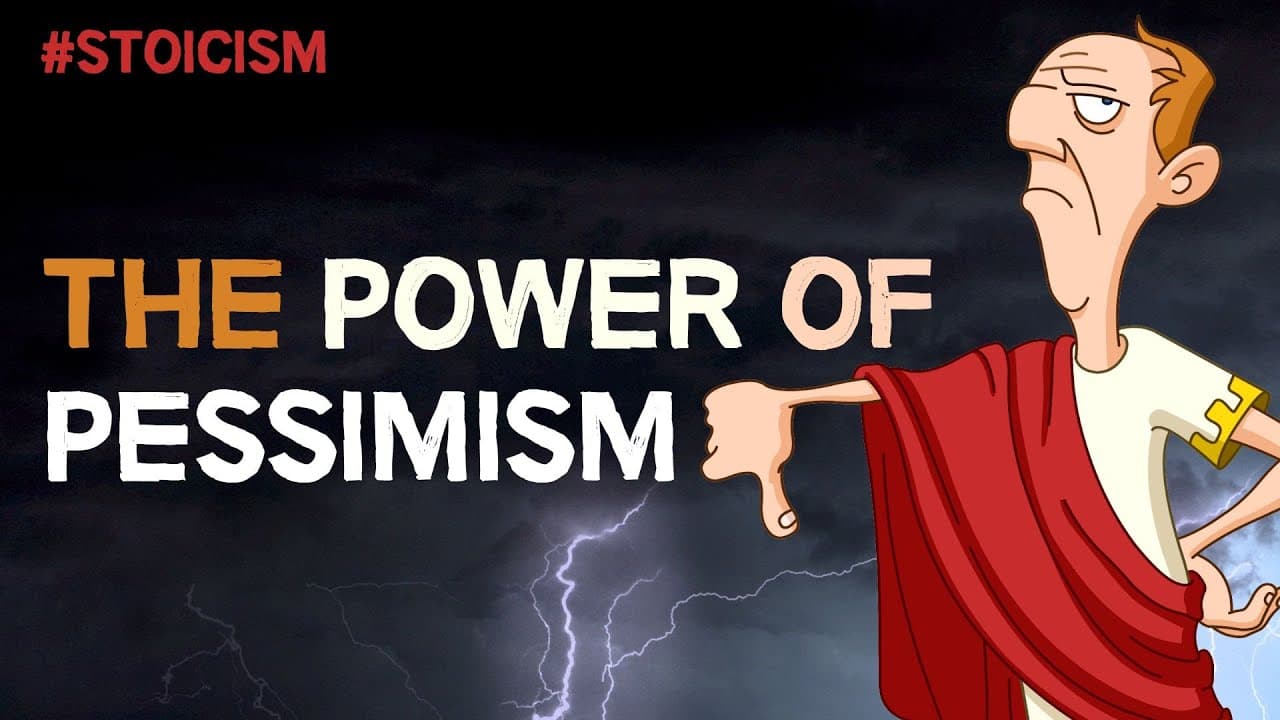
Negative visualization, or praemeditatio malorum, involves mentally preparing for worst-case scenarios to enhance coping skills and maintain tranquility. This Stoic practice allows individuals to gain perspective, develop healthy detachment from outcomes, and reduce anxiety by anticipating challenges. By accepting what we cannot control, we cultivate inner peace and resilience in the face of adversity.
Transcript
Because my video with 7 stoic exercises for inner peace was so successful, I’ve decided to go a bit deeper into each exercise, giving you a little bit more intellectual baggage to ponder over. I’ll start with explaining the praemeditatio malorum by Marcus Aurelius, that harvests its strength from pessimism. First of all, thank you Jean-Claude for y... Read More
Key Insights
- 🦡 Negative visualization, a stoic practice, involves preparing for challenges by imagining worst-case scenarios.
- 😫 By embracing pessimism, we can set ourselves up for functioning well in difficult circumstances.
- 🔬 Negative visualization helps us gain perspective, improve coping skills, and cultivate healthy detachment.
- 👻 It promotes resilience and reduces anxiety by allowing us to anticipate and prepare for potential hardships.
- 🏛️ Through exploring the nature of actions and understanding others' behaviors, negative visualization builds compassion and acceptance.
- 🧑🏫 It teaches us to accept the things we cannot control and focus on maintaining tranquility within ourselves.
- 🛟 Negative visualization encourages us to see everything in life as impermanent and constantly changing.
Install to Summarize YouTube Videos and Get Transcripts
Explore YouTube Video Summarizer or Get YouTube Transcript Extractor
Questions & Answers
Q: What is negative visualization?
Negative visualization is a stoic practice that involves mentally preparing ourselves by imagining worst-case scenarios and challenges we may face in order to cope better when they occur.
Q: How does negative visualization help us cope?
By visualizing potential difficulties in advance, we can strategize and find solutions, increasing our ability to handle these challenges when they actually arise.
Q: What is the role of perspective in negative visualization?
Through conscious and rational thinking about events, negative visualization helps us put things in perspective and change our thoughts, reducing their influence on our mood.
Q: How does negative visualization promote healthy detachment?
By contemplating the impermanence of things we love and realizing that everything is subject to change and loss, negative visualization helps us maintain a realistic perspective and detachment.
Q: What is the impact of negative visualization on anxiety?
Negative visualization acts as an anxiety reducer by preparing us for potential chaos and creating order beforehand. It helps us become more resilient and less shocked when challenging situations arise.
Summary & Key Takeaways
-
The praemeditatio malorum, or negative visualization, is a practice that involves imagining worst-case scenarios to prepare for challenges in daily life.
-
Stoic philosophers like Marcus Aurelius and Epictetus advocated for this practice as a way to cope with difficulties and maintain tranquility.
-
Negative visualization offers benefits such as coping skills, creating perspective, healthy detachment, and reducing anxiety.
Read in Other Languages (beta)
Share This Summary 📚
Summarize YouTube Videos and Get Video Transcripts with 1-Click
Try YouTube Summary with ChatGPT & Claude or YouTube Transcript Generator
Explore More Summaries from Einzelgänger 📚



Summarize YouTube Videos and Get Video Transcripts with 1-Click
Try YouTube Summary with ChatGPT & Claude or YouTube Transcript Generator