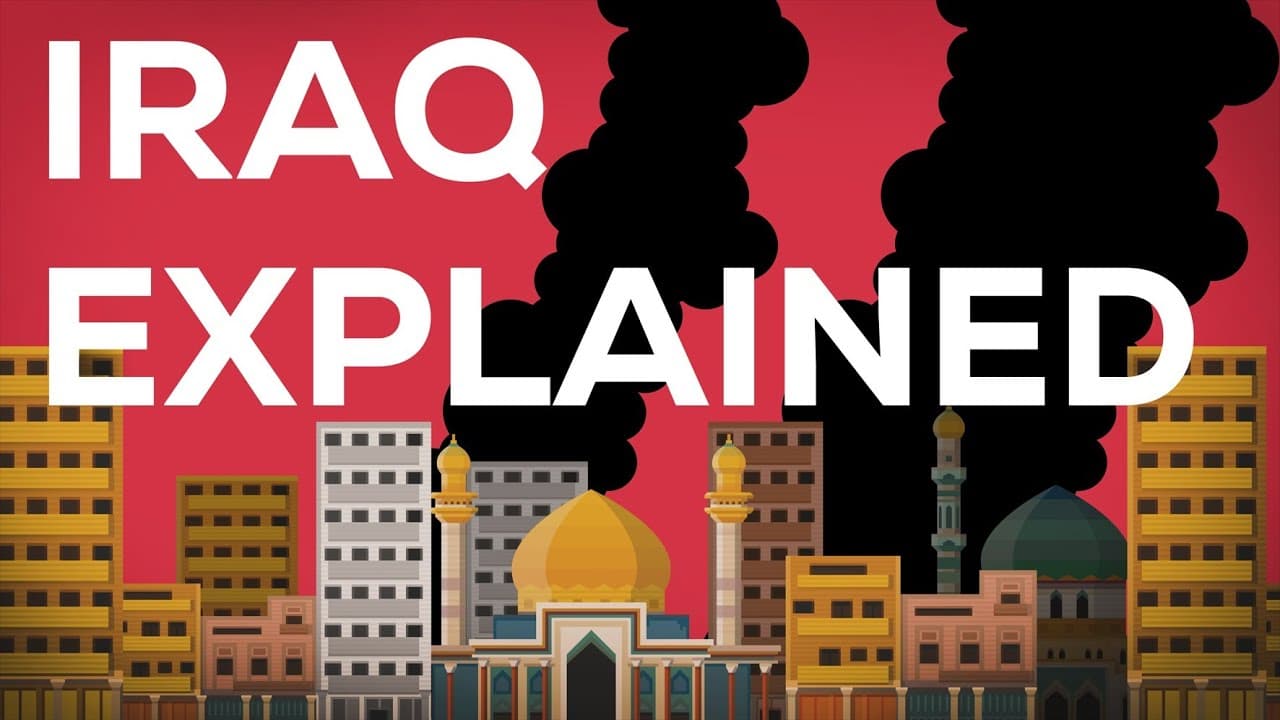
Iraq Explained -- ISIS, Syria and War
TL;DR
The US invasion of Iraq in 2003 led to the formation of terrorist groups, including ISIS, due to the lack of a plan for the country.
Transcript
Oh dear… Just when you thought the Iraq problem was solved because you haven’t heard about it for a while, everything’s back to murderous chaos and terror. What happened? In 2003, the US invaded Iraq because of its alleged connections to terrorism and weapons of mass destruction. At the time, Saddam Hussein, a brutal dictator, ruled the country. He... Read More
Key Insights
- 👻 The US invasion of Iraq created a power vacuum, allowing for the rise of terrorist groups like al-Qaeda and later ISIS.
- 🙃 The Shia-Sunni divide in Iraq has led to continued violence and instability, with both sides supporting extremist factions.
- 🫱 The Arab Spring and the Syrian civil war further escalated the conflict in Iraq, as foreign groups joined the fight.
- 😮 The corrupt and unpopular government of Iraq has contributed to the rise of ISIS by marginalizing and discriminating against Sunnis.
- 🌱 The situation in Iraq highlights the need for a comprehensive plan for post-conflict reconstruction and the inclusion of all factions in the rebuilding process.
- 🇮🇷 Iran and the US are considering cooperating to combat ISIS, emphasizing the severity of the threat posed by the terrorist organization.
- ✊ The current situation in Iraq underscores the consequences of exploiting defeated populations and denying them power and participation in rebuilding efforts.
Install to Summarize YouTube Videos and Get Transcripts
Explore YouTube Video Summarizer or Get YouTube Transcript Extractor
Questions & Answers
Q: What were the reasons for the US invasion of Iraq in 2003?
The US invaded Iraq due to alleged connections to terrorism and weapons of mass destruction. Saddam Hussein's rule as a brutal dictator also played a role.
Q: How did the US invasion lead to the formation of terrorist groups like ISIS?
The US's lack of a plan for Iraq allowed the suppressed Shia majority to oppress the Sunnis, leading to a Sunni rebel uprising. Terrorist groups like al-Qaeda took advantage of the chaos and began fighting US troops and the newly formed Iraqi state.
Q: How did the Arab Spring affect the situation in Iraq?
The Arab Spring changed the dynamics in the Middle East, leading to a gruesome civil war in Syria. Foreign groups joined the fight, many for religious reasons, including ISIS, which had already gained control over parts of northern Iraq.
Q: What is the current situation in Iraq?
The corrupt and unpopular government of Iraq, led by Prime Minister Nouri al-Maliki, has marginalized and discriminated against Sunnis. The Iraqi army, created with US funding, is disloyal and losing territory to ISIS, which aims to establish an Islamic state.
Summary & Key Takeaways
-
In 2003, the US invaded Iraq, overthrowing Saddam Hussein and leading to the suppression of the Sunni minority by the Shia majority.
-
The US had no plan for the country, which resulted in a Sunni rebel uprising and the infiltration of terrorist groups like al-Qaeda.
-
The situation worsened with the Arab Spring in 2010, the Syrian civil war, and the rise of ISIS, leading to increased violence and instability in Iraq.
Read in Other Languages (beta)
Share This Summary 📚
Summarize YouTube Videos and Get Video Transcripts with 1-Click
Try YouTube Summary with ChatGPT & Claude or YouTube Transcript Generator
Explore More Summaries from Kurzgesagt – In a Nutshell 📚






Summarize YouTube Videos and Get Video Transcripts with 1-Click
Try YouTube Summary with ChatGPT & Claude or YouTube Transcript Generator