How Did PC Gaming Evolve? Crash Course Games #20
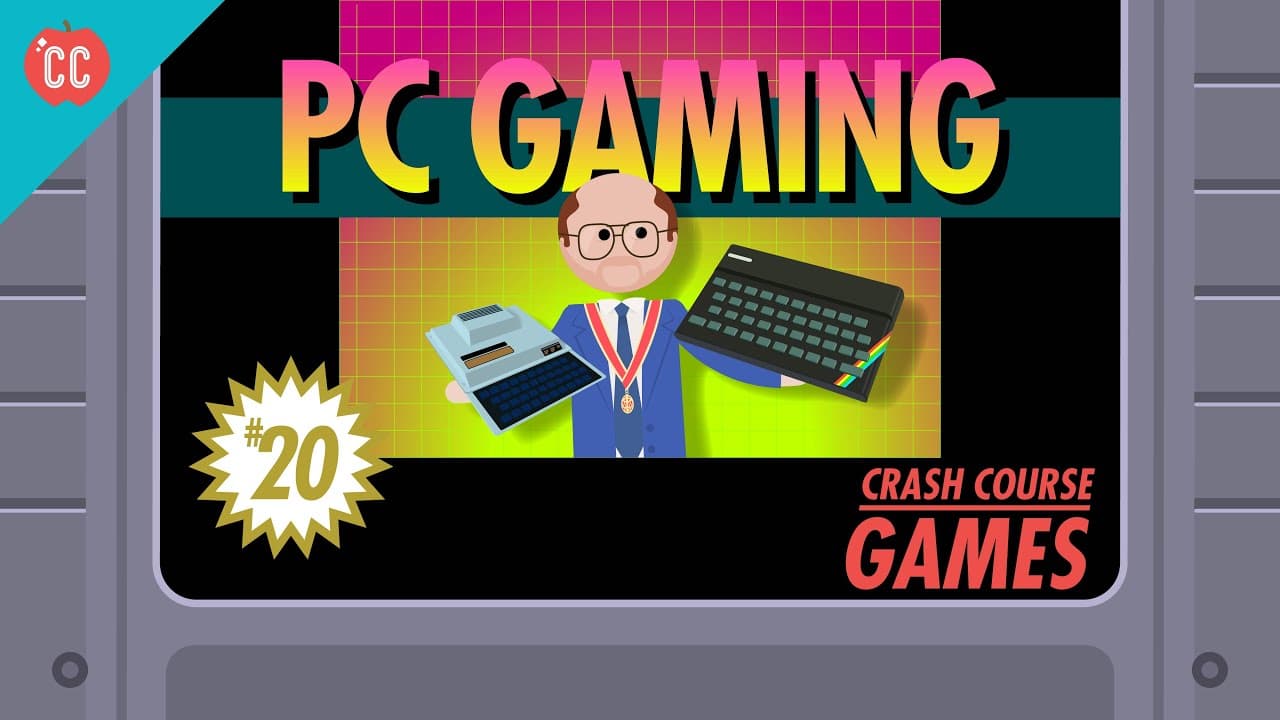
TL;DR
PC gaming evolved from experimental games on post-World War II computers into an adaptable, creative foundation for modern video games. Milestones included the commercially successful Altair 8800 in 1974, the Commodore 64’s sales of over 17 million units, distinctive 1990s genres, and platforms like Steam. Read on to see how technology, multitasking, modding, and open development shaped that evolution.
Transcript
Hi, I’m Andre Meadows and this is Crash Course Games. Today we’re going to take a brief look at the world of PC Gaming. That’s right PC Master Race we’ve got you covered. Because computers did start the video game age after all. They were the precursor of the console, hand-held systems, and all other technological gaming genres. But just because PC... Read More
Key Insights
- PC gaming started as soon as computers appeared after World War II.
- The Altair 8800 was the first commercially successful PC in 1974.
- Arcade machines initially captured the public's gaming imagination.
- The Great Video Game Crash of 1983 led to a rise in PC gaming.
- The Commodore 64 sold over 17 million units with 10,000 programs.
- The ZX Spectrum was a major influence on UK gaming, more so than the NES.
- Real-time strategy games like Dune II emerged in the early 1990s.
- Platforms like Steam have revolutionized game distribution and access.
Install to Summarize YouTube Videos and Get Transcripts
Explore YouTube Video Summarizer or Get YouTube Transcript Extractor
Questions & Answers
Q: How did PC gaming evolve over time?
People began making games almost as soon as computers appeared after World War II, but early machines were enormous. Microprocessors developed in the 1960s and 70s helped computers move toward the desktop, while later systems, new genres, digital platforms, and modding made PC gaming increasingly diverse and open.
Q: What was the Altair 8800’s role in PC gaming history?
MITS introduced the Altair 8800 as a build-it-yourself computer kit in 1974. Although it had no keyboard or screen and communicated through flashing lights, it is considered the first commercially successful PC.
Q: How did the Great Video Game Crash of 1983 help PC gaming?
The crash caused the public to lose faith in home consoles, giving PCs an opportunity to attract that audience. PC makers emphasized that their machines could play games while also managing taxes, supporting geography study, and helping with homework.
Q: Why was the Commodore 64 important to early PC gaming?
Released in 1982, the Commodore 64 sold over 17 million units during its 12-year lifespan and supported 10,000 commercial programs. Its expanding software library and programmability reflected the openness and experimentation that continued to characterize PC gaming.
Q: What technical features did the Commodore 64 offer?
The Commodore 64 used a MOS 6510 microprocessor and provided 64 kilobytes of RAM. Its display supported 16 colors, 40 columns, 25 lines of text, and a resolution of 320 by 200, which was cutting-edge at the time.
Q: Why was the ZX Spectrum significant in the United Kingdom?
Sinclair Research Ltd released the ZX Spectrum in 1982, and it became a British gaming institution despite receiving a poor response elsewhere. It inspired six magazines and well over 24,000 games and had more influence on UK gaming than the original NES.
Q: Which game genres flourished on PCs in the 1990s?
By the start of the 1990s, PC gaming was entering a golden age of experiences often unavailable elsewhere. Real-time strategy was represented by Dune II, first-person shooters by Wolfenstein 3D, and simulation games by SimCity.
Q: What makes PC gaming distinct from console gaming?
PCs let players alter their systems and modify games to suit their preferences. Designers and developers can also create without being tied to one machine, producing a landscape where players, creators, and developers intermingle and experiment.
Summary & Key Takeaways
-
PC gaming's roots trace back to post-World War II, evolving with technological advancements like the microprocessor. The Altair 8800 marked the first commercially successful PC, and the 1983 video game crash shifted focus to PCs due to their multitasking abilities. The Commodore 64 and ZX Spectrum were pivotal in the growth of PC gaming.
-
The 1990s ushered in a golden age for PC gaming with genres like real-time strategy, first-person shooters, and simulators gaining popularity. Games like Dune II, Wolfenstein 3D, and SimCity defined these genres, showcasing the unique capabilities of PCs compared to consoles.
-
Today, PC gaming thrives with platforms like Steam, offering vast libraries and fostering creativity through mods. PC gaming's adaptability and openness have inspired originality in game development, making it a cornerstone of the gaming industry, with genres and experiences often exclusive to this platform.
Read in Other Languages (beta)
Share This Summary 📚
Summarize YouTube Videos and Get Video Transcripts with 1-Click
Try YouTube Summary with ChatGPT & Claude or YouTube Transcript Generator
Explore More Summaries from CrashCourse 📚






Summarize YouTube Videos and Get Video Transcripts with 1-Click
Try YouTube Summary with ChatGPT & Claude or YouTube Transcript Generator