How to Trade Non-Farm Payroll Events Effectively
TL;DR
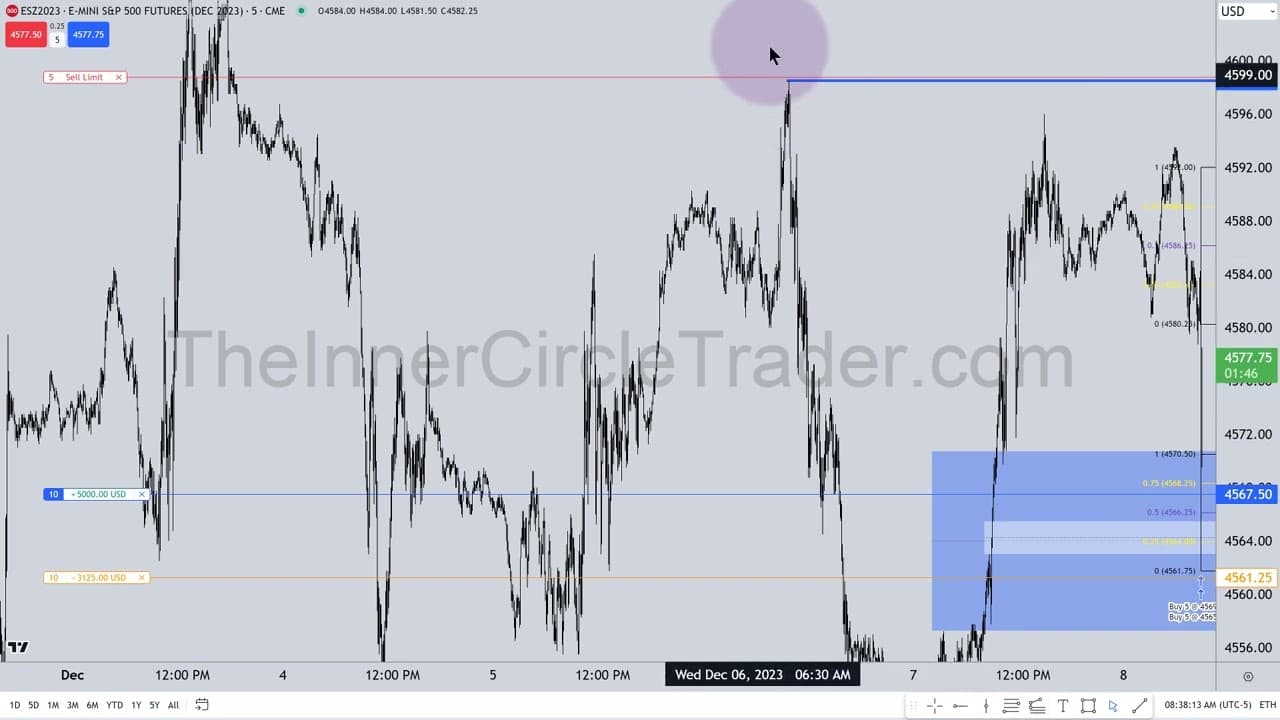
Trading non-farm payroll events requires understanding market inefficiencies and liquidity. The speaker demonstrates a strategy using fair value gaps and order blocks to anticipate price movements. Emphasizing risk management, he showcases how to navigate the volatile environment of non-farm payroll days, ensuring trades are profitable even if not perfect.
Transcript
well good morning good morning good morning it is a good morning right so here's a 4our chart on ES I just let you know I'm bullish I think we're going to try to press higher and we'll jump into a 15-minute time frame see that fair value got right there I missed that Del di I'm waiting for this uh Camtasia platform to to start so this is where I we... Read More
Key Insights
- Non-farm payroll days are highly manipulated, making them challenging for traders.
- Fair value gaps represent inefficiencies in price delivery and can indicate potential price movements.
- Order blocks, formed by consecutive down or up candles, can act as support or resistance levels.
- Partial profit-taking is crucial for managing risk and securing gains during volatile trading sessions.
- Maintaining a mindset focused on probabilities, rather than being right, is essential for long-term success.
- Using a simplified model and focusing on key levels helps in navigating complex market conditions.
- Embracing imperfections and uncertainties in trading can lead to better decision-making and reduced stress.
- Understanding market structure and liquidity targets can provide a competitive edge over retail traders.
Install to Summarize YouTube Videos and Get Transcripts
Explore YouTube Video Summarizer or Get YouTube Transcript Extractor
Questions & Answers
Q: How to trade effectively on non-farm payroll days?
Trading effectively on non-farm payroll days involves understanding market inefficiencies and liquidity. By focusing on fair value gaps and order blocks, traders can anticipate price movements. Emphasizing risk management, such as taking partial profits, helps navigate the volatile environment and ensures trades remain profitable even if not perfect.
Q: What is a fair value gap in trading?
A fair value gap is an inefficiency in price delivery, represented by a gap between consecutive candles on a chart. It indicates a lack of price action in that range, suggesting potential areas where the market may return to fill these gaps. Traders use them to predict future price movements and potential entry or exit points.
Q: Why is risk management important in trading?
Risk management is crucial in trading as it helps protect capital and ensures long-term profitability. By taking partial profits and setting stop-losses, traders can manage potential losses and secure gains. This approach reduces emotional stress, allowing traders to focus on executing their strategies effectively without the pressure of being right all the time.
Q: What are order blocks in trading?
Order blocks are areas on a chart formed by consecutive down or up candles, indicating potential support or resistance levels. They represent zones where significant buying or selling occurred, and the market may revisit these areas in the future. Traders use order blocks to identify potential entry or exit points based on market structure.
Q: How can traders manage emotions during volatile trading days?
Traders can manage emotions during volatile trading days by focusing on probabilities and risk management rather than being right. By taking partial profits and securing gains, traders reduce the pressure of needing trades to be perfect. Embracing uncertainties and imperfections in trading helps maintain a clear and objective mindset, leading to better decision-making.
Q: What role do liquidity targets play in trading?
Liquidity targets are key levels where buy or sell orders are clustered, often around previous highs or lows. Traders focus on these targets to anticipate potential price movements, as the market tends to gravitate towards areas of high liquidity. Understanding these targets provides a competitive edge, allowing traders to position themselves advantageously in the market.
Q: How can traders simplify their trading models?
Traders can simplify their trading models by focusing on key levels, such as fair value gaps and order blocks, and eliminating unnecessary indicators. By concentrating on market structure and liquidity, traders can reduce complexity and make clearer, more informed decisions. Simplified models help in maintaining focus and executing trades efficiently, especially in volatile conditions.
Q: Why is it important to embrace imperfections in trading?
Embracing imperfections in trading is important because it allows traders to accept uncertainties and manage expectations realistically. Recognizing that not all trades will be perfect or profitable helps reduce emotional stress and prevents impulsive decisions. By focusing on probabilities and risk management, traders can navigate the market more effectively and achieve long-term success.
Summary & Key Takeaways
-
The speaker explains that non-farm payroll days are challenging due to high market manipulation. He uses fair value gaps and order blocks to predict price movements, emphasizing risk management through partial profit-taking. By focusing on market inefficiencies and liquidity, traders can navigate these volatile days effectively.
-
Trading on non-farm payroll days involves understanding market inefficiencies like fair value gaps and order blocks. The speaker demonstrates a strategy to anticipate price movements, highlighting the importance of managing risk by taking partial profits. This approach helps traders remain profitable even in uncertain conditions.
-
The video focuses on trading strategies for non-farm payroll days, using concepts like fair value gaps and order blocks to predict market movements. The speaker stresses the importance of risk management, including taking partial profits, to ensure trades are profitable despite the day's inherent volatility.
Read in Other Languages (beta)
Share This Summary 📚
Summarize YouTube Videos and Get Video Transcripts with 1-Click
Try YouTube Summary with ChatGPT & Claude or YouTube Transcript Generator
Explore More Summaries from The Inner Circle Trader 📚
Summarize YouTube Videos and Get Video Transcripts with 1-Click
Try YouTube Summary with ChatGPT & Claude or YouTube Transcript Generator