Who Should You Save in an Ethical Dilemma?
TL;DR
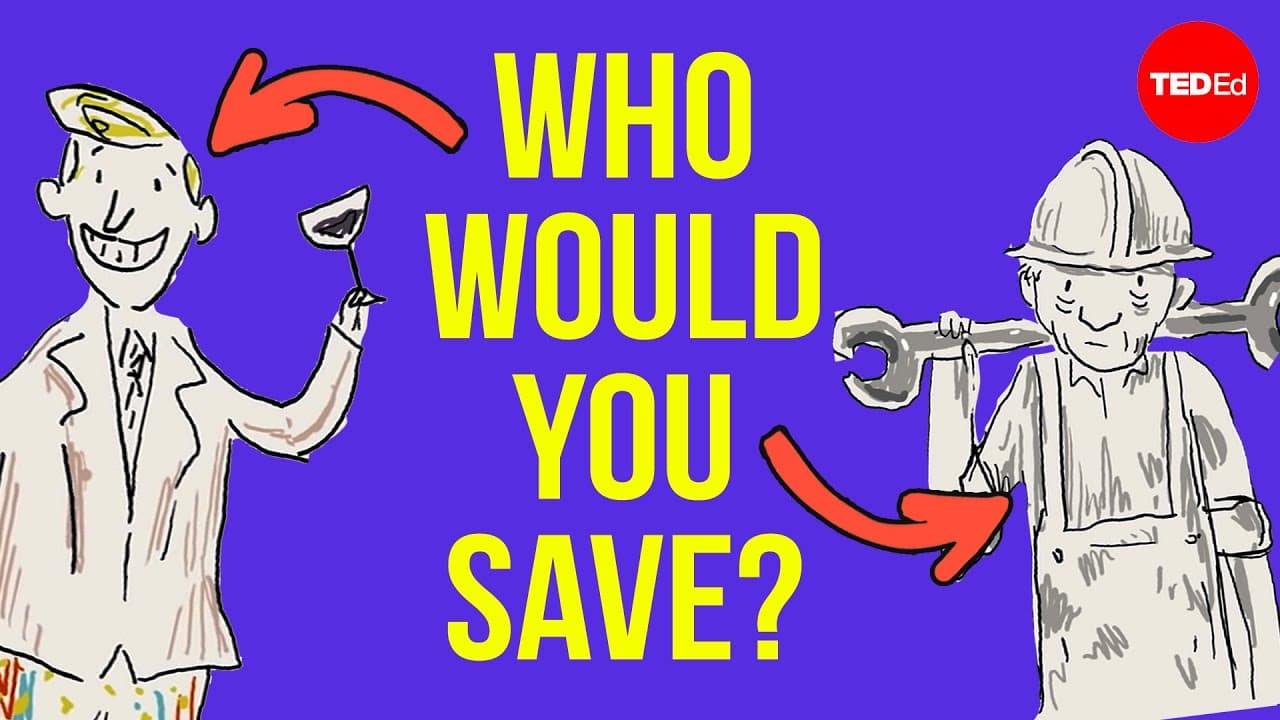
When deciding whether to save 30 middle-aged workers or 20 college students from certain doom, utilitarianism suggests saving the most lives for maximum happiness. However, analyzing life years saved and considering who is worse off presents alternative viewpoints. Ultimately, perspectives like equal concern or even using a coin flip offer additional ethical frameworks for the difficult decision.
Transcript
You are the captain of the Mallory 7, an interstellar cargo transport. On your way to the New Lindley spaceport, you receive a distress call. There’s been an explosion on the Telic 12 and its passengers are running out of oxygen. As you set a course to intercept, you check the Telic 12′s manifest. It’s currently transporting 30 middle-aged indivi... Read More
Key Insights
- 🛟 Utilitarianism suggests saving more lives to generate greater happiness.
- 🛟 The consideration of life years saved could challenge the utilitarian approach.
- 🦡 Prioritizing the worse off can be a valid ethical perspective in decision-making.
- 👥 Inequality and hardships experienced by different groups may influence the decision.
- 🥳 John Taurek proposes a coin flip as a fair way to treat all parties equally.
- ❓ The emotional impact of the decision should also be considered.
- ❓ Defining and measuring happiness is a complex task.
Install to Summarize YouTube Videos and Get Transcripts
Explore YouTube Video Summarizer or Get YouTube Transcript Extractor
Questions & Answers
Q: What is utilitarianism and how does it influence decision-making in this scenario?
Utilitarianism is an ethical view that prioritizes the action that promises the greatest sum of happiness. In this scenario, it suggests saving the ship with 30 middle-aged workers as it would potentially generate more happiness by saving more lives.
Q: How do hedonists define happiness, and how does it relate to this ethical dilemma?
Hedonists define happiness as a life with the most pleasure and the least pain. While the exact definition varies, most would agree that saving 30 lives has the potential to generate more happiness than saving 20.
Q: What is the argument for giving priority to the worse off in this situation?
The philosophy of giving priority to the worse off argues that benefits to those in disadvantaged groups matter more than equivalent benefits to the well-off. In this case, it suggests prioritizing the workers who come from poorer backgrounds and face more hardships.
Q: What is John Taurek's perspective on deciding whom to save?
John Taurek argues that each person is deserving of equal concern and respect. Instead of considering numbers, flipping a coin treats all parties equally, giving each individual an equal chance of being rescued.
Summary & Key Takeaways
-
The captain of the Mallory 7 receives distress calls from two different ships: the Telic 12 with 30 middle-aged workers running out of oxygen and the Pareto with 20 college students about to collide with an asteroid belt.
-
Utilitarianism suggests saving the workers as it would potentially generate more happiness because saving more lives. However, the consideration of life years saved could determine that saving the students might generate more happiness.
-
Another perspective proposes prioritizing the worse off, which would indicate saving the workers who come from poorer backgrounds and face hardships.
Read in Other Languages (beta)
Share This Summary 📚
Summarize YouTube Videos and Get Video Transcripts with 1-Click
Try YouTube Summary with ChatGPT & Claude or YouTube Transcript Generator
Explore More Summaries from TED-Ed 📚

Summarize YouTube Videos and Get Video Transcripts with 1-Click
Try YouTube Summary with ChatGPT & Claude or YouTube Transcript Generator