How Does Community Improve Public Health?
TL;DR
Strong relationships and community support are essential to physical, mental, social, and spiritual health. Rebuilding connection can counter loneliness, pessimism, division, and declining well-being, but doing so requires individuals and institutions to treat community as a public health foundation rather than as an optional social benefit.
Transcript
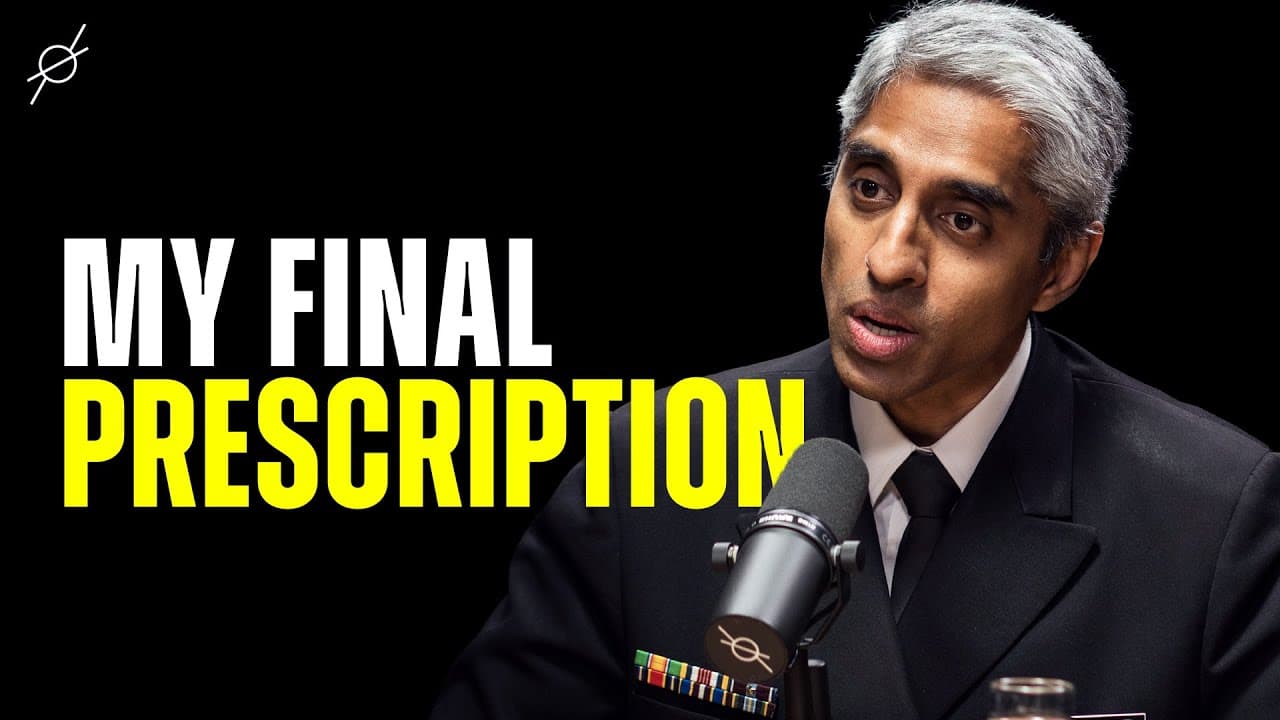
we have an opportunity being in an independent office that's driven by Science office of Surgeon General where we not only can say things that need to be said but we should when Dr V mty became the US Surgeon General he did something unprecedented he identified loneliness as a Public Health crisis in other words at the very heart of what most ails ... Read More
Key Insights
- Community is a foundation for health, happiness, and fulfillment because relationships influence both physical and mental well-being. Rebuilding community is therefore presented as a public health priority, especially during a period marked by loneliness, pain, division, polarization, pessimism, and social disconnection.
- Health is composed of physical, mental, social, and spiritual dimensions that intersect with one another. A person cannot be understood solely through bodily health because relationships, emotional well-being, meaning, and purpose also contribute to the ability to thrive and experience fulfillment.
- Social health is the dimension of well-being shaped by relationships with other people. Murthy argues that these connections affect physical and mental health, making loneliness and disconnection more than private emotional experiences. They are concerns with consequences for the broader health of society.
- Spiritual health is concerned with where people find meaning and purpose in their lives. It does not necessarily depend on a faith or religious tradition, but it still requires attention because it interacts with physical, mental, and social well-being.
- Pessimism and cynicism can obstruct national progress even when a country has strong technology, substantial financial resources, and supportive programs. Murthy worries that despondency has become increasingly common and sees restored human connection as necessary for rebuilding hope and collective agency.
- Hope is sustained by ordinary acts of generosity, kindness, and responsibility that continue across the country. People help neighbors, care for children and elderly relatives, and contribute to their communities, even though these behaviors are less visible in online feeds and news coverage.
- Public health must address root causes as well as visible symptoms. Murthy’s approach broadens the traditional focus on physical illness by treating mental distress, weak relationships, loneliness, and loss of meaning as interconnected conditions that shape both individual and societal well-being.
- Institutions have a role in rebuilding community because widespread division and polarization cannot be addressed only through private choices. Murthy argues that organizations should ask what they can do to strengthen connection, bring people together, and restore the social foundations required for health.
Install to Summarize YouTube Videos and Get Transcripts
Explore YouTube Video Summarizer or Get YouTube Transcript Extractor
Questions & Answers
Q: Why is loneliness considered a public health crisis?
Loneliness is considered a public health crisis because social disconnection affects more than a person’s private emotional state. Relationships influence physical and mental health, while widespread disconnection contributes to pessimism, despondency, division, and reduced social well-being. Treating loneliness as a health issue widens public health beyond disease symptoms and directs attention toward the relationships and communities people need to thrive.
Q: How does community improve physical and mental health?
Community improves health by giving people relationships through which they can receive care, support, meaning, and a sense of connection. Murthy describes social health as a distinct dimension that interacts with physical and mental well-being. When relationships weaken, loneliness and distress can deepen. When communities are strong, people are better positioned to support neighbors, care for relatives, sustain hope, and pursue fulfillment.
Q: What are the four dimensions of health described by Vivek Murthy?
The four dimensions are physical, mental, social, and spiritual health. Physical health concerns the body, while mental health includes emotional and psychological well-being. Social health is shaped by relationships with others. Spiritual health concerns meaning and purpose, whether or not those come through religion. Murthy emphasizes that these dimensions intersect, so each needs attention if people and societies are to thrive.
Q: What is social health and why does it matter?
Social health is the dimension of health created and sustained through relationships with other people. It matters because those relationships influence both physical and mental well-being. Murthy’s framework treats connection as a basic health need rather than an optional benefit. Weak social health can leave people lonely and disconnected, while strong relationships support care, generosity, hope, and meaningful participation in community life.
Q: What does spiritual health mean in this public health framework?
Spiritual health means having sources of meaning and purpose in life. It does not necessarily require religious faith or participation in a particular tradition. Murthy includes it because meaning and purpose interact with physical, mental, and social health. A public health framework focused only on the body would therefore miss an important part of what allows people to feel fulfilled and genuinely thrive.
Q: Why can pessimism and cynicism harm public health progress?
Pessimism and cynicism can make progress difficult even when a country has advanced technology, financial resources, and programs intended to support people. Murthy is concerned that depression, anxiety, suicide, despondency, and loss of hope weaken the confidence required for collective action. Rebuilding community can help restore connection and the belief that people can cooperate to improve their shared circumstances.
Q: What gives Vivek Murthy hope about America’s health?
Murthy finds hope in the conduct of people he has met across the country. He continues to see individuals helping neighbors, trying to do right by their children, caring for elderly relatives, and contributing to their communities. These acts demonstrate that generosity, kindness, and hope have not disappeared, even if online feeds and news coverage often make them less visible than conflict and disagreement.
Q: What can institutions do to rebuild community?
Institutions can begin by asking how their policies, practices, and public roles might bring people together and strengthen relationships. Murthy argues that every institution should consider its responsibility during a period of pain, division, and polarization. The objective is to restore community as a foundation for health, happiness, and fulfillment, creating conditions in which people can cooperate, support one another, and pursue shared goals.
Summary & Key Takeaways
-
Dr. Vivek Murthy concludes his service as U.S. Surgeon General concerned about depression, anxiety, suicide, chronic illness, drug overdose deaths, and growing pessimism. Yet his conversations across the country also reveal generosity, kindness, family commitment, and neighborly support, giving him hope that Americans retain the capacity to heal together.
-
Murthy presents community as a foundation for health, happiness, and fulfillment. Loneliness and social disconnection influence both individual well-being and society’s ability to make progress. His parting prescription calls on people and institutions to rebuild relationships, reduce division, and create the conditions required for collective healing and meaningful cooperation.
-
Health includes physical, mental, social, and spiritual dimensions that continually interact. Social health concerns relationships, while spiritual health concerns meaning and purpose and does not necessarily require religion. A complete public health approach must therefore look beyond physical disease and support every dimension people need to thrive and feel fulfilled.
Read in Other Languages (beta)
Share This Summary 📚
Summarize YouTube Videos and Get Video Transcripts with 1-Click
Try YouTube Summary with ChatGPT & Claude or YouTube Transcript Generator
Explore More Summaries from Rich Roll 📚



Summarize YouTube Videos and Get Video Transcripts with 1-Click
Try YouTube Summary with ChatGPT & Claude or YouTube Transcript Generator