How to Create Reusable AI Avatar Video Ads
TL;DR
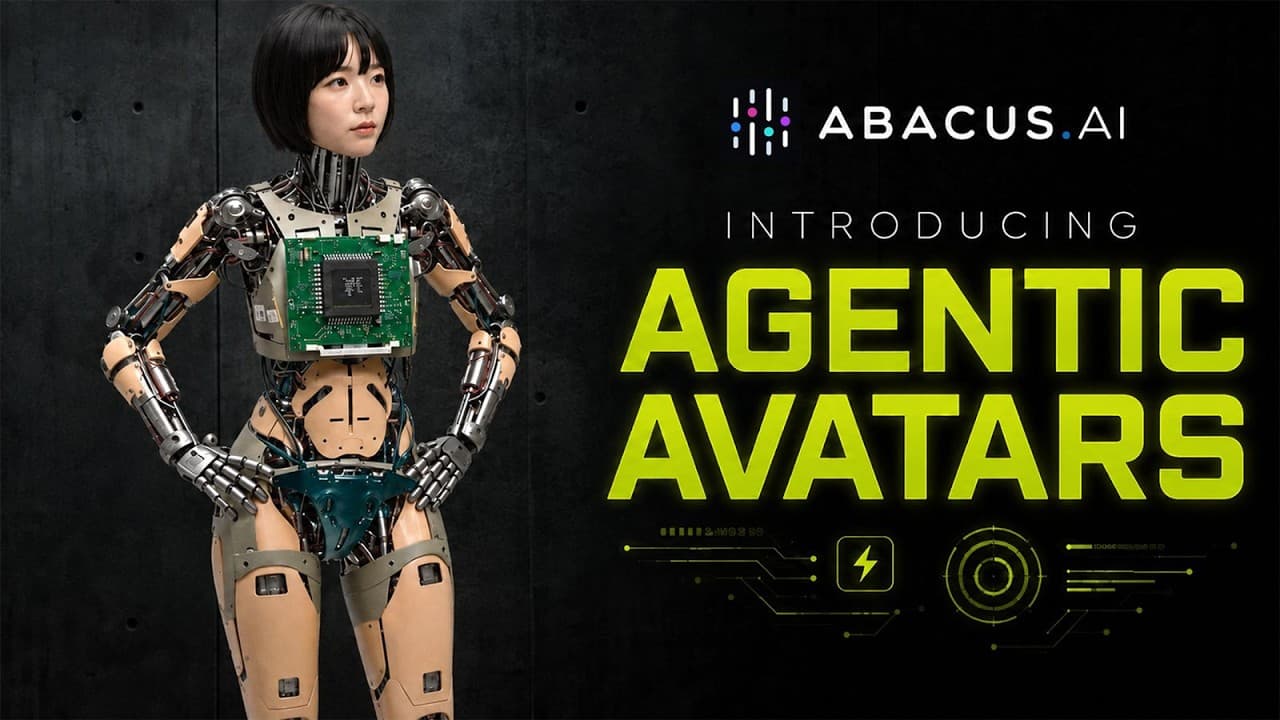
Abacus AI Studio can turn product references and a written brief into a researched, planned, and rendered video campaign using reusable AI avatars. Its agent writes a numbered shot list for approval before Seedance 2.5 renders the video, while stored identities, products, voices, templates, and cinematic presets support repeated content variations without rebuilding every asset.
Transcript
Abacus AI Studio just dropped two new features, shorts and aentic avatars. And one of the demos is a 15-second perfume ad, macro shots of light moving through glass, a 360 orbit with speed ramps, liquid breaking in slow motion built from a few product photos, and a paragraph of text. That's a six-f figureure spot through a production house normally... Read More
Key Insights
- Agentic orchestration is the layer that converts a broad creative request into research, scripting, shot sequencing, camera direction, dialogue placement, and music decisions before the underlying video model generates the finished scenes.
- The approval step is a form of AI-assisted pre-production because Studio exposes its numbered shot plan before rendering. Users can identify weak creative direction before spending generation credits instead of discovering the problem only after a completed render.
- Identity persistence turns an AI character into a reusable asset with a saved face, voice, appearance, and personality. The same avatar can return in travel reels, tutorials, reviews, unboxings, try-ons, commercials, and custom Wildcard productions.
- Avatar creation supports three starting methods: selecting a ready-made persona, describing a fictional person in plain English, or uploading reference photographs. Voice creation similarly supports a short sample for cloning or a written description for synthesizing a new voice.
- Content templates provide format-specific production structures rather than only visual styles. Studio accounts for differences among short-form hooks, handheld reviews, ASMR unboxings, get-ready-with-me videos, cinematic advertisements, and other formats when developing scripts and pacing.
- Product persistence allows an uploaded item to be reused across multiple productions. Products can enter Studio through images, a web address, or specification files, including specifications for products that do not physically exist yet.
- Generative consistency remains imperfect because faces can drift and product details can break between shots. The demonstrated instruction not to beautify or reshape a subject functions as a negative prompt that measurably reduces identity drift.
- Campaign variation becomes practical when reusable products, avatars, and templates are combined with discounted Seedance 2.5 rendering inside Studio. The workflow can produce multiple treatments with different faces, openings, moods, settings, and pacing, then use performance numbers to select a winner.
- More videos from this channel:
- More from this channel: AI Revolution
Install to Summarize YouTube Videos and Get Transcripts
Explore YouTube Video Summarizer or Get YouTube Transcript Extractor
Questions & Answers
Q: How does Abacus AI Studio create a video advertisement?
Abacus AI Studio begins by researching the supplied product and interpreting the user's creative brief. Its agent then writes the commercial as a numbered shot list, including editorial structure, camera movements, dialogue, music placement, and scene order. The user reviews and approves that plan before Seedance 2.5 renders the scenes, providing a checkpoint between the initial idea and generation.
Q: How can you create a reusable avatar in Abacus AI Studio?
Studio offers three ways to begin an avatar. A user can select a ready-made persona from the built-in library, describe a new fictional person in plain English, or upload several reference photographs to build an identity around a real face. The user can then adjust clothing, hair, personality, and voice before saving the complete character for reuse in later videos.
Q: What is identity persistence in AI avatar videos?
Identity persistence is Abacus AI Studio's approach to saving a generated character as an asset that can be recalled across projects. The same person can appear in new locations, outfits, lighting conditions, camera styles, and content formats without starting with a completely new stranger each time. The transcript notes that some facial drift remains because the underlying footage is still generative video.
Q: Why is the shot-list approval step important?
The approval step lets users inspect creative direction before paying for the full render. Studio reveals the proposed script and numbered sequence first, so an unsuitable concept, weak scene order, or incorrect approach can be changed during planning. The transcript describes this as the closest implementation of real pre-production in such a system because it moves review ahead of generation rather than after it.
Q: How does Abacus AI Studio preserve avatar consistency?
Studio stores the character's identity and reuses it across later scenes and projects, while the creative brief can explicitly require consistent facial features, skin tone, hairstyle, and proportions. The demonstrated prompt also tells the system not to beautify or reshape the subject between scenes. That negative instruction measurably reduces drift, although it does not eliminate facial changes or other generative errors completely.
Q: What types of videos can Agentic Avatars create?
A saved avatar can be used in travel reels, get-ready-with-me clips, red-carpet arrivals, street-style pieces, hero transformations, tutorials, unboxings, reviews, try-ons, UGC-style promotions, and fully custom Wildcard projects. The examples also include ASMR content, skincare demonstrations, fragrance advertising, a multi-scene automotive commercial, a gaming-room unboxing skit, and a watch-focused hotel sequence.
Q: How do templates improve AI-generated social and commercial videos?
Templates give the agent a proven production skeleton for a specific content format. A get-ready-with-me clip, ASMR unboxing, handheld review, short-form hook, and luxury fragrance advertisement each require different openings, rhythms, camera choices, and pacing. Studio uses that embedded format knowledge while writing a new script and shot plan around the supplied product, avatar, and creative request.
Q: How can brands test multiple AI video concepts with Studio?
Brands can store a product in Studio using images, a URL, or specification files, then reuse it across polished advertisements, avatar demonstrations, selfie reviews, and alternate openings. They can change the presenter, setting, mood, pacing, or hook and generate multiple visual treatments. The transcript argues that performance numbers can then identify which concept deserves additional budget instead of relying only on subjective preference.
Summary & Key Takeaways
-
Abacus AI Studio introduces Shorts and Agentic Avatars for creating commercials, social clips, reviews, and other branded videos. Instead of immediately rendering a prompt, its agent researches the product, selects an appropriate content structure, writes the script and numbered shot sequence, and presents the production plan for approval before generation begins.
-
Creators can build an avatar from a built-in persona, a plain-English description, or reference photographs of a real person. A cloned or described voice, clothing, hair, appearance, and personality become part of a saved identity. That identity can then appear across locations, lighting conditions, outfits, formats, and later projects.
-
Products can remain stored in Studio after being added through images, a URL, or specification files. A brand can use the same item in polished commercials, avatar demonstrations, selfie reviews, try-ons, unboxings, and alternate hooks. Multiple treatments can then be tested with different moods, pacing, settings, and digital presenters.
Read in Other Languages (beta)
Share This Summary 📚
Summarize YouTube Videos and Get Video Transcripts with 1-Click
Try YouTube Summary with ChatGPT & Claude or YouTube Transcript Generator
Explore More Summaries from AI Revolution 📚



Summarize YouTube Videos and Get Video Transcripts with 1-Click
Try YouTube Summary with ChatGPT & Claude or YouTube Transcript Generator