What Drives Us? The Power of Motivation Explained
TL;DR
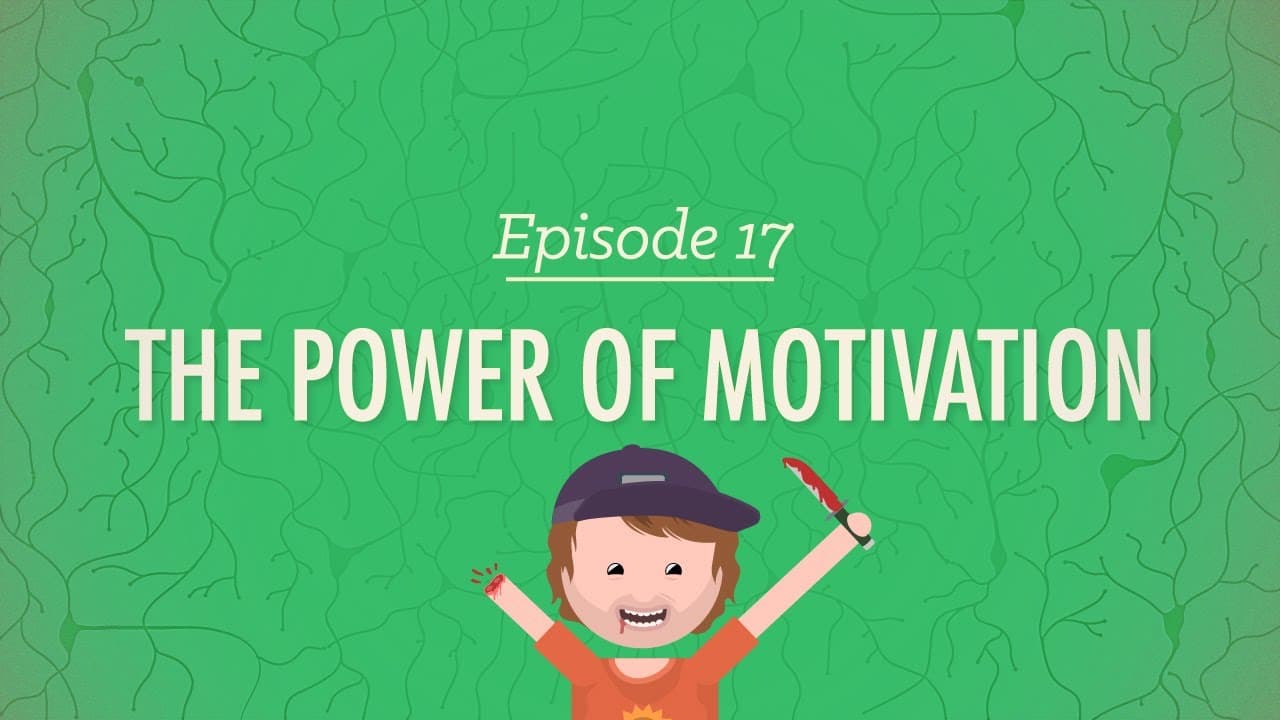
Motivation is driven by fundamental needs such as survival, belonging, and self-actualization. It can be understood through theories like drive-reduction, which emphasizes physiological needs; optimal arousal, which seeks balance between stimulation and relaxation; and Maslow's hierarchy, prioritizing basic needs over higher-level motivations. Aron Ralston's survival story exemplifies the profound impact of motivation on human behavior.
Transcript
You've probably heard this story. Aron Ralston was out climbing in Utah's Bluejohn Canyon when a giant rock shifted under his feet, and he fell, pinning his right arm to the canyon wall. He was stuck, and worse, he hadn't told anyone where we was going. For the next five days, Ralston tried to move and chip away at the rock.... Read More
Key Insights
- Aron Ralston's survival story illustrates the immense power of motivation, driven by basic needs and personal visions.
- Motivation can be understood through various theories: evolutionary perspective, drive-reduction, optimal arousal, and Maslow's hierarchy of needs.
- Instinct Theory suggests behaviors are innate, but modern understanding acknowledges the role of individual experiences.
- Drive-reduction theory emphasizes maintaining physiological balance, but oversimplifies behavior by ignoring non-essential motivations.
- Optimal arousal theory posits that people seek a balance between stimulation and relaxation to avoid boredom and stress.
- Maslow's hierarchy of needs outlines a progression of motivations from basic physiological needs to self-actualization.
- Sexual motivation is driven by biological, psychological, and sociocultural factors, promoting species survival and community bonding.
- Hunger is a primary motivator, influenced by physiological needs and psychological, cultural, and mood factors.
Install to Summarize YouTube Videos and Get Transcripts
Explore YouTube Video Summarizer or Get YouTube Transcript Extractor
Questions & Answers
Q: What is the significance of Aron Ralston's story in understanding motivation?
Aron Ralston's story is a powerful illustration of motivation's role in human survival. Trapped and isolated, Ralston was driven by basic needs like hunger and thirst, but also by a vision of his future self as a father. This vision ignited his will to survive, showcasing how motivation can harness psychological forces to achieve extraordinary feats.
Q: How does the drive-reduction theory explain human motivation?
Drive-reduction theory explains human motivation as a process of maintaining physiological balance, or homeostasis. It posits that physiological needs create an aroused state, or drive, prompting behaviors to reduce this drive and restore balance. For example, hunger motivates eating to reduce the drive and maintain energy levels, but it oversimplifies by ignoring non-essential motivations.
Q: What is the optimal arousal theory of motivation?
Optimal arousal theory suggests that people are motivated to maintain a balance between stimulation and relaxation. Individuals seek activities that provide the right level of arousal to avoid boredom and stress. This varies among people, with some seeking high-stimulation activities like extreme sports, while others find satisfaction in less intense pursuits, like reading or knitting.
Q: How does Maslow's hierarchy of needs structure human motivation?
Maslow's hierarchy of needs structures human motivation as a progression from basic physiological needs to self-actualization. At the base are essential needs like food and water, followed by safety, love, and esteem. Only when these are met can individuals pursue self-actualization and personal growth. However, empirical research suggests people often skip around this hierarchy based on circumstances.
Q: What role does sexual motivation play in human behavior?
Sexual motivation plays a significant role in human behavior, driven by biological factors like sex hormones and psychological and sociocultural influences. It promotes species survival through procreation and strengthens community bonds through recreation. While not a life-essential need, sexual motivation impacts social interactions, cultural practices, and personal relationships, influencing behavior across various contexts.
Q: How does hunger influence human motivation and behavior?
Hunger is a fundamental motivator, driven by physiological needs for energy and influenced by psychological, cultural, and mood factors. The sensation of hunger begins with a drop in blood-sugar levels, prompting eating behaviors. However, cultural experiences and personal preferences shape what and when we eat, affecting both individual behavior and social interactions. Hunger can lead to significant psychological and social consequences, as demonstrated by studies like the Minnesota Hunger Experiment.
Q: What were the psychological effects observed in the Minnesota Hunger Experiment?
The Minnesota Hunger Experiment, conducted during World War II, revealed significant psychological effects of starvation. Participants became obsessed with food, losing interest in sex, humor, and social activities. They experienced irritability, anxiety, and depression, highlighting the profound impact of hunger on mental health. This study demonstrated how frustration of a fundamental need could lead to a decline in social connections and overall well-being.
Q: Why is the need to belong considered a powerful motivator?
The need to belong is a powerful motivator because social bonding is essential for human survival and well-being. Evolutionarily, forming social connections has helped humans thrive by sharing resources and responsibilities. The pain of social exclusion, like ostracism, can be deeply distressing, affecting mental health and emotional outcomes. A sense of belonging enhances health and well-being, underscoring its importance in human motivation.
Summary & Key Takeaways
-
Motivation is a complex psychological force driving human behavior, illustrated by Aron Ralston's survival story and various motivation theories. These include evolutionary instincts, drive-reduction for physiological balance, optimal arousal for stimulation, and Maslow's hierarchy of needs, which prioritizes basic survival over self-actualization.
-
Instinct theory views behavior as innate, but modern psychology recognizes the significant role of individual experience. Drive-reduction theory highlights physiological needs, but fails to account for complex motivations. Optimal arousal theory suggests people seek a balance between stimulation and relaxation to avoid boredom and stress.
-
Maslow's hierarchy of needs describes a progression from basic physiological needs to self-actualization. Sex is a major motivator, driven by biological, psychological, and sociocultural factors. Hunger, a primary motivator, is influenced by physiological needs and psychological, cultural, and mood factors, affecting both behavior and social interactions.
Read in Other Languages (beta)
Share This Summary 📚
Summarize YouTube Videos and Get Video Transcripts with 1-Click
Try YouTube Summary with ChatGPT & Claude or YouTube Transcript Generator
Explore More Summaries from CrashCourse 📚



Summarize YouTube Videos and Get Video Transcripts with 1-Click
Try YouTube Summary with ChatGPT & Claude or YouTube Transcript Generator