How to Use Open Source AI Repos for Leverage
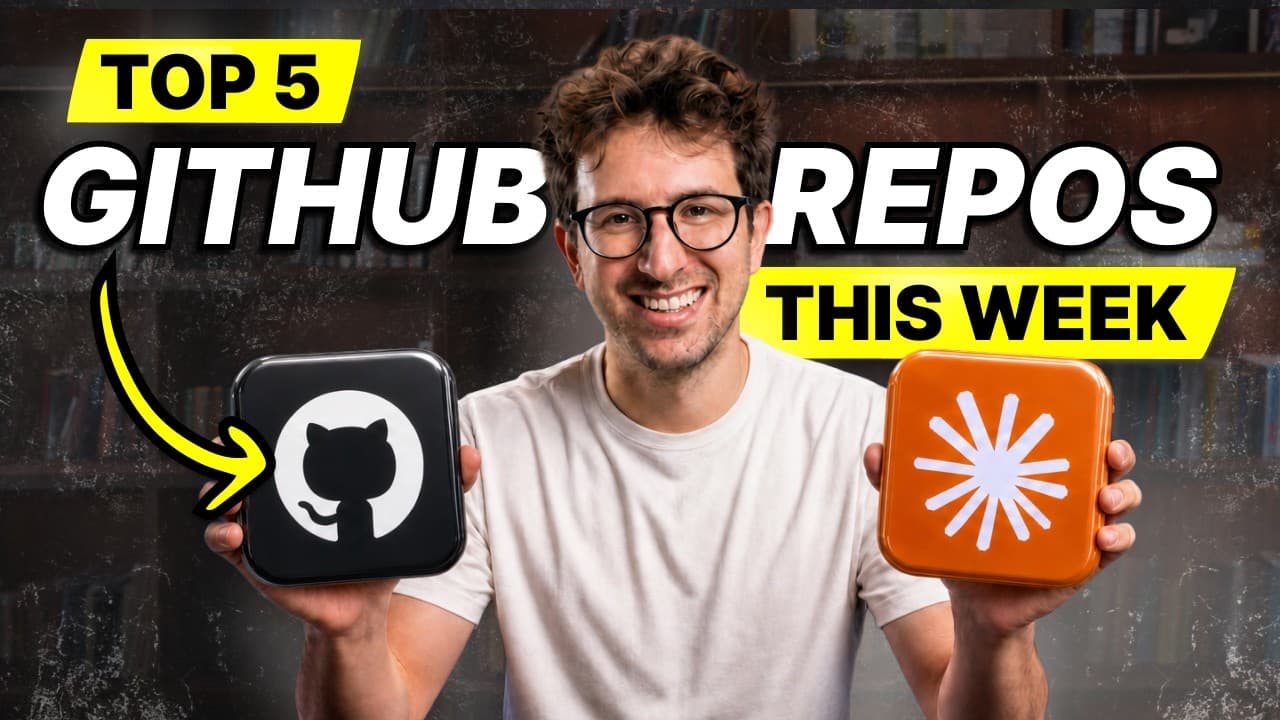
TL;DR
Start by installing one relevant open-source repository and proving one small workflow before deciding whether to productize it or keep it as personal leverage. The featured tools can preserve a writer's voice, maintain business relationships, automate repeatable video edits, inspect skills, or support phone-based workflows, although some require technical setup or paid dependencies.
Transcript
I don't know about you, but I've been spending a lot more time on GitHub lately. And there's a real reason behind it. I mean, it's turned into one of the best places to get an unfair advantage in the Agentic era because you're seeing the tools people will be talking about in 6 months today. A lot of the things that eventually become SAS companies, ... Read More
Key Insights
- GitHub is an early source of agentic tools that may later develop into SaaS products, agencies, workflows, and startup ideas. Monitoring repositories that are attracting attention can reveal practical tools before they become broadly discussed or packaged as commercial offerings.
- Open-source software is free to use at the code level, but its dependencies can still cost money. One featured repository depends on ElevenLabs, and other tools may require supporting services, integrations, or technical infrastructure before their complete workflows can operate.
- No AI Slop is an editing skill that identifies patterns associated with generic AI writing while trying to preserve the author's voice. Its purpose is not merely cleaner prose, but communication that feels more distinctive, believable, and worthy of a reader's trust.
- The strongest writing workflow begins with human ideas and uses AI for cleanup. A person first records the real points in a rough draft or outline, then asks the skill to remove recognizable AI patterns without sanding away the voice or interesting details.
- The TryComp AI CRM treats customer information as an active workspace for an agent instead of a passive filing cabinet. The agent can research people, enrich company details, schedule follow-ups, update notes, and help maintain a current relationship graph.
- A useful CRM pilot focuses on warm leads that cannot be forgotten. The pipeline can include people who showed buying intent, replied to an email, booked a call, asked about pricing, or requested contact again after a specific period.
- Video Use enables coding agents such as Claude Code or Codex to edit raw footage placed in a folder. The agent can remove filler words and dead space, add subtitles, apply color grading and overlays, render the result, and check its output.
- The recommended adoption process has three stages: install the repository, make one small workflow operate successfully, and decide whether to productize it or retain it as personal leverage. This approach tests practical value before expanding the implementation.
Install to Summarize YouTube Videos and Get Transcripts
Explore YouTube Video Summarizer or Get YouTube Transcript Extractor
Questions & Answers
Q: How can open-source GitHub repos create business leverage?
Open-source repositories can provide early access to tools and workflows that may later become SaaS products, agencies, or startup ideas. A builder can use them to automate repetitive work, preserve overlooked sales opportunities, improve content production, or test a product concept. The suggested approach is to prove one small workflow first, then decide whether it should become a commercial offering or remain an internal advantage.
Q: How does No AI Slop make AI-assisted writing sound human?
No AI Slop searches drafts for patterns that make writing feel generated, including overly polished, symmetrical, or formulaic phrasing. It edits those patterns while attempting to retain the author's actual voice. The recommended workflow is to create a rough draft or outline with genuine ideas first, then use the skill to clean the writing instead of asking AI to invent the entire message from scratch.
Q: Why can generic AI writing reduce trust and engagement?
Generic AI writing can feel polished yet impersonal, repetitive, or recognizable as machine-generated. Readers may not explicitly accuse the author of using AI, but they may trust the message less, keep scrolling, decline to reply, or doubt its claims. Because founders regularly write emails, posts, landing pages, updates, and onboarding copy, preserving a distinctive voice directly affects whether their communication feels believable.
Q: How do you install the No AI Slop skill?
The source recommends installing No AI Slop as a skill by using the command pattern "npx skills add" followed by the repository's GitHub link. After installation, it can be used within an agent workflow whenever a draft needs editing. The practical instruction is to provide a human-created draft and request removal of AI writing patterns while explicitly asking the tool to preserve the writer's voice.
Q: What makes an agentic CRM different from a normal CRM?
A normal CRM mainly stores names, email addresses, notes, and sometimes deal stages, while relying on people to maintain the records. The TryComp AI CRM is designed as a workspace where an agent can perform upkeep and relationship tasks. It can inspect records, research contacts, enrich company information, schedule follow-ups, and keep notes current instead of leaving all maintenance to the user.
Q: What is a good first workflow for the TryComp AI CRM?
A focused first workflow is a pipeline for warm leads that the business cannot afford to forget. It can include anyone who showed buying intent, answered an email, booked a call, asked about pricing, or promised to reconnect later. The agent can then identify who needs follow-up, suggest what to say, and research what has changed at the person's company since the previous conversation.
Q: How can coding agents automate repeatable video editing?
Video Use lets a creator place raw footage in a folder and ask a coding agent, such as Claude Code or Codex, to edit it. The workflow can remove filler words and dead space, add subtitles, apply color grading, create overlays, render the completed video, and check the output. Its central value is making a creator's recurring editing preferences understandable and repeatable by an agent.
Q: How should you evaluate one of these GitHub repositories?
Begin by installing one repository that addresses a specific need, then make one small workflow function successfully. Avoid treating the initial experiment as a complete business or a broad automation program. Once the narrow workflow proves useful, decide whether the solution addresses a problem worth productizing or whether it is more valuable as private leverage that saves time, improves output, or protects opportunities.
Summary & Key Takeaways
-
GitHub offers an early view of tools that may later become SaaS products, agencies, workflows, or startup ideas. The five selected repositories are free and open source, but they vary in technical complexity and may rely on paid services. Each can potentially save time, support product development, or create business opportunities.
-
No AI Slop edits drafts to remove formulaic AI patterns while preserving the writer's voice. The agentic CRM maintains records, enriches company information, schedules follow-ups, and updates notes. Video Use turns recurring editing preferences into workflows that coding agents can execute, including trimming silence, removing filler words, adding subtitles, and rendering outputs.
-
The recommended method is to install one repository, make one narrowly defined workflow work, and then evaluate its value. If the workflow solves a broader problem, it may become a product or service. If not, it can remain a private advantage that saves time or prevents valuable opportunities from being forgotten.
Read in Other Languages (beta)
Share This Summary 📚
Summarize YouTube Videos and Get Video Transcripts with 1-Click
Try YouTube Summary with ChatGPT & Claude or YouTube Transcript Generator
Explore More Summaries from Greg Isenberg 📚



Summarize YouTube Videos and Get Video Transcripts with 1-Click
Try YouTube Summary with ChatGPT & Claude or YouTube Transcript Generator