How to Grow a Mobile App With Creator Demos
TL;DR
Mobile apps grow when distribution shows the product solving a recognizable problem inside content people already want to watch. The founder tested formats himself, partnered with small creators who matched his audience, demonstrated the app naturally, and repeated successful concepts instead of relying on direct sales pitches or outsourcing discovery too early.
Transcript
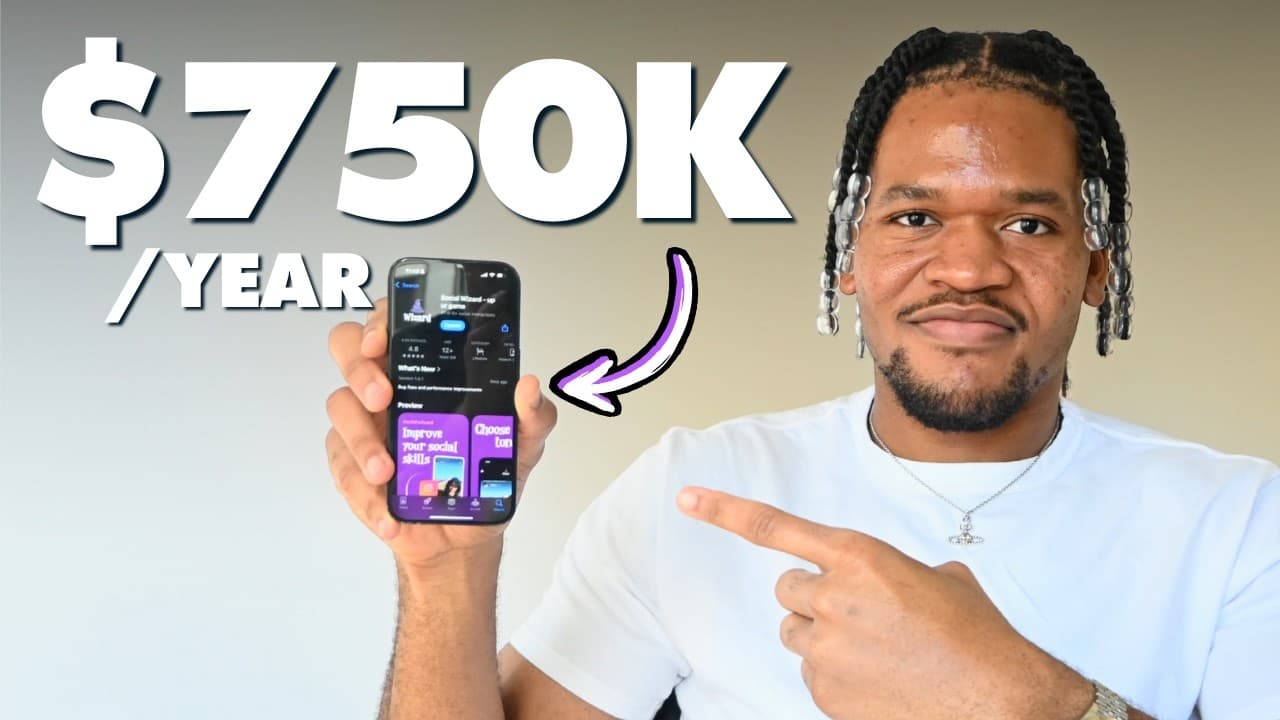
Within the last 12 months, I've built two apps that have generated 1.5 million in revenue. This is Kletchi, a 22-year-old from Nigeria who moved to the US with nothing but a dream to build a business. You know, I moved to the US with literally only $100 my name with his back against the wall in just a few months to prove himself. Kletchi built two ... Read More
Key Insights
- Distribution is as important as product development because a useful app cannot grow if potential users never encounter it. Kelechi argues that founders should determine how they will communicate and demonstrate the product instead of treating promotion as an afterthought.
- Social Wizard emerged from a problem Kelechi experienced personally. He wanted help composing messages, built an experimental AI-powered script, and recognized commercial potential only after friends showed unusual interest in using what he had created.
- Product validation can begin with informal user reactions. Kelechi's friends cared about the messaging tool before it became a polished product, giving him evidence that the use case was understandable and valuable enough to justify an App Store release.
- Effective app marketing shows the product completing a desirable task. The successful creator format presented a social media story, established the difficulty of composing a reply, and then used Social Wizard to generate a message within the flow of the content.
- A strong opening gives viewers a reason to stop scrolling. Kelechi's example began with an appealing social media image, then created curiosity about how the creator would respond, allowing the app demonstration to resolve a question already forming in the viewer's mind.
- Small creators can provide valuable audience alignment even without an established history of major viral success. Kelechi selected streamers who reached the desired audience, supplied them with a tested format, and used their natural content style to introduce the product.
- Creator outreach is a volume-driven process because many contacts may be required before finding a productive collaborator. Once one creator produces a useful example, that clip can serve as evidence when approaching additional creators and explaining the intended format.
- Founders should learn content creation directly before outsourcing it. Kelechi warns that delegating the entire discovery process can waste capital and prevent founders from understanding which hooks, demonstrations, creators, and audience responses actually drive distribution.
Install to Summarize YouTube Videos and Get Transcripts
Explore YouTube Video Summarizer or Get YouTube Transcript Extractor
Questions & Answers
Q: How did Kelechi find the idea for Social Wizard?
Kelechi found the idea through a personal need rather than formal market research. After a conversation with someone did not progress as he hoped, he searched the App Store for useful advice and found nothing suitable. He then built an AI-powered script that generated possible messages. When friends became interested in using it, he recognized that the tool could become a consumer app.
Q: How did Social Wizard attract users without traditional advertising?
Social Wizard attracted users through creator content that demonstrated the app inside an entertaining social scenario. A streamer would show a social media story, wonder how to respond, open the app, and generate a suggested message. Because viewers saw the problem and solution unfold naturally, the content communicated the product's value without depending on a conventional advertisement or an extended verbal explanation.
Q: Why does showing an app work better than directly selling it?
Showing an app lets viewers understand its function, context, and benefit through visible evidence. In the Social Wizard example, viewers first saw the difficulty of replying to a social media story and then watched the app produce a usable response. The demonstration answered the viewer's immediate question, so the product became part of the content rather than an unrelated sales interruption.
Q: How can founders identify a repeatable viral content format?
Founders can identify a repeatable format by producing content themselves, observing which concepts attract attention, and refining the elements that work. Kelechi did not begin with a guaranteed formula. He tested content until he found a promising structure, then gave that structure to relevant creators. Repetition across different clips and creators helped turn one effective demonstration into a broader distribution strategy.
Q: What should founders look for when choosing creators?
Founders should prioritize creators whose audiences match the product's intended users. Kelechi worked with small streamers who made the kind of content his target audience already watched, even though those creators had not consistently produced major viral moments. Audience fit, willingness to collaborate, and the ability to perform a proven content format mattered more than selecting creators solely by their apparent size.
Q: Should app founders create content themselves or hire creators?
The choice depends on whether the niche already has substantial content activity. Kelechi recommends working with established creators when a large volume of relevant content already exists. If the niche lacks that ecosystem, the founder should focus on producing content personally. Direct involvement is especially important during discovery because it helps the founder understand audience reactions before delegating or spending heavily.
Q: Why is creator outreach a volume-driven process?
Creator outreach is volume-driven because only a portion of contacted creators will respond, agree to collaborate, or produce content that works. Kelechi cautions against concluding that the strategy has failed after contacting only a small group. The immediate goal is to find one workable partnership and useful clip, which can then make later outreach easier by giving other creators a concrete example.
Q: What app growth playbook would Kelechi use when starting over?
Kelechi would begin by studying the niche and determining whether creators already produce a large amount of relevant content. He would then choose between creator partnerships and making content himself. Next, he would publish and test clips, search for formats that hold attention and demonstrate the product, and repeat successful concepts across additional creators instead of expecting the first attempt to work.
Summary & Key Takeaways
-
Kelechi developed Social Wizard after using an AI-powered script to generate messages for a personal conversation. Interest from friends showed that the underlying problem resonated with potential users. He then polished the concept into a mobile app that helps users respond to social media stories and begin conversations.
-
Initial sales were modest, so Kelechi spent several weeks experimenting with distribution. He discovered that creator clips worked when they opened with an attention-grabbing social situation, raised a question viewers naturally wanted answered, and presented the app as the practical solution without interrupting the entertainment with a conventional sales pitch.
-
Kelechi recommends evaluating whether a niche already has an active content ecosystem before choosing a distribution approach. Existing demand can support creator partnerships, while less-developed niches may require founders to make content themselves. In either case, founders should test repeatedly, learn directly from audience reactions, and scale formats that demonstrate value clearly.
Read in Other Languages (beta)
Share This Summary 📚
Summarize YouTube Videos and Get Video Transcripts with 1-Click
Try YouTube Summary with ChatGPT & Claude or YouTube Transcript Generator
Explore More Summaries from Starter Story 📚
Summarize YouTube Videos and Get Video Transcripts with 1-Click
Try YouTube Summary with ChatGPT & Claude or YouTube Transcript Generator