Habitable Exoplanets Debunked!
TL;DR
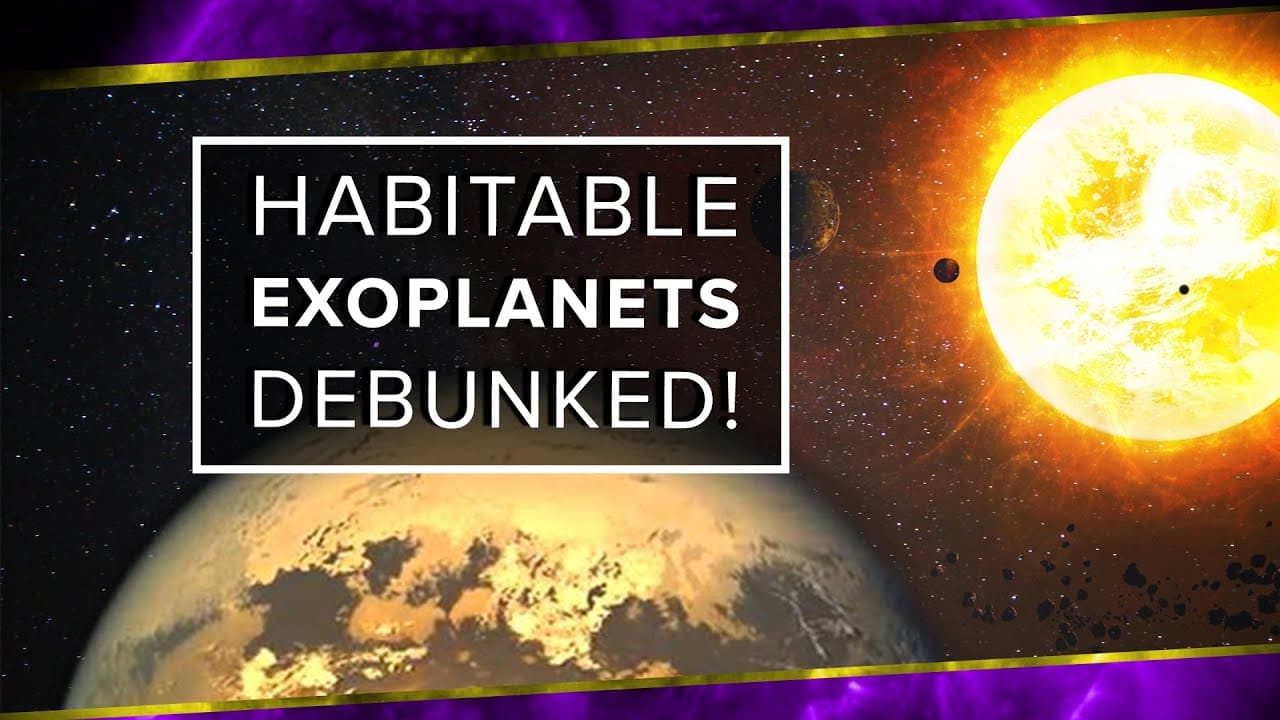
Exoplanets labeled as habitable may not truly be Earth-like.
Transcript
Every few months, the press describes some recently discovered exoplanet as the closest thing yet to Earth's twin. But how much like Earth are these planets really? And do we even have the ability yet to answer that question? [MUSIC PLAYING] Lots of headlines have touted the discovery of potentially habitable worlds, some of which might be Earth tw... Read More
Key Insights
- The term 'habitable exoplanet' often misleads the public, as it only refers to planets in the habitable zone, not necessarily Earth-like conditions.
- Artist renditions of exoplanets often depict them as Earth-like, but these are speculative and not based on actual observations.
- The habitable zone is a guideline for potential habitability, but many factors like atmosphere and surface conditions remain unknown.
- Current technology cannot accurately determine the atmospheres of Earth-sized exoplanets in the habitable zone, limiting our understanding of their habitability.
- The Kepler 186F exoplanet, despite being in the habitable zone, remains a mystery regarding its mass and atmospheric conditions.
- Direct imaging and transit spectroscopy are two methods used to study exoplanet atmospheres, each with significant limitations.
- A proposed Terrestrial Planet Finder could have provided more insight, but funding cuts halted its development.
- Public perception influenced by media may hinder funding and progress in identifying truly habitable exoplanets.
Install to Summarize YouTube Videos and Get Transcripts
Explore YouTube Video Summarizer or Get YouTube Transcript Extractor
Questions & Answers
Q: What does 'habitable exoplanet' mean to astronomers?
To astronomers, a 'habitable exoplanet' refers to a planet located in the habitable zone of its host star, where conditions might allow for liquid water on the surface. However, this does not guarantee Earth-like conditions, as the planet's atmosphere, surface, and other factors remain unknown.
Q: Why are artist renditions of exoplanets misleading?
Artist renditions of exoplanets often depict them as Earth-like, with solid surfaces and liquid water. These images are speculative and not based on actual data, as we currently lack the technology to observe these features directly. The public may be misled into thinking these planets are more Earth-like than they truly are.
Q: What are the limitations of current technology in studying exoplanets?
Current technology cannot accurately determine the atmospheres of Earth-sized exoplanets in the habitable zone. Methods like direct imaging and transit spectroscopy have limitations, such as the difficulty in isolating a planet's light from its star. This restricts our ability to assess the true habitability of these planets.
Q: What is the significance of the Kepler 186F exoplanet?
Kepler 186F gained attention as the first confirmed Earth-sized exoplanet in its star's habitable zone. Despite this, its true nature remains uncertain, as we cannot determine its mass or atmospheric conditions due to its distance and current technological limitations. It highlights the challenges in studying potentially habitable exoplanets.
Q: How do direct imaging and transit spectroscopy work?
Direct imaging involves blocking a star's light to see the planet, effective for planets in large orbits. Transit spectroscopy measures the combined light of a star and planet during transit to determine atmospheric composition. Both methods have limitations, especially for Earth-sized planets in the habitable zone, due to contrast and distance issues.
Q: What happened to the Terrestrial Planet Finder (TPF) project?
The Terrestrial Planet Finder was a proposed space telescope designed to analyze the atmospheres of Earth-sized planets in Earth-like orbits. Despite its potential to advance our understanding of exoplanet habitability, funding for the TPF was cut, halting its development and leaving a gap in our observational capabilities.
Q: Why is public perception important in exoplanet research?
Public perception, influenced by media portrayal, can significantly impact funding and support for scientific missions. Misleading headlines suggesting we have already found Earth-like planets may reduce urgency and public interest in funding further research, which is essential for advancing our understanding of exoplanet habitability.
Q: What is the role of the habitable zone in exoplanet studies?
The habitable zone serves as a guideline for identifying planets that might support liquid water, a key factor for life as we know it. However, being in the habitable zone does not guarantee habitability, as other factors like atmosphere and surface conditions are crucial and currently beyond our full understanding with existing technology.
Summary & Key Takeaways
-
The concept of a habitable exoplanet is often misunderstood, as it merely indicates a planet's position within the habitable zone of its star, without confirming Earth-like conditions.
-
Technological limitations currently prevent scientists from accurately determining the atmospheric conditions of Earth-sized exoplanets within the habitable zone, leaving their true habitability uncertain.
-
Efforts to identify potentially habitable exoplanets are crucial, but media portrayal can mislead the public, affecting funding and progress in the search for Earth-like planets.
Read in Other Languages (beta)
Share This Summary 📚
Summarize YouTube Videos and Get Video Transcripts with 1-Click
Try YouTube Summary with ChatGPT & Claude or YouTube Transcript Generator
Explore More Summaries from PBS Space Time 📚



Summarize YouTube Videos and Get Video Transcripts with 1-Click
Try YouTube Summary with ChatGPT & Claude or YouTube Transcript Generator