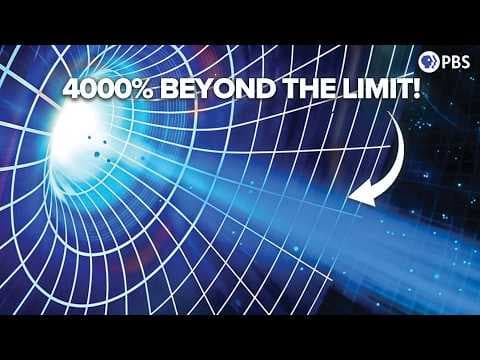
First Detection of Light from Behind a Black Hole
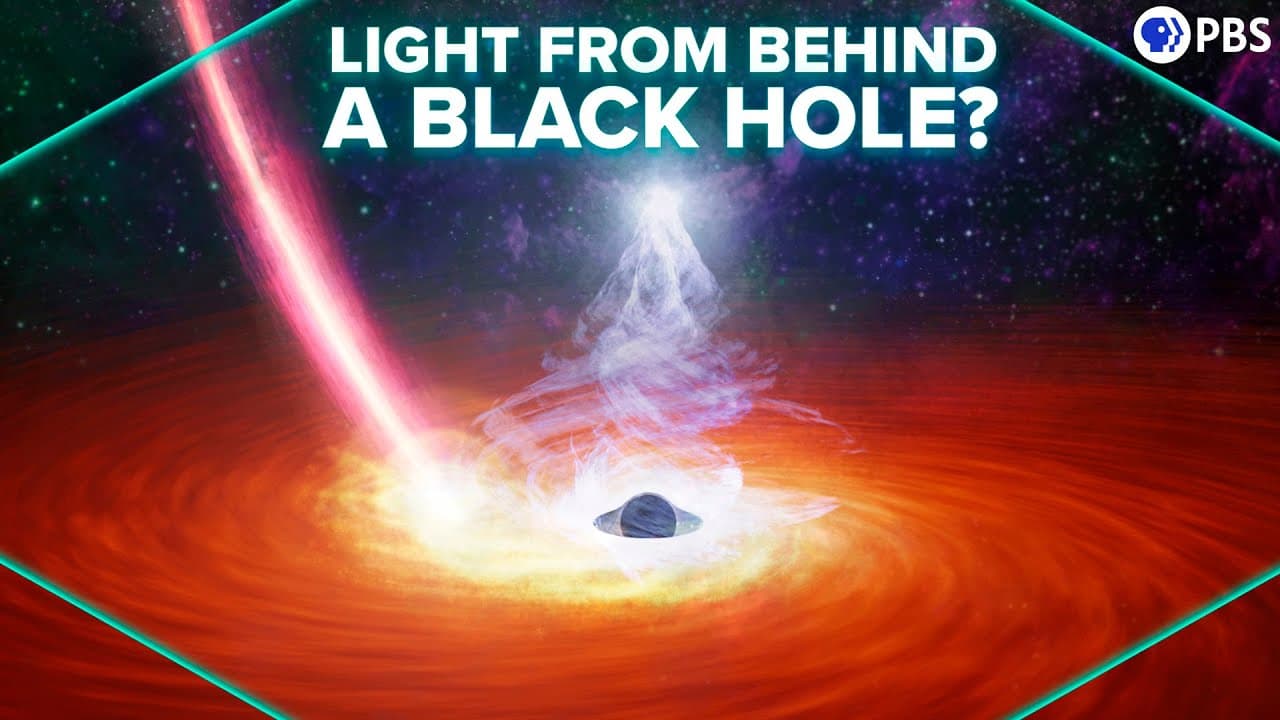
TL;DR
Astronomers detect light from behind a black hole using reverberation mapping.
Transcript
Thank you to Blinkist for supporting PBS. How do you see the unseeable - how do you explore the inescapable? Our cleverest astronomers have figured out ways to catch light that skims the very edge of black holes. Let’s find out what they learned. A few weeks ago a story made the rounds of pop-sci media proclaiming that for the first time light had ... Read More
Key Insights
- Astronomers have detected light from behind a black hole for the first time, using a technique called reverberation mapping.
- Reverberation mapping involves observing how light flares from violent events near black holes reflect and travel through quasars.
- The detection was made near a supermassive black hole in the Seyfert galaxy I Zwicky 1, approximately 100 million light years away.
- The flare of light was analyzed in three phases, showing evidence of gravitational lensing by the black hole's field.
- The X-ray corona, a region of high-energy electrons surrounding the black hole, played a crucial role in boosting light to X-ray energies.
- The observed light suggests an outflow of gas, with evidence of a rotational component in the iron-laced wind.
- This discovery helps in understanding the dynamics of gas around black holes and supports Einstein's theory of relativity.
- Future telescopes, like the Vera Rubin Observatory, will enhance the study of quasars and black holes by observing millions simultaneously.
Install to Summarize YouTube Videos and Get Transcripts
Explore YouTube Video Summarizer or Get YouTube Transcript Extractor
Questions & Answers
Q: What technique was used to detect light from behind the black hole?
The technique used is called reverberation mapping. It involves observing how light flares from violent events near black holes reflect and travel through the complex structure of quasars. This method allows astronomers to untangle information about the black hole and its surrounding environment from the light that reaches us.
Q: Where was the light detected from behind a black hole?
The light was detected near a supermassive black hole in the Seyfert galaxy I Zwicky 1, which is approximately 100 million light years away. This detection showcases the ability to study the dynamics and environment around black holes that are relatively close in cosmic terms.
Q: What role did the X-ray corona play in the detection?
The X-ray corona, a region of high-energy electrons surrounding the black hole, played a crucial role by boosting the energy of light passing through it to X-ray energies. This high-energy light was essential in observing the flare and understanding the dynamics of gas around the black hole, leading to the successful detection of light from behind it.
Q: How does this discovery support Einstein's theory of relativity?
The discovery supports Einstein's theory of relativity by demonstrating gravitational lensing, where light from the accretion disk is bent around the black hole due to its strong gravitational field. This effect, predicted by general relativity, was observed in the distinct phases of the flare, providing empirical evidence for the theory's predictions about the behavior of light in extreme gravitational fields.
Q: What future advancements are expected in the study of quasars and black holes?
Future advancements in the study of quasars and black holes are expected with the development of new telescopes like the Vera Rubin Observatory. These instruments will enable astronomers to observe millions of quasars simultaneously, providing deeper insights into the behavior of these objects and enhancing our understanding of the dynamics around black holes.
Q: What evidence suggests an outflow of gas near the black hole?
The evidence for an outflow of gas near the black hole comes from the observed light's phases, where the blue side of the iron line varied before the red side. This suggests that the gas is moving outward, with a rotational component in the iron-laced wind, as the blue-shifted light indicates gas moving towards us more quickly than the red-shifted light.
Q: What is the significance of the iron K-alpha line in this study?
The iron K-alpha line is significant because it is a specific X-ray wavelength emitted by iron atoms near the black hole. This line helps identify the presence and motion of iron-laced winds around the black hole, providing crucial information about the dynamics and composition of the gas in this region, which contributes to understanding the environment around supermassive black holes.
Q: How does reverberation mapping help distinguish between different gas motion scenarios?
Reverberation mapping helps distinguish between different gas motion scenarios by analyzing how light flares reverberate through the gas around a black hole. By observing the timing and sequence of light responses from different regions, astronomers can infer whether gas is falling into the black hole, being blasted out, or swirling around, as each scenario produces distinct patterns in the emitted light.
Summary & Key Takeaways
-
Astronomers have detected light from behind a black hole for the first time using reverberation mapping. This technique analyzes how light flares from violent events near black holes travel and reflect through quasars, offering insights into the dynamics of gas and supporting Einstein's theory of relativity.
-
The discovery was made near the supermassive black hole in the Seyfert galaxy I Zwicky 1, approximately 100 million light years away. The detection involved analyzing a flare in three phases, showing evidence of gravitational lensing by the black hole's field, and suggesting an outflow of gas with a rotational component.
-
The X-ray corona, a region of high-energy electrons surrounding the black hole, boosted light to X-ray energies. Future telescopes like the Vera Rubin Observatory will enhance the study of quasars and black holes by observing millions simultaneously, deepening our understanding of these cosmic phenomena.
Read in Other Languages (beta)
Share This Summary 📚
Summarize YouTube Videos and Get Video Transcripts with 1-Click
Try YouTube Summary with ChatGPT & Claude or YouTube Transcript Generator
Explore More Summaries from PBS Space Time 📚
Summarize YouTube Videos and Get Video Transcripts with 1-Click
Try YouTube Summary with ChatGPT & Claude or YouTube Transcript Generator