What Were the Fish Wars and Why Did They Matter? | Crash Course Native American History, Ep. 9
TL;DR
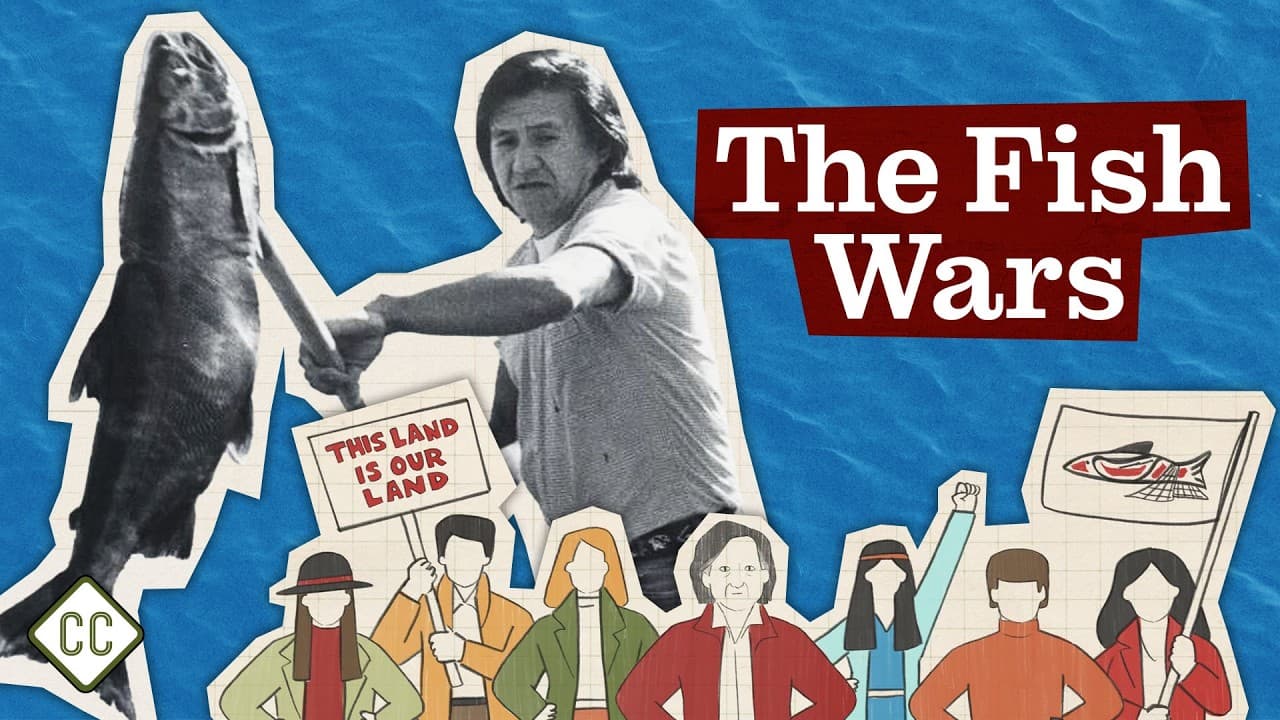
The Fish Wars were protests and legal battles in the Pacific Northwest over Native nations’ treaty-protected right to fish in their traditional waters. Nisqually activist Billy Frank Jr. was first arrested at age fourteen in 1945 and later arrested at least fifty more times. The 1974 Boldt Decision affirmed Native nations’ right to 50% of Washington’s harvestable fish catch. Read on to understand how fishing, food sovereignty, and Native self-governance are connected.
Transcript
On a dark winter night in 1945, a shout rang out on the banks of the Nisqually River: “You’re under arrest.” Billy Frank Jr.— just fourteen at the time—called back, “Leave me alone! [...] I live here!” before being hauled off to a holding cell. He didn’t know it then, but his arrest was one of the earliest battles in what would later be known as “... Read More
Key Insights
- Billy Frank Jr. was a key figure in the Fish Wars, arrested multiple times for fishing in traditional waters.
- Food sovereignty is the right of Native nations to govern their traditional food systems.
- Colonization led to the loss of 99% of Native lands, disrupting traditional food practices.
- The U.S. government used buffalo eradication to force Native land cessions.
- The Boldt Decision of 1974 affirmed Native fishing rights to 50% of the harvestable catch.
- Frybread, a Native staple, originated from government rations during forced relocations.
- Modern Native food initiatives aim to restore traditional food practices and sovereignty.
- The state of Washington now co-manages salmon resources with Native Nations.
Install to Summarize YouTube Videos and Get Transcripts
Explore YouTube Video Summarizer or Get YouTube Transcript Extractor
Questions & Answers
Q: What were the Fish Wars and why did they matter?
The Fish Wars were protests and legal battles over Pacific Northwest Native nations’ treaty-protected right to fish in their traditional waters. Native fishers faced arrests, threats, and harassment even though their treaties with the U.S. government preserved those rights. The movement mattered because the 1974 Boldt Decision affirmed their right to 50% of Washington’s harvestable fish catch.
Q: What caused the Fish Wars?
In the mid-19th century, the Nisqually and other Native nations ceded millions of acres in what is now Washington State while retaining the right to fish as they always had. By the mid-20th century, salmon populations were collapsing after decades of logging, mining, commercial fishing, and other human activity. State enforcement then disproportionately targeted Native fishing on riverbanks, even though Native nets took less than 5% of the annual catch.
Q: What role did Billy Frank Jr. play in the Fish Wars?
Billy Frank Jr., a member of the Nisqually Nation, became a central figure in the Fish Wars through nonviolent resistance. He was first arrested in 1945 at age fourteen while checking his fishing nets on the Nisqually River. He was later handcuffed at least fifty more times and inspired dozens of others to join him.
Q: What did the 1974 Boldt Decision establish?
The 1974 Boldt Decision upheld Native treaty fishing rights in Washington State. It affirmed that Native nations were entitled to 50% of the harvestable fish catch. The ruling was a landmark victory following years of protests, arrests, and legal conflict.
Q: What is food sovereignty for Native nations?
Food sovereignty is the right of Native nations to use the foods that have sustained their communities since time immemorial. It is a form of self-governance tied to culturally defined beliefs, practices, and relationships with traditional foods. For the Nisqually, salmon were gifts from the Creator that had to be honored and protected.
Q: How did colonization disrupt Native food systems?
Over just more than 300 years, Native nations lost 99% of the lands where they had hunted, fished, gathered, and grown food. Federal boarding schools separated Native children from their families, languages, traditions, and foods, while often feeding them low-quality rations. Settlers also exploited traditional food sources through activities such as commercial fishing and mass buffalo hunting.
Q: How did the destruction of buffalo affect Native nations?
At least 30 million buffalo roamed the plains in the early 19th century, but fewer than 100 likely remained in the wild by 1887. Their destruction eliminated a traditional food source and devastated the way of life of peoples such as the Great Sioux, or Pte Oyate, meaning “Buffalo Nation.” The U.S. government understood that starvation could pressure Native people to sign treaties and surrender land.
Q: How are salmon resources managed in Washington State today?
Washington State now co-manages salmon resources with Native Nations. This collaborative arrangement reflects recognition of Native treaty rights and the nations’ continuing role in protecting salmon. It represents progress from the period when state enforcement disproportionately targeted Native fishers on riverbanks.
Summary & Key Takeaways
-
The Fish Wars were a pivotal movement for Native American treaty rights in the Pacific Northwest, led by figures like Billy Frank Jr. Despite facing arrests and violence, activists successfully highlighted the importance of food sovereignty. The 1974 Boldt Decision was a landmark victory, affirming the right of Native nations to half the fish catch, symbolizing broader struggles for sovereignty.
-
Food sovereignty is crucial for Native communities, linking cultural identity and health. Colonization severely disrupted traditional food systems, as seen with the buffalo's near extinction. The Fish Wars underscored these issues, with Native activists fighting for their rights to fish and sustain their communities, amidst environmental and legal challenges.
-
Modern initiatives continue to address the legacy of disrupted food systems, with projects promoting traditional practices and education. Native chefs and food projects work to restore and celebrate indigenous foodways. The collaborative management of resources like salmon in Washington exemplifies progress towards respecting Native sovereignty and environmental stewardship.
Read in Other Languages (beta)
Share This Summary 📚
Summarize YouTube Videos and Get Video Transcripts with 1-Click
Try YouTube Summary with ChatGPT & Claude or YouTube Transcript Generator
Explore More Summaries from CrashCourse 📚





Summarize YouTube Videos and Get Video Transcripts with 1-Click
Try YouTube Summary with ChatGPT & Claude or YouTube Transcript Generator