Could your brain repair itself? - Ralitsa Petrova
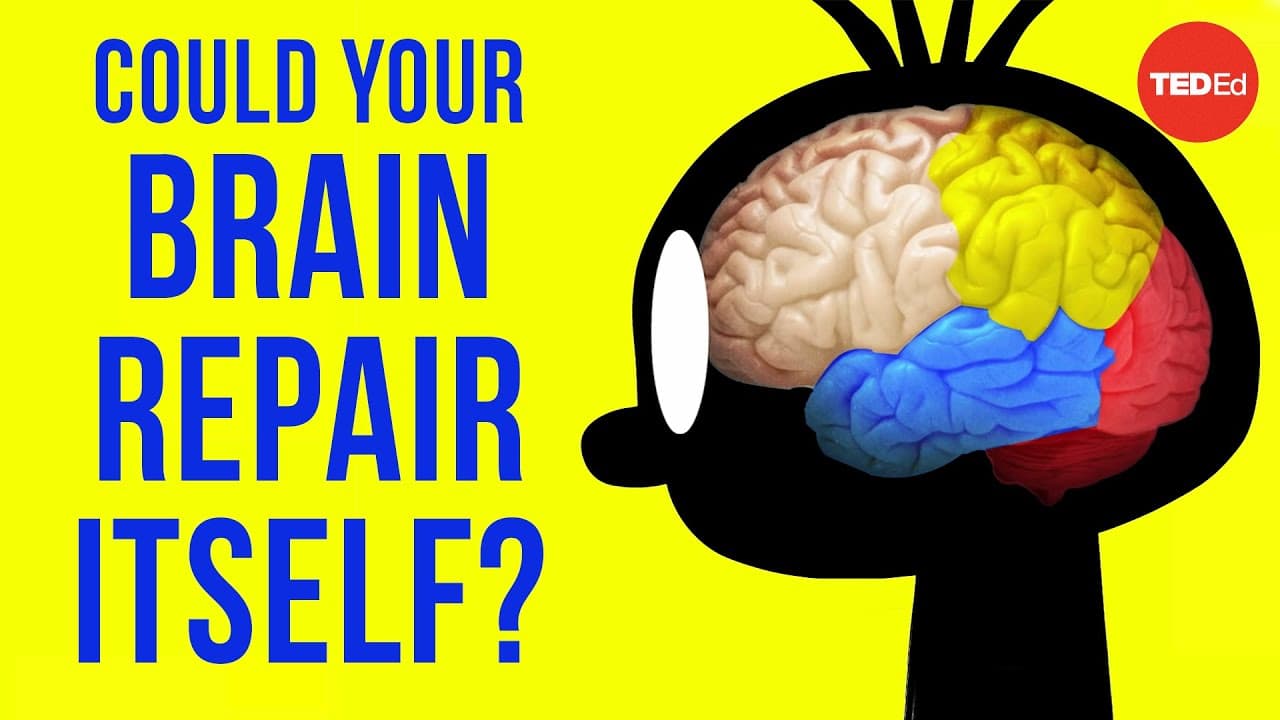
TL;DR
The adult brain may be able to repair some damage by producing new neurons, but scientists cannot yet say whether full self-repair will become possible. Neurogenesis occurs in at least three specialized regions: the dentate gyrus, subventricular zone, and striatum. Researchers are testing proteins, transplanted neural stem cells, and reprogrammed brain cells to expand this capacity, making the details worth reading on.
Transcript
Imagine the brain could reboot, updating its withered and damaged cells with new, improved units. That may sound like science fiction, but it's a potential reality scientists are investigating right now. Will our brains one day be able to self-repair? It's well known that embryonic cells in our young developing brains produce new neurons, the micr... Read More
Key Insights
- 🧠 Neurogenesis, the production of new neurons in the adult brain, occurs in three specialized regions: the dentate gyrus, the subventricular zone, and the striatum.
- 🧠 The role of neurogenesis in these regions and why it is absent elsewhere in the brain is still not fully understood.
- 🤗 The ability to harness neurogenesis for self-repair opens up possibilities for treating neurological diseases and brain injuries.
- 🤳 Current research focuses on improving the efficiency and survival of newly produced cells in order to enhance the potential for self-repair.
- 🧠 Transplanting healthy neural stem cells may offer a promising approach to regenerate damaged brain tissue.
- 🧠 Astrocytes and oligodendrocytes, other types of brain cells, could potentially be transformed to behave like neural stem cells to generate neurons.
- 💨 Regenerative medicine aims to uncover ways to promote self-repair in the brain, but it may take a couple of decades to achieve significant progress.
Install to Summarize YouTube Videos and Get Transcripts
Explore YouTube Video Summarizer or Get YouTube Transcript Extractor
Questions & Answers
Q: Could your brain repair itself?
The adult brain has a limited capacity to produce new neurons, creating the possibility of repairing some damaged tissue. Scientists cannot yet say whether brains will achieve broader self-repair, but making that possible is a major goal of regenerative medicine.
Q: What is neurogenesis?
Neurogenesis is the process through which neural stem cells and progenitor cells produce new neurons or replace old ones. Scientists have found that this process continues in at least three specialized locations in the adult brain.
Q: Where does neurogenesis occur in the adult brain?
Neurogenesis has been discovered in the dentate gyrus, the subventricular zone, and the striatum. The dentate gyrus is associated with learning and memory, the subventricular zone may supply neurons to the olfactory bulb, and the striatum helps manage movement.
Q: How did neurogenesis change scientists’ understanding of the adult brain?
Scientists previously thought brain-cell production stopped abruptly after the brain’s initial development. Discovering new-cell production in adult brains challenged the belief that damage from neurological diseases, strokes, and similar events must always be irreversible.
Q: Can proteins stimulate the brain to produce more neurons?
Certain proteins and small molecules that mimic them can be administered to make neural stem cells and progenitor cells produce more neurons in the three known neurogenic regions. The technique still needs improvement so cells reproduce more efficiently and more of them survive.
Q: Can newly produced brain cells move to an injured area?
Research shows that progenitor cells from neurogenic regions can migrate to places where injury has occurred. Once there, they can give rise to new neurons, suggesting a possible route for repairing damaged tissue.
Q: Could transplanted neural stem cells repair damaged brain tissue?
Researchers are exploring the transplantation of healthy human neural stem cells cultured in a laboratory into injured brain tissue. Experiments are testing whether donor cells can divide, differentiate, and successfully generate new neurons in the damaged brain.
Q: Can other brain cells be taught to generate neurons?
Scientists have found that astrocytes and oligodendrocytes might be taught to behave like neural stem cells. If this approach succeeds, these cells could begin generating neurons and potentially expand the brain’s limited repair capacity.
Summary & Key Takeaways
-
Scientists have recently discovered that adult brains can produce new cells in three specialized locations through a process called neurogenesis.
-
These regions include the dentate gyrus, associated with learning and memory, the subventricular zone, which may supply neurons to the olfactory bulb, and the striatum, involved in movement.
-
Further research is being conducted to understand the role of neurogenesis and potentially use it to promote healing in the brain.
Read in Other Languages (beta)
Share This Summary 📚
Summarize YouTube Videos and Get Video Transcripts with 1-Click
Try YouTube Summary with ChatGPT & Claude or YouTube Transcript Generator
Explore More Summaries from TED-Ed 📚






Summarize YouTube Videos and Get Video Transcripts with 1-Click
Try YouTube Summary with ChatGPT & Claude or YouTube Transcript Generator