How to Lead and Inspire Others Effectively
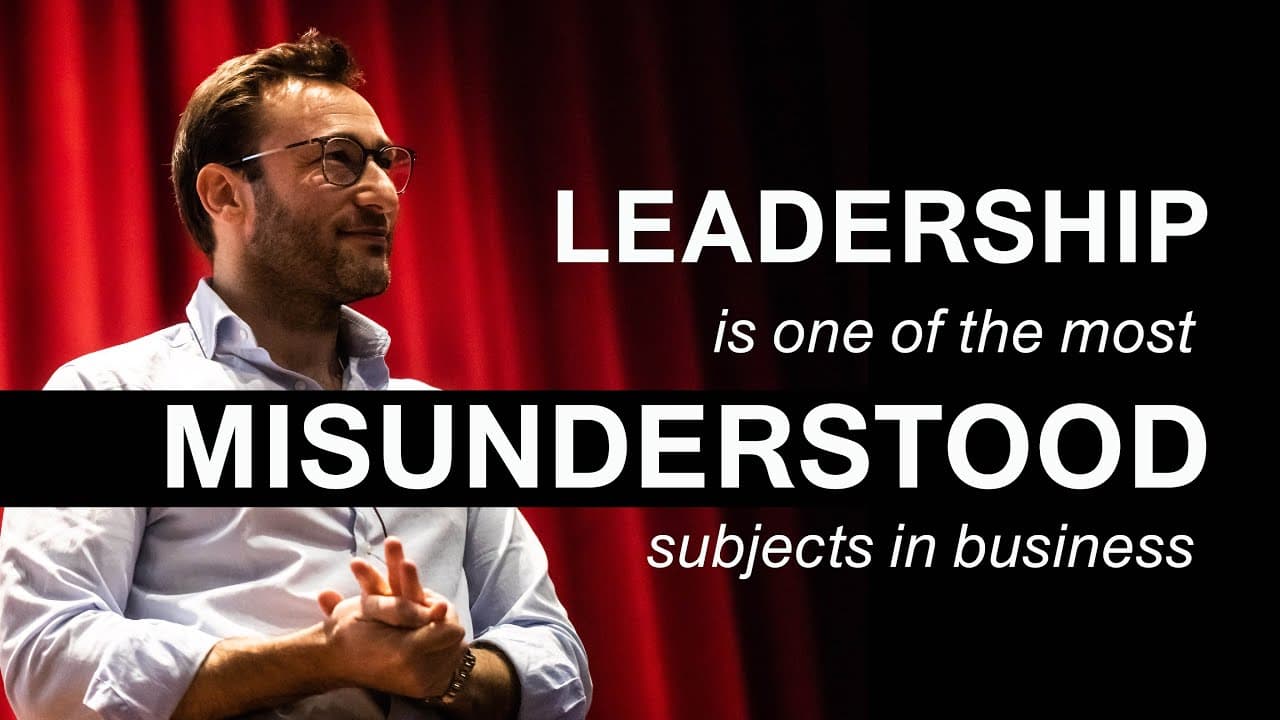
TL;DR
Effective leadership involves setting goals within a purpose-driven framework, building trust, and understanding the difference between finite and infinite games. Leaders should focus on the growth and well-being of their team members, fostering an environment of continuous improvement and innovation. Empathy and relationship-building are crucial for sustaining long-term success and engagement.
Transcript
welcome pleasure to see you Patrice how are you I'm very good I'm very good so we're about roughly 6 000 people listening to us so I have few questions if you may I hope that uh they will like give a lot of uh value for them so of course Simon let's start by referring to one of your best sellers um to start with why all gratitude Inspire everyone t... Read More
Key Insights
- Leadership is not about rank or hierarchy but about the responsibility to help those around us rise.
- Sales goals should align with a company's higher purpose, not just be treated as the end goal.
- Empathy in leadership involves seeing team members as human beings, not just as part of a machine.
- Building trust requires more effort in a virtual environment; prescriptive actions like regular check-ins can help.
- Good leaders are students of leadership, constantly learning and improving their skills.
- Diversity in teams brings new perspectives and solutions, enhancing problem-solving capabilities.
- Infinite games, like business, have no end; the goal is continuous improvement and adaptation.
- Engagement and retention are driven by how employees feel about their jobs, not just financial incentives.
Install to Summarize YouTube Videos and Get Transcripts
Explore YouTube Video Summarizer or Get YouTube Transcript Extractor
Questions & Answers
Q: How can leaders balance sales targets with a purpose-driven mindset?
Leaders can balance sales targets with a purpose-driven mindset by aligning goals with the company's higher purpose. Sales targets should not be seen as the ultimate objective but as part of a broader mission to serve customers and society. By focusing on purpose, leaders can inspire their teams to find meaning in their work and achieve success beyond just meeting targets.
Q: What role does empathy play in effective leadership?
Empathy plays a crucial role in effective leadership by allowing leaders to see their team members as human beings, not just as part of a machine. Empathetic leaders build trust and loyalty by genuinely caring for their team's well-being, leading to higher engagement and performance. Empathy involves open communication, understanding individual needs, and supporting personal and professional growth.
Q: How can companies foster innovation and continuous improvement?
Companies can foster innovation and continuous improvement by encouraging a culture of learning and experimentation. This involves providing training and development opportunities, rewarding creative problem-solving, and promoting diverse perspectives. Leaders should create an environment where employees feel safe to take risks and share new ideas, recognizing that innovation is essential for long-term success.
Q: What is the difference between finite and infinite games in business?
Finite games have known players, fixed rules, and a clear endpoint, like sports. Infinite games, like business, have no defined end, with changeable rules and players. The goal in infinite games is to continue playing and improving. In business, this means focusing on long-term growth and adaptation, rather than short-term wins, recognizing that success is an ongoing journey.
Q: How can leaders build trust in a virtual environment?
Building trust in a virtual environment requires intentional efforts to foster human connections. Leaders can implement regular check-ins focused on personal well-being, encourage open communication, and use technology to maintain relationships. Virtual team-building activities and informal interactions can help replicate the spontaneous connections of in-person work, ensuring team members feel valued and supported.
Q: Why is diversity important in leadership and team building?
Diversity in leadership and team building brings a range of perspectives and experiences, enhancing problem-solving and innovation. Diverse teams can approach challenges with varied insights, leading to more creative and effective solutions. Leaders should actively seek to build diverse teams, recognizing the value of different backgrounds in driving business success and fostering an inclusive workplace culture.
Q: How can leaders encourage employee engagement and retention?
Leaders can encourage employee engagement and retention by creating a supportive environment where employees feel valued and heard. This involves offering opportunities for personal and professional growth, recognizing achievements, and fostering a sense of purpose. Leaders should focus on building strong relationships, providing meaningful work, and ensuring that employees see a clear path for advancement within the organization.
Q: What strategies can leaders use to adapt to the post-COVID work environment?
In the post-COVID work environment, leaders should balance flexibility with maintaining team cohesion. This includes offering hybrid work options, ensuring regular communication, and fostering a culture of trust and accountability. Leaders should focus on well-being, providing support for mental health, and encouraging work-life balance. Embracing technology for collaboration while maintaining personal connections will be key to navigating this new landscape.
Summary & Key Takeaways
-
Effective leadership balances meeting sales targets with a purpose-driven mindset. Goals should be seen as part of an ongoing lifestyle rather than finite achievements. Empathy and relationship-building are key to sustaining trust and engagement.
-
Leadership is about helping others rise, regardless of rank. Good leaders foster growth through continuous learning and empathy, creating a supportive environment where team members feel valued and motivated.
-
Businesses operate in an infinite game, requiring constant adaptation and improvement. Leaders should focus on building diverse teams and fostering innovation, recognizing that success is an ongoing journey rather than a fixed destination.
Read in Other Languages (beta)
Share This Summary 📚
Summarize YouTube Videos and Get Video Transcripts with 1-Click
Try YouTube Summary with ChatGPT & Claude or YouTube Transcript Generator
Explore More Summaries from Simon Sinek 📚





Summarize YouTube Videos and Get Video Transcripts with 1-Click
Try YouTube Summary with ChatGPT & Claude or YouTube Transcript Generator