How Does Animal Farming Increase Pandemic Risk?
TL;DR
Pandemic risk can be reduced by closing live-animal markets, limiting the wild-animal trade, and reforming intensive animal agriculture. Crowding thousands of stressed animals in waste-filled, poorly ventilated sheds creates favorable conditions for pathogens to spread and change, while the history discussed here links several major infectious diseases to human interactions with animals.
Transcript
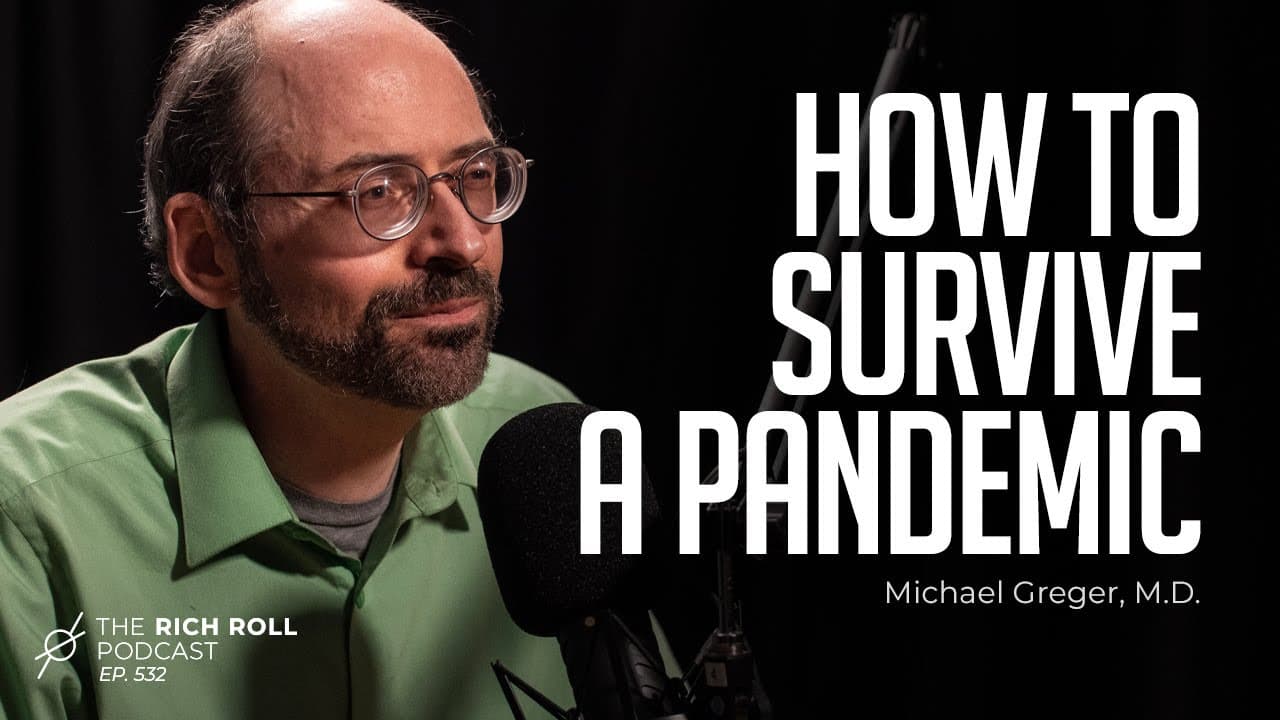
hey everybody welcome to the podcast my guest today is dr. Michael Greger making his fourth appearance on the show most people know Michael as a nutrition expert he's the man behind such best-selling books as how not to die and how not to diet as well as the founder of nutritionfacts.org less well-known is the fact that earlier in his medical caree... Read More
Key Insights
- Human pathogens are emerging from animals at a rate described as unprecedented in human history. The examples given include HIV from butchering primates, mad cow disease from feeding animal material to cattle, and coronavirus outbreaks associated with exotic live-animal markets.
- H7N9 bird flu is identified as the CDC's leading candidate for a pandemic after COVID-19. Greger describes it as having a 40 percent fatality rate and being 100 times deadlier than COVID-19, making its potential global spread especially alarming.
- The 1918 influenza pandemic had a reported fatality rate of 2 percent. Greger uses that historical comparison to illustrate how much more devastating a virus with a 40 percent fatality rate could be if billions of people became infected.
- Pandemic prevention is partly a matter of changing human relationships with animals. Closing live-animal markets and limiting wildlife trade could reduce future coronavirus risks, while reforming domestic animal agriculture could help prevent another influenza pandemic.
- Industrial animal facilities are breeding grounds for disease because they combine thousands of animals, overcrowding, accumulated waste, stress, ammonia, insufficient fresh air, and insufficient sunlight. These conditions weaken animals and facilitate the emergence and spread of dangerous pathogens.
- Influenza begins as an innocuous waterborne virus in waterfowl. When it enters land-based birds such as chickens, it must adapt to a new transmission environment, potentially changing into an airborne virus that infects the lungs and poses greater risks to terrestrial mammals.
- Live-animal markets can bring ducks and chickens into close proximity. This contact gives influenza viruses opportunities to move from aquatic birds, where they spread through a fecal-oral route, into terrestrial birds that require the virus to find a different means of transmission.
- Viral virulence is normally constrained by the need to keep hosts mobile enough to transmit infection. Extreme crowding removes part of that constraint because even severely ill or immobilized animals can pass a pathogen to another animal positioned immediately beside them.
Install to Summarize YouTube Videos and Get Transcripts
Explore YouTube Video Summarizer or Get YouTube Transcript Extractor
Questions & Answers
Q: How does intensive animal farming increase pandemic risk?
Intensive animal farming places thousands of animals in crowded, waste-filled sheds where pathogens can spread rapidly. Greger identifies several contributing conditions: stress that impairs immune defenses, ammonia from decomposing waste that damages lungs, insufficient fresh air, and insufficient sunlight. Close confinement also allows a pathogen to transmit even when an infected animal becomes severely ill or immobilized.
Q: What changes could help prevent future pandemics?
Closing live-animal markets and reducing the wild-animal trade could lower the risk of future coronavirus outbreaks, according to Greger. He also argues that reforming how domestic animals are raised for food could help prevent future influenza pandemics. These measures target environments where susceptible species mix, pathogens spread quickly, and viruses gain opportunities to adapt to new hosts.
Q: Why are live-animal markets associated with influenza risk?
Live-animal markets can place waterfowl and land-based birds such as chickens together. Influenza exists harmlessly in waterfowl as a waterborne virus that multiplies in the intestinal wall and spreads through a fecal-oral route. After entering chickens, the virus faces a different environment and may adapt toward airborne transmission involving the lungs, increasing its relevance to terrestrial mammals.
Q: What is H7N9 bird flu, and why is it concerning?
H7N9 is described by Greger as the CDC's leading candidate for the pandemic that could follow COVID-19. He reports that it has a 40 percent fatality rate and is 100 times deadlier than COVID-19. His concern is that a virus with that level of lethality could produce catastrophic consequences if it acquired the capacity for broad global transmission.
Q: How did the 2009 swine flu pandemic originate?
Greger says the 2009 swine flu pandemic arose largely from industrial pig operations in the United States, rather than from a remote live-animal market in Asia. He describes the virus as a hybrid containing genes from human, pig, and avian influenza viruses. It was sufficiently unfamiliar to human immune systems to spread globally and later remained as seasonal flu.
Q: Why can crowding make animal viruses more virulent?
Viruses ordinarily face a balance between virulence and transmissibility because killing or immobilizing a host can limit opportunities for spread. In densely confined animal populations, that restriction weakens. A pathogen can make an animal severely ill and still reach another host nearby. Greger compares the setting to placing a thousand pigs in an elevator when one of them sneezes.
Q: Which major diseases are linked to animal exposure in the discussion?
The discussion links HIV to the butchering of primates and the African bushmeat trade, mad cow disease to practices that made cattle consume animal material, and SARS and COVID-19 to exotic live-animal markets. It also traces the 2009 swine flu pandemic to industrial pig operations, showing that risks can arise from both wildlife commerce and domestic agriculture.
Q: How does influenza change when it moves from ducks to chickens?
Influenza is described as a harmless aquatic virus in ducks and other waterfowl, where it multiplies in the intestinal wall and spreads through water by a fecal-oral route. Chickens do not move between ponds, so the virus must adapt or disappear. Greger says this pressure can favor airborne transmission and lung infection, making the virus more dangerous to terrestrial mammals.
Summary & Key Takeaways
-
Michael Greger argues that pandemics are recurring public-health threats rather than unforeseeable events. He says experts had warned about an approaching pandemic for years, and he identifies H7N9 bird flu as a leading candidate for a future outbreak because of its reported 40 percent fatality rate and potential for global spread.
-
Many emerging human pathogens discussed in the conversation originated in animals. HIV is linked to butchering primates, mad cow disease to feeding animal material to cattle, SARS and COVID-19 to exotic live-animal markets, and the 2009 swine flu pandemic to industrial pig operations rather than a remote Asian market.
-
Greger presents prevention as a structural challenge involving how humans trade, confine, and raise animals. Closing live-animal markets and restricting wildlife trade could reduce coronavirus risks, while reforming intensive livestock production could reduce influenza risks created by crowding, stress, waste, poor ventilation, and close contact among susceptible species.
Read in Other Languages (beta)
Share This Summary 📚
Summarize YouTube Videos and Get Video Transcripts with 1-Click
Try YouTube Summary with ChatGPT & Claude or YouTube Transcript Generator
Explore More Summaries from Rich Roll 📚






Summarize YouTube Videos and Get Video Transcripts with 1-Click
Try YouTube Summary with ChatGPT & Claude or YouTube Transcript Generator