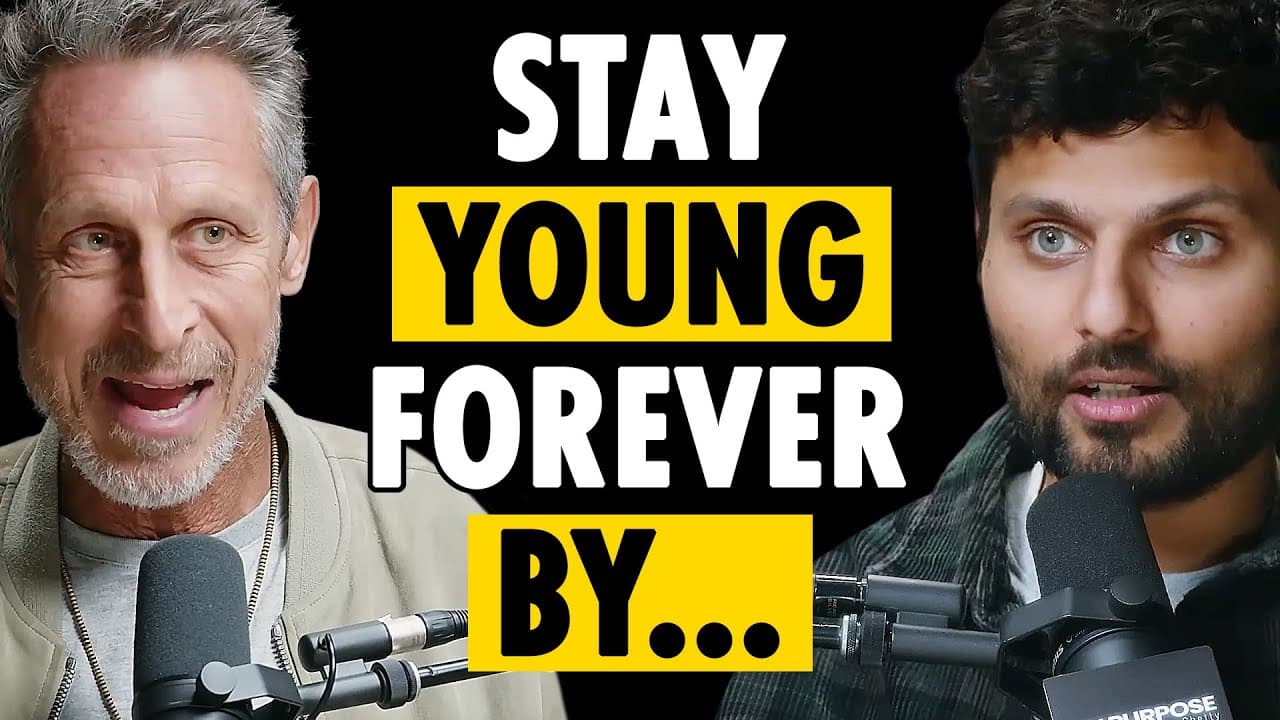
How To STAY YOUNG Forever: Top Habits To LIVE LONGER & Prevent Disease | Mark Hyman & Jay Shetty
TL;DR
For every 10% of your diet that is ultra-processed food, your risk of dying rises by 14% — and 60% of the average American diet is ultra-processed. Food is not just calories but information that regulates your biology, activating either longevity and healing or age-related disease. Whole, unprocessed foods and connected communities, like those in Blue Zones, build health by default.
Transcript
everything in our society automatically creates disease our processed diet for sleep deprived we're exposed to unnatural light at the wrong times of day all the things in our Foods apply that are damaging our guts so we have literally a disease producing culture the best-selling author and host the number one Health and Wellness podcast on purpose ... Read More
Key Insights
- Ultra-processed food raises mortality risk by 14% for every 10% of the diet it makes up, and it currently accounts for 60% of adult and 67% of children's diets in America.
- Ultra-processed food is defined as food-like substances made by breaking soy, wheat, and corn into component parts and reassembling them into chemically extruded shapes with no resemblance to anything humans ate through evolutionary history.
- Food is information and code that regulates every aspect of biology, meaning it can act as medicine or as poison that drives inflammation and accelerates age-related disease.
- Diet drives a wide range of conditions, including cancer, heart disease, diabetes, dementia, and depression, yet most doctors and patients still assume food has nothing to do with disease.
- Feeding prisoners healthy food cut violent crime by 56%, reduced violence in juvenile detention by over 90%, lowered use of restraints by 75%, and reduced suicide by 100%.
- Blue Zones like Sardinia and Icaria build health through automatic defaults: eating local wild whole foods, hiking rocky terrain to herd animals, lifting logs, and embedding community and relationships into daily life.
- Modern society is a disease-producing culture through processed diets, sedentary lifestyles, chronic stress, sleep deprivation, unnatural light exposure, environmental toxins, and antibiotics that destroy the microbiome.
- The goal of living young forever is not narcissistic pleasure-seeking but the ability to show up fully, love, serve, be present in relationships, and engage life with meaning and purpose.
Install to Summarize YouTube Videos and Get Transcripts
Explore YouTube Video Summarizer or Get YouTube Transcript Extractor
Questions & Answers
Q: How does ultra-processed food affect your risk of dying?
According to Dr. Mark Hyman, for every 10% of your diet that is ultra-processed food, your risk of dying goes up by 14%. This matters enormously because ultra-processed food makes up 60% of the average adult diet and 67% of children's diets in America today. He describes this food as poison that is addictive, drives inflammation, and accelerates every age-related disease, so a diet heavily composed of it dramatically raises mortality.
Q: What is ultra-processed food and how is it different from processed food?
Ultra-processed food is a food-like substance rather than real food. It is made by taking raw materials from soy, wheat, and corn grown through industrial agriculture, breaking them into component parts, and reassembling them into chemically extruded shapes and colors that resemble nothing humans ate through evolutionary history. This differs from ordinary processed food like sauerkraut, canned sardines, or canned tomatoes, which Hyman says are fine to eat.
Q: Why does Mark Hyman say food is medicine?
Hyman explains that food is not just calories but information, instructions, and code that regulates every aspect of your biology for good or bad. Ancient systems in the body can either activate longevity and healing or cause disease depending on the information in the food you eat. He quotes ayurvedic wisdom: when diet is wrong medicine is of no use, and when diet is correct medicine is of no need. So food is medicine, but it can also be poison.
Q: What health conditions are linked to diet and gut health?
Hyman says food is the single biggest driver of many diseases, though most doctors deny food has anything to do with them. He links diet to arthritis, rheumatoid arthritis, cancer, dementia, heart disease, diabetes, and depression. Ultra-processed food drives inflammation and accelerates every age-related disease. He notes gut health is connected to longevity and aging, a conversation he feels society is only now beginning to have widely.
Q: How does food affect violence and mental health?
Hyman cites research from his book Food Fix showing food dramatically affects behavior. When prisoners are given healthy food, violent crime goes down by 56%. In juvenile detention centers, violence drops by over 90%, use of restraints falls by 75%, and suicide, the third leading cause of death in that population, goes down by 100%. This demonstrates that food is critical to mental as well as physical health.
Q: What makes Blue Zones so healthy?
Blue Zones like Sardinia and Icaria stay healthy because their defaults automatically create health. People eat only local wild and whole unprocessed foods, hike five miles a day up and down rocky terrain to shepherd goats and sheep, and lift heavy logs to build things, keeping them naturally strong. Community and relationships are deeply embedded in the culture. Hyman met a Sardinian shepherd, Silvio, who could barely comprehend the concept of stress.
Q: Why does modern society automatically create disease?
Hyman argues everything in modern society automatically creates disease. Our processed diet, sedentary lifestyles, chronic stress, sleep deprivation, exposure to unnatural light at the wrong times of day, environmental toxin overload, and overuse of drugs like antibiotics that destroy the microbiome all damage our guts. Combined with a culture focused on individualism, success, and achievement rather than connection, this produces what he calls a disease-producing culture.
Q: What is the real purpose of trying to live young forever?
Hyman says the purpose of being young forever is not to live a hedonistic, pleasure-seeking, narcissistic life. Instead it is about being able to show up in your life fully, to love and serve, to do the things you want, and to engage in life in a meaningful, purposeful way. It means being present in relationships and showing up for friends, family, and community. He sums it up with Neem Karoli Baba's words: love everybody, serve everybody, feed everybody.
Summary
In this video, Jay Shetty interviews Dr. Mark Hyman, a popular health and wellness expert, on the topic of longevity and living a healthy life. They discuss the impact of processed food on our health, the importance of diet and gut health, and the power of community in creating healthy habits. Dr. Hyman also introduces his book, "Young Forever," which focuses on activating ancient longevity switches in our bodies.
Questions & Answers
Q: You mentioned that for every 10% of our diet that consists of ultra-processed food, our risk of dying goes up by 14%. Can you explain what ultra-processed food is and why it is harmful?
Ultra-processed food refers to food-like substances that are created by breaking down raw materials from soy, wheat, and corn into chemically extruded foods. These processed foods trigger ancient pathways in our body that can lead to diseases such as cancer, heart disease, diabetes, and dementia. Cutting down on ultra-processed food and opting for real, whole foods can significantly improve our health and well-being.
Q: How is our diet and gut health linked to longevity and aging?
Our diet plays a crucial role in our overall health and well-being. The food we eat provides our bodies with information and instructions that regulate various biological processes. By consuming a diet rich in whole, unprocessed foods and avoiding harmful substances, we can activate ancient longevity switches in our bodies and promote healing and longevity. Gut health is also important, as it affects our immune system, digestion, and nutrient absorption.
Q: How can we change our habits to promote longevity?
Changing habits can be challenging, but finding a supportive community can make it easier. Surrounding ourselves with people who have similar health goals can help us stay motivated and accountable. Building new relationships and finding new communities that support our desired lifestyle can make it easier to transition away from unhealthy habits. Additionally, focusing on foundational self-care practices, such as eating real food, exercising, managing stress, and getting enough sleep, can greatly contribute to our overall health and longevity.
Q: You mentioned the 10 Hallmarks of Aging. Can you explain the link between inflammation and aging?
Inflammation is a common underlying factor in many age-related diseases, such as heart disease, cancer, and diabetes. When our bodies are exposed to too much of the wrong substances, such as sugar, processed food, and toxins, our biological pathways become overwhelmed, leading to chronic inflammation. Chronic inflammation can accelerate the aging process and contribute to the development of various diseases. By reducing inflammation through proper diet, stress management, and other lifestyle changes, we can promote longevity and overall health.
Q: What are some starting points for people who want to transition to a healthier lifestyle?
The foundational basics of self-care include eating real food, exercising, and managing stress. Focus on consuming whole, unprocessed foods and avoiding sugar and processed foods. Incorporate regular exercise into your routine, starting with activities that you enjoy. Practice stress reduction techniques like meditation or deep breathing exercises. Making small, sustainable changes over time can lead to significant improvements in your health and well-being.
Q: How can we activate the ancient longevity switches in our bodies?
Activating ancient longevity switches involves various lifestyle choices, such as nourishing our bodies with the right food, getting enough rest and sleep, managing stress, and engaging in regular exercise. Additionally, incorporating fasting or time-restricted eating can also activate these switches and promote cellular repair and healing. Consuming plant-rich diets and incorporating specific plant compounds into our meals can also help activate these switches. By following these practices, we can optimize our health and well-being.
Q: Can you explain the importance of community in creating healthy habits?
Community plays a significant role in creating and maintaining healthy habits. Surrounding ourselves with like-minded individuals who are on a similar health journey can provide support, motivation, and accountability. Research has shown that our social networks have a strong influence on our behaviors and health outcomes. Finding a buddy or a group that shares your health goals can make it easier to implement and sustain healthy habits. By supporting and inspiring each other, we can create a positive and nurturing community that promotes health and well-being.
Q: What are the impediments and ingredients for health?
The impediments for health include factors such as bad food, excessive stress, environmental toxins, disrupted gut microbiome, infections, and allergens. On the other hand, the ingredients for health include nutrient-dense foods, balance in hormones, exposure to natural light, clean air and water, meaningful connections, a sense of purpose, restorative sleep, regular exercise, and movement. By identifying and addressing these impediments while incorporating the ingredients for health, we can optimize our well-being and promote longevity.
Q: Can you explain the connection between mTOR, nutrient sensing, and longevity?
mTOR is a nutrient-sensing pathway in our bodies that regulates cellular processes such as growth, metabolism, and autophagy. When mTOR is overstimulated due to excessive protein or sugar intake, it can lead to a cascade of negative effects, including inflammation, oxidative stress, and mitochondrial injury. This can contribute to accelerated aging and disease. By inhibiting mTOR through practices like fasting or time-restricted eating, we can activate autophagy, which allows for cellular cleanup, repair, and improved overall health and longevity.
Q: How can we activate the sirtuin and AMPK Pathways to promote DNA repair and longevity?
Sirtuins and AMPK are two other pathways involved in nutrient sensing and longevity. Activating these pathways promotes DNA repair and other cellular processes that contribute to longevity. Resveratrol, a compound found in red grapes, activates sirtuins and has been associated with increased lifespan in some studies. Consuming plant-rich diets that contain various phytochemicals can also activate these pathways. Practicing intermittent fasting, ketogenic diets, or other methods that promote nutrient deprivation can stimulate sirtuin and AMPK pathways, leading to improved cellular health and longevity.
Q: What are some other factors that contribute to longevity and healthy aging?
In addition to the nutrition and lifestyle factors discussed, other factors that contribute to longevity and healthy aging include adequate sleep, stress management, and regular movement. Optimizing sleep quality and duration is crucial for overall health and cellular repair. Managing stress through various techniques such as meditation, breathwork, or engaging in activities that bring joy and relaxation can also promote longevity. Regular movement and exercise, especially resistance training, help maintain muscle mass and strength, which is essential for healthy aging.
Takeaways
Taking care of our health involves simple yet powerful practices such as eating real food, exercising, managing stress, and getting enough sleep. By avoiding ultra-processed foods and adopting a plant-rich diet, we can activate ancient longevity switches in our bodies and promote healing and longevity. Building a supportive community and finding like-minded individuals who share our health goals can greatly contribute to maintaining healthy habits. Inhibiting mTOR and activating pathways like sirtuins and AMPK through practices like fasting or nutrient deprivation can promote DNA repair and overall cellular health. Prioritizing sleep, stress management, and regular exercise are also essential for longevity and healthy aging.
Summary & Key Takeaways
-
Dr. Mark Hyman, a functional medicine physician and author of Young Forever, explains that ultra-processed food raises death risk by 14% per 10% of the diet. Such food is not real food but reassembled chemical substances that trigger ancient disease pathways in the body.
-
Food functions as information and instructions that regulate biology, activating either longevity and healing systems or accelerating age-related disease. Hyman cites prison studies where healthy food cut violent crime by 56% and reduced suicide by 100%, showing food shapes both physical and mental health.
-
Blue Zone cultures like Sardinia stay healthy through automatic defaults: whole local foods, daily physical labor, low stress, and deep community. Modern society instead defaults to disease through processed diets, sedentary living, chronic stress, toxins, and a focus on individual achievement over connection.
Read in Other Languages (beta)
Share This Summary 📚
Summarize YouTube Videos and Get Video Transcripts with 1-Click
Try YouTube Summary with ChatGPT & Claude or YouTube Transcript Generator
Explore More Summaries from Health & Wellness 📚



Summarize YouTube Videos and Get Video Transcripts with 1-Click
Try YouTube Summary with ChatGPT & Claude or YouTube Transcript Generator