How Does Mentorship Strengthen Cybersecurity?
TL;DR
Cybersecurity teams respond to incidents at the speed of trust, so professionals must build relationships before a crisis occurs. Mentorship, reciprocal coaching, and sponsorship create stronger networks by sharing expertise, investing resources in others, and connecting teams that share risks, responsibilities, and a common interest in defending important assets.
Transcript
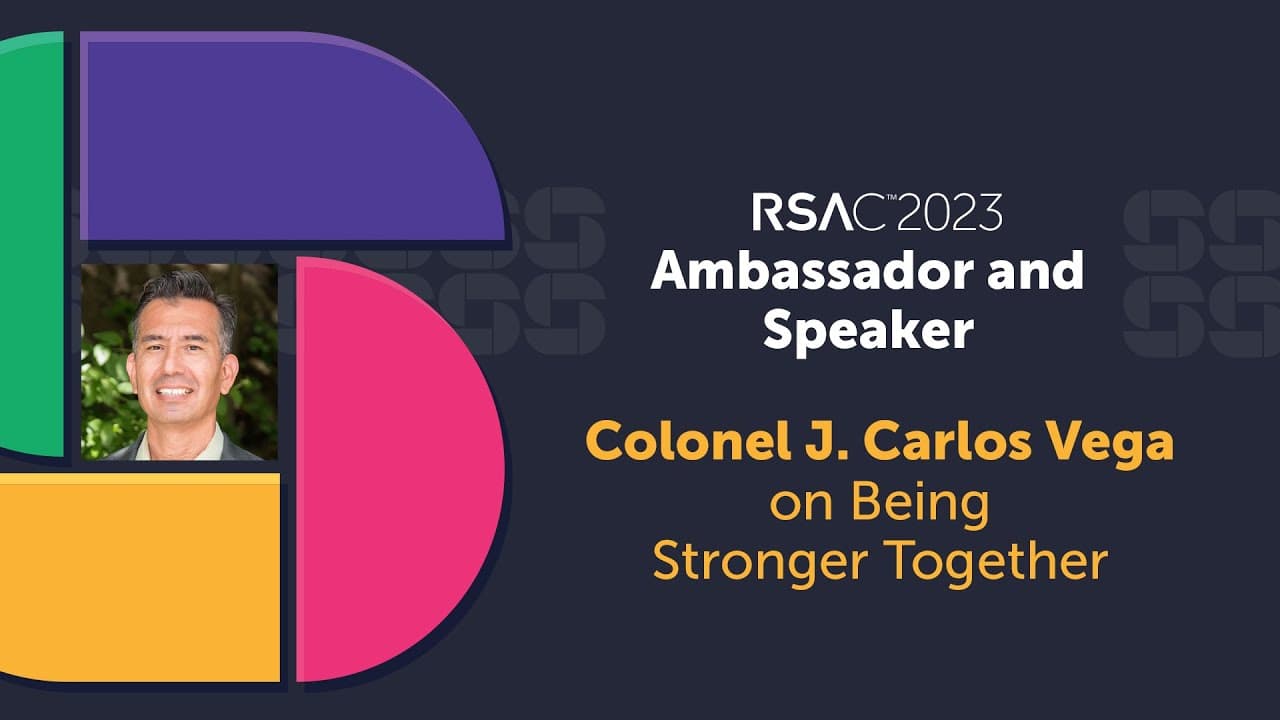
Hello, everyone. Thanks so much for joining me. I'm Casey Zirkus with the RSA Conference team, and I am pleased to be here with Colonel Juan Carlos Vega, who is speaking at RSA Conference this year. And, um, Juan Carlos is going to share with us a little bit of a personal story about, um, mentorship, and, uh, our, in our effort to honor our mentors... Read More
Key Insights
- A mentor network is more valuable than a single fixed relationship because different people can provide advice, coaching, inspiration, sponsorship, expertise, and honest feedback. Vega attributes his growth to a whole team whose members supported him in distinct ways throughout his career.
- Sponsorship is active investment in another person's success. Unlike mentorship limited to conversation or advice, sponsorship requires someone to put their own professional capital and resources at stake, work alongside another person, and create opportunities that enable that person to succeed.
- Mentor and mentee roles can change as both people develop. Vega describes relationships in which he initially served as a mentor, then exchanged roles with the other person, and eventually became a mutual coach who could both give and receive candid professional guidance.
- Deep technical expertise can make former students valuable advisers to their previous mentors. Cadets supported through the Army Cyber Institute later became officers or civilians with specialized knowledge, allowing Vega to rely on them for subjects they understand more deeply than he does.
- Cybersecurity requires continual learning because the discipline changes constantly. Remaining intellectually stationary allows the field to pass a practitioner, so professionals must keep seeking knowledge and draw insights from people whose experience, technical depth, and perspectives differ from their own.
- Conference learning becomes more useful when trusted peers compare their observations. Vega reconnects with people he previously mentored to discuss their principal takeaways and identify topics worth investigating, using their collective perspectives to balance the limitations of his individual judgment.
- Cybersecurity incident response moves at the speed of trust. Trust cannot be automated or demanded during a crisis, because it must be earned beforehand through sustained engagement with professional communities, organizational partners, vendors, service providers, and other teams that may provide assistance.
- A resilient cybersecurity organization is a team of teams rather than a collection of internal personnel. Organizations occupy a shared ecosystem, face overlapping risks, and share responsibility for defense, making trusted access to external knowledge, capabilities, and resources essential when incidents occur.
Install to Summarize YouTube Videos and Get Transcripts
Explore YouTube Video Summarizer or Get YouTube Transcript Extractor
Questions & Answers
Q: How does mentorship strengthen cybersecurity teams?
Mentorship strengthens cybersecurity teams by spreading knowledge, developing future experts, encouraging honest feedback, and creating relationships that can later support incident response. The relationship is not necessarily one-directional. As mentees gain experience or specialized technical knowledge, they can begin coaching their former mentors, helping the entire professional network adapt to a discipline that changes constantly.
Q: What is the difference between mentorship and sponsorship?
Mentorship can involve answering questions, offering perspective, and advising someone about professional growth. Sponsorship requires a more direct personal investment. A sponsor puts professional capital or resources at stake, works to create opportunities, and takes action alongside another person for that person's benefit. It therefore moves beyond guidance into tangible support for success.
Q: Why should professionals have multiple mentors?
Professionals benefit from multiple mentors because no individual can provide every kind of knowledge, opportunity, perspective, and support needed across a career. A broader group can include coaches, sponsors, senior leaders, near peers, technical specialists, and inspiring figures. Together, they can offer frank feedback, practical assistance, specialized expertise, and guidance suited to different situations.
Q: How can a mentee eventually become a mentor or coach?
A mentee can become a mentor or coach by developing experience and expertise that the original mentor does not possess. Vega observed this among cadets who later became officers or civilians with deep cybersecurity knowledge. Their changing capabilities made the relationship reciprocal, allowing them to advise him on new issues while continuing to benefit from his leadership experience.
Q: Why is cybersecurity described as a contact sport?
Cybersecurity is described as a contact sport because defense depends on active outreach and human connection, not only on internal technical capabilities. When an incident occurs, teams need assistance from people and organizations they already trust. Building those relationships through regular community and partner engagement allows participants to coordinate and share resources more effectively during a crisis.
Q: What does it mean to respond at the speed of trust?
Responding at the speed of trust means that action during a cybersecurity incident is limited or accelerated by the strength of existing relationships. Trust is not automated, and it cannot simply be treated as an obligation. It is earned through prior engagement, reliable cooperation, and continuing connections with partners who may need to exchange knowledge, capabilities, or resources.
Q: How can conferences support continuous cybersecurity learning?
Conferences can help practitioners identify subjects that may become important and gather perspectives from people with different expertise. Vega supplements his own observations by reconnecting with trusted colleagues and former mentees after the event. They compare their main takeaways and decide which topics deserve further investigation, creating a broader information source than one person's judgment alone.
Q: What is a team of teams in cybersecurity?
A team of teams is a defense network that extends beyond the people assigned to one organization. It may include internal colleagues, friends, vendors, service providers, and other community partners willing to help. Because organizations participate in a shared ecosystem with overlapping risks, effective defense requires shared responsibility and trusted relationships that support voluntary resource sharing when needed.
Summary & Key Takeaways
-
Colonel J. Carlos Vega credits a broad network rather than one mentor for his professional development. Mentors, coaches, sponsors, peers, senior leaders, and even people he never met have informed, inspired, and empowered him. He seeks to return that support by helping others grow and succeed throughout their careers.
-
Sponsorship goes beyond offering advice because sponsors commit their reputation, relationships, resources, or professional capital to another person's success. Mentoring relationships can also become reciprocal as careers progress. Former mentees may develop deeper expertise, allowing them to coach the people who previously guided them and contribute knowledge those leaders lack.
-
Cybersecurity is both a team sport and a contact sport because effective incident response depends on trusted relationships. Strong defense requires a team of teams, including colleagues, friends, vendors, service providers, and community partners. Organizations share an ecosystem and its risks, so they must also share responsibility and, when trust is earned, resources.
Read in Other Languages (beta)
Share This Summary 📚
Summarize YouTube Videos and Get Video Transcripts with 1-Click
Try YouTube Summary with ChatGPT & Claude or YouTube Transcript Generator
Explore More Summaries from RSAC Cybersecurity 📚
Summarize YouTube Videos and Get Video Transcripts with 1-Click
Try YouTube Summary with ChatGPT & Claude or YouTube Transcript Generator