How AI Is Changing Product Management Teams
TL;DR
Product managers should automate repetitive work, expand into design and engineering, and teach their teams to use AI. AI can rapidly produce useful first drafts, prototypes, feedback, and synthesized insights, freeing product leaders to focus on future customer needs and broader execution. The emerging model favors versatile contributors who can move across traditional role boundaries instead of waiting for specialized teams.
Transcript
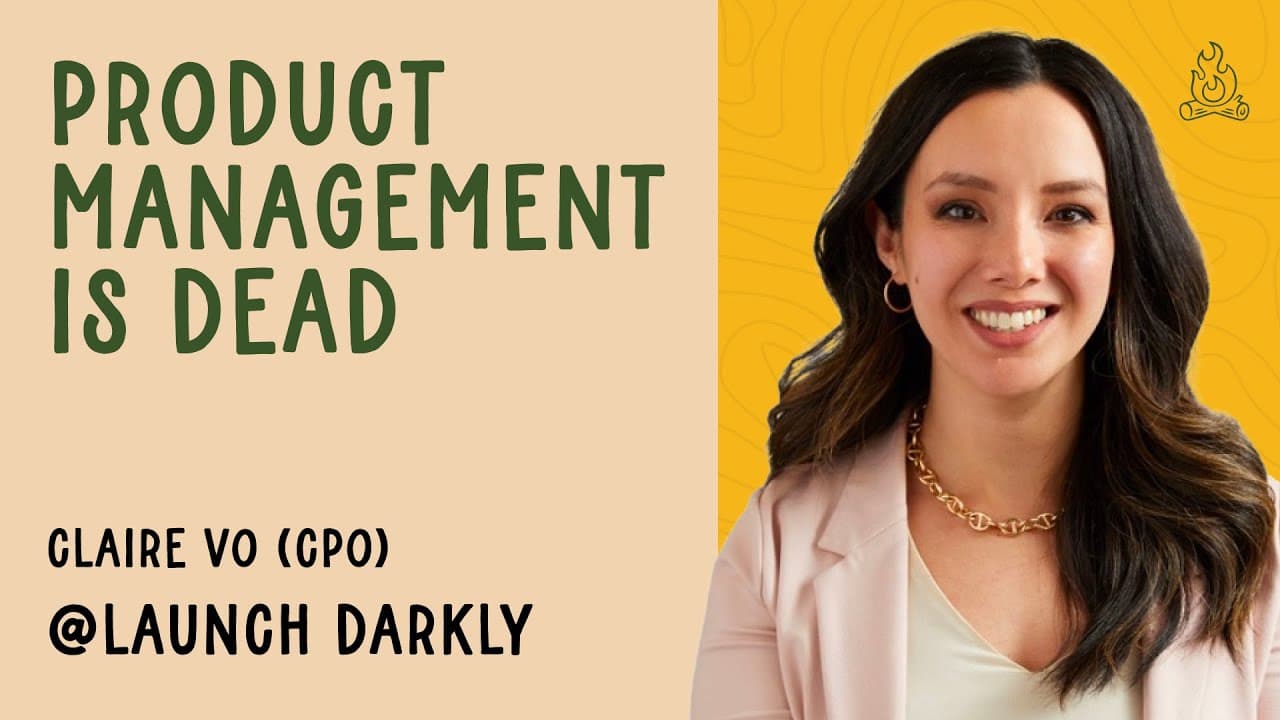
good morning I'm very excited to be here and they thought what should we do bright and early at the product leaders conference let's just go ahead and nicks product management entirely let's get rid of it um we can all go enjoy a great San Francisco October morning so I'm here to tell you and I act I believe this to be true this is not a hot take f... Read More
Key Insights
- Product management as traditionally practiced is becoming less necessary because AI can complete or accelerate substantial portions of document creation, feedback, synthesis, prototyping, and coordination work that previously consumed product managers' time.
- Product strategy should anticipate what customers will need in three, five, and ten years, rather than optimizing only for the present. Product leaders should apply the same future-oriented thinking to how their teams will operate.
- AI can turn conversational input into a substantial product strategy draft. Claire Vo describes speaking into ChatGPT during her commute and receiving a document comparable to one that previously required weeks of interviews, writing, feedback, and revision.
- The value of AI is reaching a useful draft faster, not expecting a perfect final result. The recommended approach is to reach roughly 75 percent quality quickly, then use human expertise to improve the work instead of beginning from zero.
- An AI-powered product manager automates repetitive responsibilities, adds new capabilities, and teaches colleagues what works. These three practices speed delivery, broaden individual contributions, and multiply the impact of successful AI workflows across the entire product team.
- Routine product work is a strong automation target, including drafting documents, collecting feedback, writing updates, producing meeting summaries, prioritizing requests, monitoring goals, tracking competitors, preparing interviews, consolidating candidate feedback, creating slides, and explaining product functionality.
- Versatile contributors can overcome functional bottlenecks by learning adjacent disciplines. Cody responded to limited design availability by learning design tools and creating polished prototypes, then began contributing frontend pull requests alongside his engineering, marketing, and emerging product-management skills.
- Team-wide learning is necessary because isolated AI expertise has limited organizational value. LaunchDarkly uses a dedicated building-with-AI channel where employees share automations, ask for help, and show what they have built, making experimentation visible and repeatable.
Install to Summarize YouTube Videos and Get Transcripts
Explore YouTube Video Summarizer or Get YouTube Transcript Extractor
Questions & Answers
Q: How should product managers adapt to AI?
Product managers should begin by automating repetitive tasks that slow delivery, then reinvest the saved time in learning adjacent skills such as prototyping, design, or frontend contribution. They should also share effective workflows with colleagues so AI capability spreads beyond one person. The resulting role is broader, faster, and less constrained by traditional functional boundaries.
Q: What tasks should product managers automate with AI?
Strong automation candidates include drafting documents, receiving and giving initial feedback, writing status updates, preparing agendas, summarizing meetings, identifying action items, prioritizing feature requests, monitoring goals and OKRs, tracking competitors, preparing interviews, consolidating candidate feedback, preserving customer stories, improving slides, and explaining how product functionality works. These tasks can otherwise consume significant delivery time.
Q: How can AI speed up product strategy development?
AI can transform customer research, internal conversations, and a product leader's spoken reasoning into an initial strategy document. Claire Vo contrasts a traditional process that required weeks of writing, meetings, comments, and revisions with speaking her thoughts into ChatGPT during a drive. The generated draft still required editing, but it provided a strong foundation much faster.
Q: Why should AI drafts target 75 percent quality first?
The purpose of an AI draft is to create a useful starting point faster than a person can begin from zero. The talk recommends thinking about how quickly AI can reach roughly 75 percent quality instead of demanding 100 percent immediately. Product judgment remains necessary for reviewing, correcting, sharpening, and preparing the work for delivery or wider discussion.
Q: What defines an AI-powered product manager?
An AI-powered product manager meets three requirements described in the talk. First, the person automates personal work to speed delivery. Second, the person adds new skills and takes on broader responsibilities. Third, the person multiplies the impact by teaching the team. Together, these behaviors improve both individual output and the organization's ability to adopt AI effectively.
Q: How is AI changing product team roles?
AI is making it easier for individuals to work across product management, design, and engineering instead of remaining inside one specialty. Functional prototypes can be created in minutes, polished designs can accompany requirements, and contributors can begin producing frontend work. This favors versatile people who solve bottlenecks directly by learning the skills required to keep delivery moving.
Q: How should product leaders plan future teams?
Product leaders should imagine how teams may operate in 18 months, three years, five years, and ten years, then place informed bets on the capabilities those teams will require. This mirrors product strategy, which should consider future customer needs rather than only current demands. The objective is to prepare for rapid technological change without being surprised by it.
Q: How can teams spread effective AI practices?
Teams can create a shared space where employees regularly post automations, demonstrate things they have built, request assistance, and exchange practical workflows. LaunchDarkly uses a building-with-AI channel for this purpose. Sharing makes successful experiments visible to others, helps colleagues reproduce useful approaches, and prevents AI capability from remaining isolated with a single enthusiastic contributor.
Summary & Key Takeaways
-
AI is reducing the time required for traditional product work. A strategy document that once took weeks of interviews, drafting, feedback, and revision can now begin as an AI-generated draft created from spoken notes. The goal is to reach a useful starting point quickly, then apply human judgment to sharpen and ship it.
-
An AI-powered product manager follows three practices: automate personal tasks to accelerate delivery, acquire additional skills to contribute across functions, and multiply the benefits by teaching the wider team. Suggested automation targets include documents, feedback, updates, meeting notes, prioritization, goals, competitor tracking, interview preparation, customer stories, slides, and explanations of product functionality.
-
Product teams are moving beyond rigid divisions among product management, design, and engineering. The talk illustrates this shift through Cody, an engineer and former marketer who learned product management, prototyping, design, and frontend contribution. Product leaders should hire and develop similarly versatile people while building habits that spread AI experimentation throughout the organization.
Read in Other Languages (beta)
Share This Summary 📚
Summarize YouTube Videos and Get Video Transcripts with 1-Click
Try YouTube Summary with ChatGPT & Claude or YouTube Transcript Generator
Explore More Summaries from Lenny's Podcast 📚

Summarize YouTube Videos and Get Video Transcripts with 1-Click
Try YouTube Summary with ChatGPT & Claude or YouTube Transcript Generator