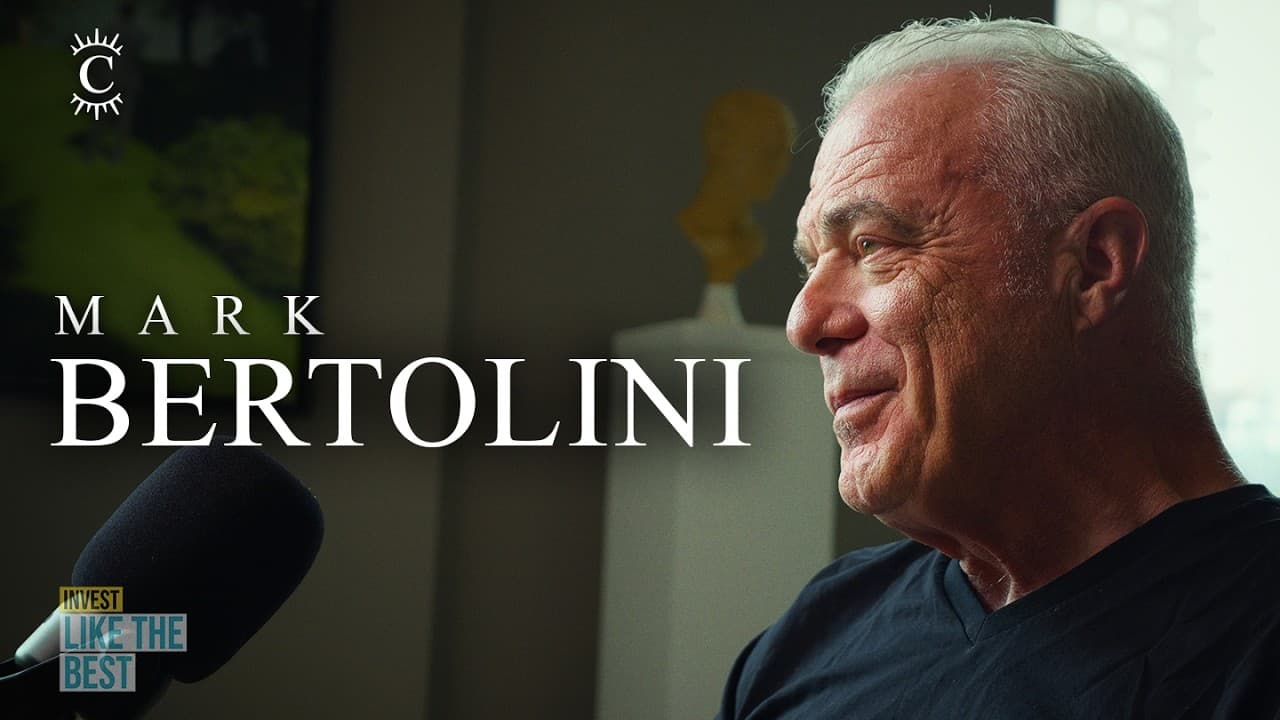
How Did Mark Bertolini Turn Pain Into Leadership?
TL;DR
Mark Bertolini turned pain into leadership by allowing a near-fatal skiing accident, 18 years of severe pain, and his son's cancer battle to deepen his focus on mortality, compassion, courage, employee well-being, and service. After sleeping about one hour a night while living with level 7 to 10 pain, he reconsidered how he spent his limited time and led healthcare organizations. Read on for the experiences and principles behind that transformation.
Transcript
So we went into hospice. I went down to the chapel, took the scapular off around my neck, the rosary from around my neck, put it on the altar, and said, "Me for him." And at that moment, I made the bargain. I said, "Let me have his disease. Let me have his pain. Let him live. I've lived a great life." He comes home on February 18th, 2003. February ... Read More
Key Insights
- Bertolini's skiing accident broke five vertebrae, damaged his brachial plexus, disconnected a nerve root serving his left arm, and left him in a coma for five days. Cold water and ice around his neck prevented the spinal cord swelling that could have worsened his injury.
- Memento mori is a daily reminder that death is inevitable and time should be spent with the right people doing the right things. Bertolini's ring prompts him to examine those choices and leave situations that fail that test.
- Bertolini's childhood in Detroit taught him that improvement required practice because children were selected for neighborhood games according to ability. He also concluded that bullies must be challenged, a lesson that influenced how he approached conflict and defended other people.
- Bertolini's photographic memory allowed him to recall blackboards, printed pages, and spreadsheets with unusual precision. In business, he used that ability like a forensic tool, noticing changed spreadsheet cells and detecting misprinted words before consciously reading the page.
- Business execution is more powerful than merely producing ideas, according to Bertolini's distinction between Platonists and Aristotelians. His first company nearly failed because its leaders had to learn that strategies must be implemented, not simply conceived and communicated.
- Bertolini's unconventional career began with failed college studies, factory work, paramedic experience, and an accounting degree pursued to qualify for a union position. High GMAT performance then opened opportunities at graduate business schools and led him to Cornell.
- Bertolini chose healthcare entrepreneurship over better-paid finance opportunities after reviewing the public offering materials of an HMO. He returned to Detroit for roughly one-third of the compensation available elsewhere and helped start a healthcare organization he initially knew little about.
- Bertolini's leadership philosophy was transformed by prolonged pain, his son's battle with cancer, and exposure to Eastern beliefs. The conversation connects those experiences with servant leadership, employee wellness, higher wages and benefits, curiosity, courage, and a pursuit of meaning through service.
Install to Summarize YouTube Videos and Get Transcripts
Explore YouTube Video Summarizer or Get YouTube Transcript Extractor
Questions & Answers
Q: How did Mark Bertolini turn pain into leadership?
Bertolini's broken neck, 18 years of severe pain, and his son's cancer battle reshaped his view of life and leadership. These experiences moved him toward servant leadership centered on compassion, courage, employee well-being, and service to others.
Q: How did Mark Bertolini survive his skiing accident?
Bertolini caught an edge while skiing in the woods, hit a tree, broke his neck, and slid 60 feet headfirst into a river. He said the cold water, ice, and snow around his neck prevented the spinal-cord swelling that could have caused further damage. Rescuers extracted him after two hours, and he awoke from a coma five days later.
Q: What injuries did Mark Bertolini suffer in the skiing accident?
Bertolini broke five vertebrae, severely damaged his brachial plexus, and disconnected a nerve root serving his left arm from his spinal cord. He described the condition as a quadriplegic injury and said medical staff did not expect him to survive.
Q: How did chronic pain affect Mark Bertolini's life and work?
Bertolini said he lived with level 7 to 10 pain and slept about one hour a night for 18 years. He described the right side of his brain as shutting down, reducing his empathy, while the left side operated like a machine or supercomputer. That state made him intensely driven in business but became part of his longer struggle with disability and identity.
Q: What does Mark Bertolini's memento mori ring mean?
A friend sent Bertolini the ring after his near-fatal accident as a reminder that he would die. He uses it to ask whether he is spending time with the right people and doing the right things. If not, his conclusion is to leave rather than waste limited time.
Q: How did Mark Bertolini move from factory work into business leadership?
After failing college, Bertolini worked on a Ford Motor Company assembly line building rear axle differential housings for the Mercury Bobcat. A dispute with his union steward motivated him to pursue the degree required for that role. He chose accounting as the quickest path, performed strongly on the GMAT, and later studied business and finance at Cornell.
Q: Why did Mark Bertolini choose healthcare instead of higher-paid finance work?
Bertolini was considering investment banking and junk-bond trading when a friend invited him to help start an HMO. After reviewing a healthcare company's public-offering materials, he found the model compelling. He returned to Detroit and accepted roughly one-third of the compensation available elsewhere to enter healthcare.
Q: What did Mark Bertolini learn when his first HMO nearly failed?
The company nearly ran out of money within three years, teaching Bertolini that ideas and communication are insufficient without implementation. He contrasted Platonists, who stop after developing an idea, with Aristotelians, who translate ideas into practical activity. He concluded that people who make ideas happen are rarer and more valuable than people who only generate them.
Summary & Key Takeaways
-
Mark Bertolini grew up as the oldest of six children in a working-class Detroit household. After failing college, working on a Ford assembly line, and serving as a paramedic, he returned to school for an accounting degree. Strong GMAT results eventually led him to study business and finance at Cornell.
-
After graduation, Bertolini accepted lower pay to help start an HMO in Detroit. The company nearly ran out of money within three years, teaching him that ideas matter only when translated into practical work. He helped repair the business, later joined New York Life, and continued building his healthcare leadership career.
-
A catastrophic skiing accident broke Bertolini's neck, damaged five vertebrae, and left him in severe pain with major disabilities. His recovery and his son's cancer battle shaped a philosophy centered on mortality, compassion, courage, employee wellness, and service. He later brought these perspectives to Oscar Health and healthcare reform.
Read in Other Languages (beta)
Share This Summary 📚
Summarize YouTube Videos and Get Video Transcripts with 1-Click
Try YouTube Summary with ChatGPT & Claude or YouTube Transcript Generator
Explore More Summaries from Invest Like The Best 📚

Summarize YouTube Videos and Get Video Transcripts with 1-Click
Try YouTube Summary with ChatGPT & Claude or YouTube Transcript Generator