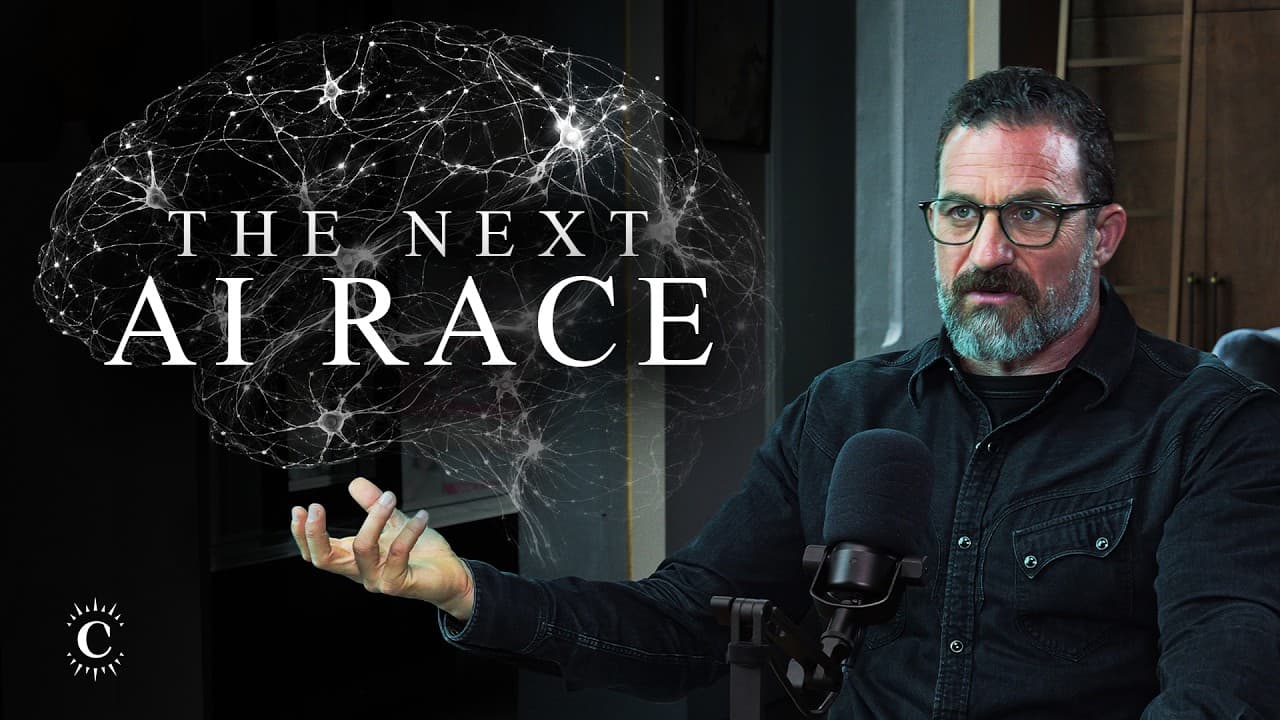
Why will AI labs evolve into biotech companies?
TL;DR
AI labs are likely to become biotech focused on brain reading and writing, using neuroscience to boost performance and energy management. The conversation emphasizes sleep needs, energy optimization, and techniques like NSDR and physiological sighs to teach the mind to downshift. It also explores the ethical and practical implications of neurotechnology and near future possibilities in brain computer interfaces.
Transcript
I'll go on record saying this. Anyone who thinks that Meta, Open AI, Anthropic, anyone that thinks that those are LLM AI companies is perhaps going to be surprised at this prediction. Every single one of those is going to be a biotech company. They're all interested in the brain. You talk to any of those guys, they may not have formal training in i... Read More
Key Insights
- AI labs may become biotech companies as brain interfacing becomes a shared goal of top tech firms.
- Energy management and sleep optimization are central to sustained high performance in intensive tech work.
- Honest self assessment about individual energy needs enables better planning and resilience.
- Some individuals have a naturally higher energy with rapid task switching that enables sustained output.
- Dowshifting at the end of the day requires turning thoughts to pure sensation and slowing heart rate through long exhales.
- Non sleep deep rest and physiological sighs are cited as practical tools to improve sleep quality and cognitive readiness.
- Non invasively reading and writing to the brain are discussed as major future capabilities in neurotechnology.
- Ethical and societal considerations are acknowledged as genetic engineering and neurotech advance.
Install to Summarize YouTube Videos and Get Transcripts
Explore YouTube Video Summarizer or Get YouTube Transcript Extractor
Questions & Answers
Q: What is the main idea behind AI labs becoming biotech companies?
The main idea is that the major tech players are focused on the brain and aim to read and write from it non invasively. This would position those AI labs as biotech entities because their core work would center on neurotechnology and brain interfacing, not just software or data models. This shift reflects broader trends toward biological interfaces.
Q: How important is energy management for high performance in tech work?
Energy management is described as a critical bottleneck for the most talented people. The ability to generate and maintain energy reduces burnout and enables founders to operate at high levels over longer periods. Honest self assessment about sleep needs and energy levels helps tailor routines that sustain peak performance.
Q: What sleep strategy is recommended for improving performance?
The discussion emphasizes recognizing one’s actual sleep needs rather than chasing a universal standard. For some, eight hours may be ideal, for others seven or six may suffice. The focus is on maximizing the quality of sleep by reducing late caffeine, optimizing light exposure, and using techniques that support easier downshifting into sleep.
Q: What is meant by downshifting and why is it hard?
Downshifting refers to turning off active thoughts and transitioning from a high energy state to sleep. It is hard because the brain tends to predict and plan what comes next. The recommended approach is to shift attention to pure sensations, slow the heart rate via long exhales, and practice present moment awareness rather than forced meditation.
Q: What techniques help the mind stop racing at night?
Techniques include focusing on bodily sensations, listening to breathing, and noticing sounds in the room. Deliberate long exhales slow heart rate through respiratory sinus arrhythmia, aiding the transition to sleep. Shifting attention away from planning to perception is key to turning off thoughts and preparing for rest.
Q: What role do non sleep deep rest and physiological sighs play?
Non sleep deep rest and physiological sighs are cited as practical tools to restore cognitive readiness and enhance focus. NSDR is presented as a method to reset energy, while physiological sighs provide a quick, science based way to recalibrate the nervous system and improve sleep quality when needed.
Q: What potential future is implied by reading and writing to the brain non invasively?
The conversation suggests a future where neuroscience enables direct brain communication and interface with machines, potentially transforming how we learn, work, and create. This neurotech frontier raises important ethical and societal questions as capabilities expand, including how such interfaces could affect health, privacy, and development in AI driven biotech ecosystems.
Q: Why is honest self assessment about sleep and energy emphasized?
Honest self assessment helps individuals tailor their routines to their true needs, preventing burnout and optimizing long term performance. By understanding personal energy ceilings, sleep requirements, and recovery needs, founders and high performers can design sustainable work patterns that maximize output without compromising health or longevity.
Summary & Key Takeaways
-
Huberman and the host discuss how high performance hinges on energy management, sleep, and methods to downshift the mind at day’s end, linking these to a potential biotech future for AI labs.
-
The discussion surveys non invasive brain reading and writing as a near term possibility, stressing energy optimization and disciplined self assessment for sustainable progress.
-
The talk culminates in a look at neurotech, ethics, and the broader implications of genetics and brain interfaces in AI driven biotech futures.
Read in Other Languages (beta)
Share This Summary 📚
Summarize YouTube Videos and Get Video Transcripts with 1-Click
Try YouTube Summary with ChatGPT & Claude or YouTube Transcript Generator
Explore More Summaries from Invest Like The Best 📚




Summarize YouTube Videos and Get Video Transcripts with 1-Click
Try YouTube Summary with ChatGPT & Claude or YouTube Transcript Generator