How to tokenize stocks on Solana and bring finance onchain
TL;DR
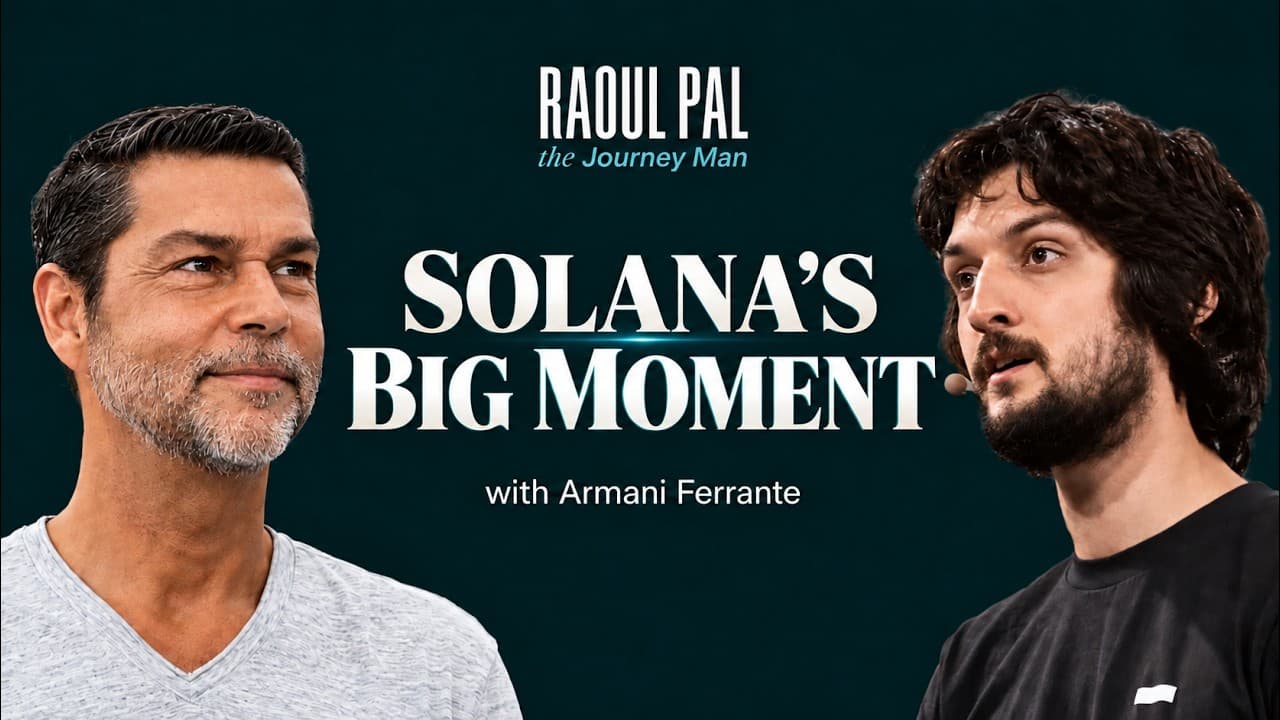
Backpack aims to bring regulated financial markets onchain using tokenization, connecting traditional finance with crypto rails. The interview covers Solana, tokenized equities worldwide, prediction markets, and the future of global finance, emphasizing a scalable blockchain ecosystem supported by developer tooling and community momentum.
Transcript
This is to me like the whole story of crypto over the next couple years. It's how do you bring the entire world's regulated economy and bring it onchain. Ultimately from a technology point of view, what all this leads to in the limit is just a global API for all of finance. [music] You now have the ability for AI intelligence to actually have a ban... Read More
Key Insights
- Solana is presented as a high throughput platform essential for scalable onchain finance.
- Backpack’s approach focuses on tokenizing equities to widen access beyond traditional markets.
- The team emphasizes regulatory compliance as a core requirement for tokenized financial products.
- Historically, the ecosystem momentum and open source work laid the groundwork for later onchain innovations.
- The FTX collapse is discussed as a catalyst that tested resilience and commitment within the Solana community.
- Pith Network is highlighted as a data provider enabling real time market data for onchain finance.
- The guests describe a future where crypto rails act as the global API for finance, integrating traditional assets with blockchain tech.
- The interview reflects a belief that crypto and blockchain will reinvent finance despite market cycles.
Install to Summarize YouTube Videos and Get Transcripts
Explore YouTube Video Summarizer or Get YouTube Transcript Extractor
Questions & Answers
Q: What is Backpack and Armani Ferrante's role in the project?
Backpack is a company built around bringing regulated financial markets onchain, focusing on tokenizing equities and other assets to enable access and compliance within a global framework. Armani Ferrante explains his role in founding Backpack and leading efforts to scale the platform, build developer tooling, and drive adoption in a regulatory compliant manner, drawing on prior experience with Solana and open source projects to expand the ecosystem.
Q: Why did the team choose Solana for their platform?
The choice of Solana is attributed to its early ecosystem momentum and potential for high throughput, which are seen as necessary for hit scale in onchain finance. Armani describes identifying Solana as the most viable option among early chains due to the community, tooling, and existing startups like GTO, Pith, and wormhole, which created a solid foundation for tokenized financial products.
Q: How does tokenizing equities broaden access to US stocks?
Tokenized equities onchain are envisioned to enable global access by representing traditional stocks as digital tokens on a regulated, compliant platform. This could allow investors outside the US to participate in US markets through onchain rails, leveraging blockchain transparency, faster settlement, and programmable compliance while maintaining regulatory safeguards.
Q: What challenges are faced when tokenizing regulated assets?
Key challenges include ensuring regulatory compliance across jurisdictions, maintaining investor protection, implementing robust KYC/AML controls, and providing secure custody for tokenized assets. The team emphasizes building a compliant framework from the ground up, integrating legal and financial infrastructure with blockchain technology to sustain trust and scalability.
Q: What role does Pith Network play in the ecosystem?
Pith Network is cited as a market data provider delivering real time data across thousands of instruments, including equities and crypto. Its data feeds are presented as essential for onchain finance, enabling accurate pricing, indices, and market signals for tokenized assets and decentralized applications that rely on reliable data sources.
Q: What is the broader vision for crypto rails in finance?
The broader vision is that crypto rails could become the global API for finance, linking regulated traditional markets with onchain infrastructure. This entails a universal layer of access, interoperability, and data flow that supports AI agents, automated market making, and programmable finance while remaining compliant with global regulations.
Q: How did the FTX collapse impact the ecosystem according to the interviewee?
The FTX collapse is described as a devastating moment that tested the resilience of the Solana ecosystem and Backpack team. Despite financial and reputational setbacks, supporters in the ecosystem, such as Multicoin Capital, helped sustain momentum. The episode frames this as a catalyst for reaffirming commitment to long term goals rather than giving up.
Q: What is the significance of AI and predictive tools in this vision?
AI and predictive tools are presented as enabling smarter market participation and automated decision making within onchain finance. The idea is that intelligent systems could operate bank-like capabilities and interact with tokenized assets, enhancing efficiency, accuracy, and accessibility in a regulated, decentralized financial landscape.
Summary & Key Takeaways
-
Backpack founder Armani Ferrante discusses turning regulated markets onchain through tokenized equities and crypto rails, highlighting regulatory compliance and global access.
-
The conversation covers Solana as a high throughput blockchain, early ecosystem work, and how open source tooling enabled momentum before the FTX collapse.
-
The episode positions tokenized stocks and onchain finance as part of a broader vision of a global API for finance driven by AI and market data networks.
Read in Other Languages (beta)
Share This Summary 📚
Summarize YouTube Videos and Get Video Transcripts with 1-Click
Try YouTube Summary with ChatGPT & Claude or YouTube Transcript Generator
Explore More Summaries from Raoul Pal The Journey Man 📚

Summarize YouTube Videos and Get Video Transcripts with 1-Click
Try YouTube Summary with ChatGPT & Claude or YouTube Transcript Generator