How Will Stablecoins Modernize Global Finance?
TL;DR
Stablecoins can modernize finance by enabling real-time dollar payments, programmable money, and broader global liquidity across blockchain networks. Paxos is presented as neutral, secure infrastructure for institutions, while tokenized equities, gold, foreign exchange, custody, privacy, interoperability, and network effects remain central to expanding multi-chain financial markets.
Transcript
Today's video is sponsored by Figer, the largest non-bank home equity loan lender in the US with over $15 billion unlocked on their lending platform. They're now in the cryptoback loan space and offering industry low interest rates when you use your Bitcoin as collateral to get cash. Access interest rates starting at 9.9%, the lowest fixed rate in ... Read More
Key Insights
- Stablecoins are positioned as infrastructure for real-time dollar payments, allowing institutions to move dollar-denominated value through blockchain-based systems rather than relying exclusively on established financial rails. The discussion connects this payment function with global liquidity and foreign exchange applications.
- Paxos is described as neutral, secure infrastructure for modernizing the global financial system. Its role spans stablecoin services, blockchain infrastructure, and custody, providing institutions with operational foundations for issuing, holding, and transferring tokenized financial assets.
- Tokenization can extend beyond currencies to equities and gold. The conversation treats these assets as part of a broader shift in which traditional financial instruments can be represented and handled through blockchain infrastructure alongside stablecoins and decentralized finance assets.
- Programmable money is a major consequence of placing financial assets on blockchain networks. The episode links programmable dollars with decentralized finance assets, suggesting that payments and assets can participate in software-driven financial activity when supported by suitable infrastructure.
- Real-time settlement is presented as an important advantage of blockchain-based dollar payments. This capability could change how institutions approach payment timing, liquidity, and foreign exchange activity by making value transfer less dependent on the operating schedules of traditional systems.
- Global liquidity is a central stablecoin use case because dollar-denominated tokens can support payments and foreign exchange activity across markets. The discussion places institutional adoption at the center of this development, rather than treating stablecoins solely as instruments for crypto trading.
- Cross-chain operation and privacy are identified as challenges for tokenized finance. A multi-chain financial system requires assets, institutions, and markets to connect across different blockchain networks while addressing confidentiality and the secure movement of value.
- Network effects will influence which stablecoin and tokenization systems achieve broad adoption. The episode links these effects with the future of multi-chain finance, where useful infrastructure must connect institutions, assets, liquidity, and multiple blockchain environments.
Install to Summarize YouTube Videos and Get Transcripts
Explore YouTube Video Summarizer or Get YouTube Transcript Extractor
Questions & Answers
Q: How can stablecoins modernize global finance?
Stablecoins can modernize global finance by supporting real-time dollar payments, programmable money, global liquidity, and foreign exchange activity on blockchain infrastructure. The conversation presents them as institutional financial rails that can connect tokenized assets with existing markets. Their broader impact depends on secure infrastructure, custody, privacy, interoperability, and adoption across multiple blockchain networks.
Q: What role does Paxos play in stablecoin infrastructure?
Paxos is presented as neutral, secure infrastructure designed to help modernize the global financial system. The discussion connects its work with custody, institutional stablecoins, real-time dollar payments, and tokenized assets. Rather than limiting its role to a single product, the episode describes an infrastructure layer supporting institutions as financial activity expands across blockchain networks.
Q: Why are institutions interested in stablecoins?
Institutions are interested in stablecoins because they can provide blockchain-based access to real-time dollar payments, programmable money, global liquidity, and foreign exchange applications. The episode frames stablecoins as financial infrastructure rather than only crypto trading assets. Institutional use also requires dependable custody, secure systems, privacy protections, and connectivity across different networks and markets.
Q: What financial assets can be tokenized?
The conversation specifically discusses tokenizing equities and gold, alongside stablecoins and decentralized finance assets. These examples show that tokenization is not limited to dollar-denominated payments. The broader concept is that traditional financial instruments can be represented and handled through blockchain infrastructure, supporting a possible migration of established markets toward programmable, multi-chain financial systems.
Q: How do stablecoins enable real-time dollar payments?
Stablecoins represent dollar-denominated value on blockchain-based infrastructure, which the discussion connects with real-time payments. This structure can allow value to move through digital networks without relying exclusively on the schedules of established financial rails. The episode links faster dollar movement with institutional use cases involving global liquidity, foreign exchange, programmable money, and tokenized financial assets.
Q: What is programmable money in tokenized finance?
Programmable money is dollar-denominated value placed on blockchain infrastructure so it can interact with software-driven financial functions. The episode connects this idea with stablecoins and decentralized finance assets. Its significance lies in combining payments with tokenized markets, though adoption still relies on secure custody, institutional infrastructure, privacy, interoperability, and reliable connections across multiple blockchain networks.
Q: What challenges face cross-chain tokenized finance?
Cross-chain connectivity and privacy are identified as important challenges for tokenized finance. A multi-chain system must enable assets, payments, liquidity, and institutions to operate across different blockchain environments. The discussion suggests that infrastructure must handle these connections securely while meeting confidentiality needs, especially as traditional financial markets and institutional stablecoin activity move toward blockchain-based systems.
Q: Why do network effects matter for stablecoin adoption?
Network effects matter because financial infrastructure becomes more useful as more institutions, assets, liquidity sources, and blockchain networks connect to it. The episode places network effects alongside the future of multi-chain finance. Broad stablecoin adoption therefore depends not only on issuing tokens, but also on building secure custody, interoperability, privacy, and institutional connections that support repeated financial activity.
Summary & Key Takeaways
-
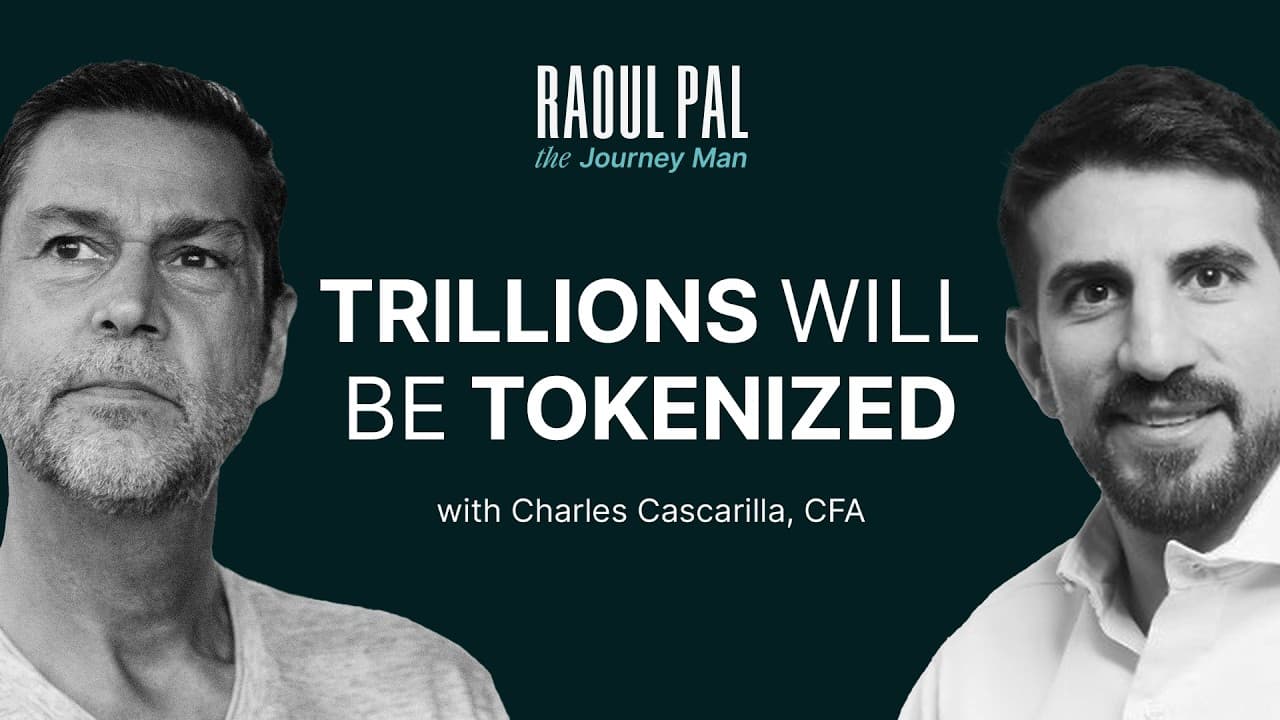
Charles Cascarilla traces Paxos back to his experience investing in financial services as technology transformed exchanges, trading, lending, and underwriting. His exposure to the debt bubble and the financial crisis shaped his view that financial infrastructure needed substantial modernization, eventually leading toward Bitcoin, blockchain innovation, custody, and regulated tokenization.
-
The conversation describes Paxos as neutral, secure infrastructure connecting institutions with blockchain-based finance. Its scope includes custody, stablecoins, real-time dollar payments, tokenized equities and gold, programmable money, decentralized finance assets, global liquidity, and foreign exchange applications, rather than focusing on a single token or isolated consumer product.
-
The future presented is multi-chain and increasingly tokenized, with traditional financial markets potentially moving onto programmable infrastructure. Adoption depends on institutional stablecoin use, liquidity, interoperability, privacy, and network effects. Cross-chain complexity remains a challenge because assets and financial activity must work securely across multiple networks and established financial systems.
Read in Other Languages (beta)
Share This Summary 📚
Summarize YouTube Videos and Get Video Transcripts with 1-Click
Try YouTube Summary with ChatGPT & Claude or YouTube Transcript Generator
Explore More Summaries from Raoul Pal The Journey Man 📚





Summarize YouTube Videos and Get Video Transcripts with 1-Click
Try YouTube Summary with ChatGPT & Claude or YouTube Transcript Generator