What Are the Stages of Cognitive Development According to Piaget?
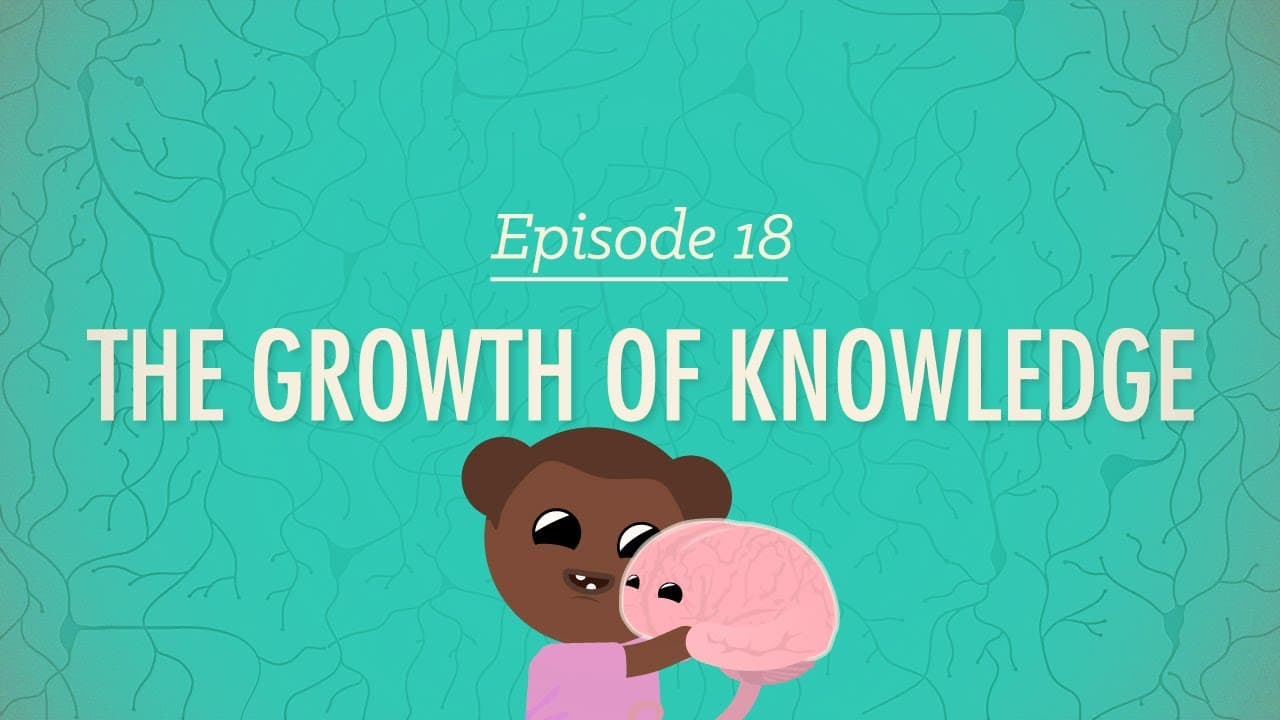
TL;DR
Cognitive development progresses through four stages proposed by Piaget: the sensorimotor stage (birth to age 2) focuses on sensory and motor skills, the preoperational stage (ages 2-7) is defined by egocentrism and imaginative play, the concrete operational stage (ages 7-11) involves logical thinking about concrete events, and the formal operational stage (ages 12 and up) incorporates abstract reasoning and problem-solving.
Transcript
Even though you can't see me, you know that I am here talking to you. And I can probably persuade you that this container of water and this container of water have the same amount of water, which they do, even though they don't look like they do. And you'll see I left my anglerfish behind me. If someone were to move it without my knowing, you'd rig... Read More
Key Insights
- Cognitive development involves a sequence of behavioral and appearance changes, influenced by genetics and environment.
- Jean Piaget's theory highlights four stages of cognitive development, each characterized by distinct learning processes.
- Schemas are mental frameworks that help interpret information, evolving through assimilation and accommodation.
- The sensorimotor stage involves learning through senses and actions, with object permanence as a key milestone.
- The preoperational stage is marked by egocentrism and difficulty with concepts like conservation and reversibility.
- Concrete operational stage allows logical thinking about concrete events and overcoming centration issues.
- Formal operational stage involves abstract thinking, problem-solving, and hypothetical reasoning.
- Lev Vygotsky emphasized social interaction and language in cognitive development, contrasting Piaget's stages.
Install to Summarize YouTube Videos and Get Transcripts
Explore YouTube Video Summarizer or Get YouTube Transcript Extractor
Questions & Answers
Q: What is the sensorimotor stage in Piaget's theory?
The sensorimotor stage is the first of Piaget's four stages of cognitive development, spanning from birth to about two years of age. During this stage, infants experience the world through their senses and actions, such as touching and grasping. A key milestone is the development of object permanence, the understanding that objects continue to exist even when they are out of sight.
Q: How does Piaget's preoperational stage differ from the sensorimotor stage?
The preoperational stage, occurring from ages two to about six or seven, follows the sensorimotor stage. It is characterized by egocentrism, where children struggle to see perspectives other than their own. Unlike the sensorimotor stage, children in the preoperational stage can mentally represent objects and events with words and images, but they still struggle with concepts like conservation and reversibility.
Q: What are schemas according to Piaget?
Schemas, as defined by Piaget, are mental frameworks or concepts that help individuals interpret and organize information. They range from simple physical objects to complex abstract ideas. As individuals encounter new experiences, they adapt their schemas through processes known as assimilation, integrating new information into existing schemas, and accommodation, adjusting schemas to incorporate new experiences.
Q: What criticisms have been made about Piaget's four-stage model?
Piaget's four-stage model has faced criticism for being overly rigid and simplifying cognitive development. Critics argue that the model does not account for the variability in children's development and that certain cognitive abilities can appear earlier than Piaget suggested. Additionally, some researchers view cognitive development as a continuous process rather than distinct stages.
Q: How does Vygotsky's theory differ from Piaget's?
Vygotsky's theory contrasts with Piaget's by emphasizing the role of social interaction and language in cognitive development. Vygotsky believed that children learn through guided interactions with caregivers and within their cultural context. He proposed the concept of scaffolding, where adults provide support to help children reach higher levels of understanding, in contrast to Piaget's focus on stages driven by individual exploration.
Q: What is the formal operational stage in Piaget's theory?
The formal operational stage is the last of Piaget's four stages, beginning around age twelve and continuing into adulthood. This stage is characterized by the ability to think abstractly, reason logically, and solve hypothetical problems. Individuals in this stage can consider multiple perspectives and engage in systematic planning and problem-solving, marking a significant advancement from earlier stages.
Q: What role does language play in Vygotsky's theory?
In Vygotsky's theory, language is a crucial tool for cognitive development. He argued that language facilitates thought processes and understanding by allowing individuals to assign meaning to objects and experiences. Through language, children can communicate, learn from others, and internalize cultural norms, which supports their cognitive growth and development.
Q: How do Piaget's and Vygotsky's theories complement each other?
While Piaget focused on stages of individual cognitive development, Vygotsky emphasized the importance of social and cultural influences. Together, their theories provide a more comprehensive understanding of cognitive development, acknowledging both the role of individual exploration and the impact of social interactions and cultural context in shaping a child's learning and cognitive abilities.
Summary & Key Takeaways
-
Cognitive development is a complex process influenced by both genetic and environmental factors, beginning from prenatal stages and continuing throughout life. Piaget's theory outlines four stages of cognitive growth, each with distinct characteristics, highlighting how children think differently than adults.
-
Piaget introduced concepts like schemas, assimilation, and accommodation to explain how knowledge grows. His stages include sensorimotor, preoperational, concrete operational, and formal operational, each representing different cognitive capabilities and understanding of the world.
-
Vygotsky offered a contrasting view, focusing on social interaction and language as key drivers of cognitive development. He proposed that cultural context and caregiver guidance play crucial roles in shaping a child's learning and understanding.
Read in Other Languages (beta)
Share This Summary 📚
Summarize YouTube Videos and Get Video Transcripts with 1-Click
Try YouTube Summary with ChatGPT & Claude or YouTube Transcript Generator
Explore More Summaries from CrashCourse 📚



Summarize YouTube Videos and Get Video Transcripts with 1-Click
Try YouTube Summary with ChatGPT & Claude or YouTube Transcript Generator