How Marc Andreessen Built Netscape and the Web Browser
TL;DR
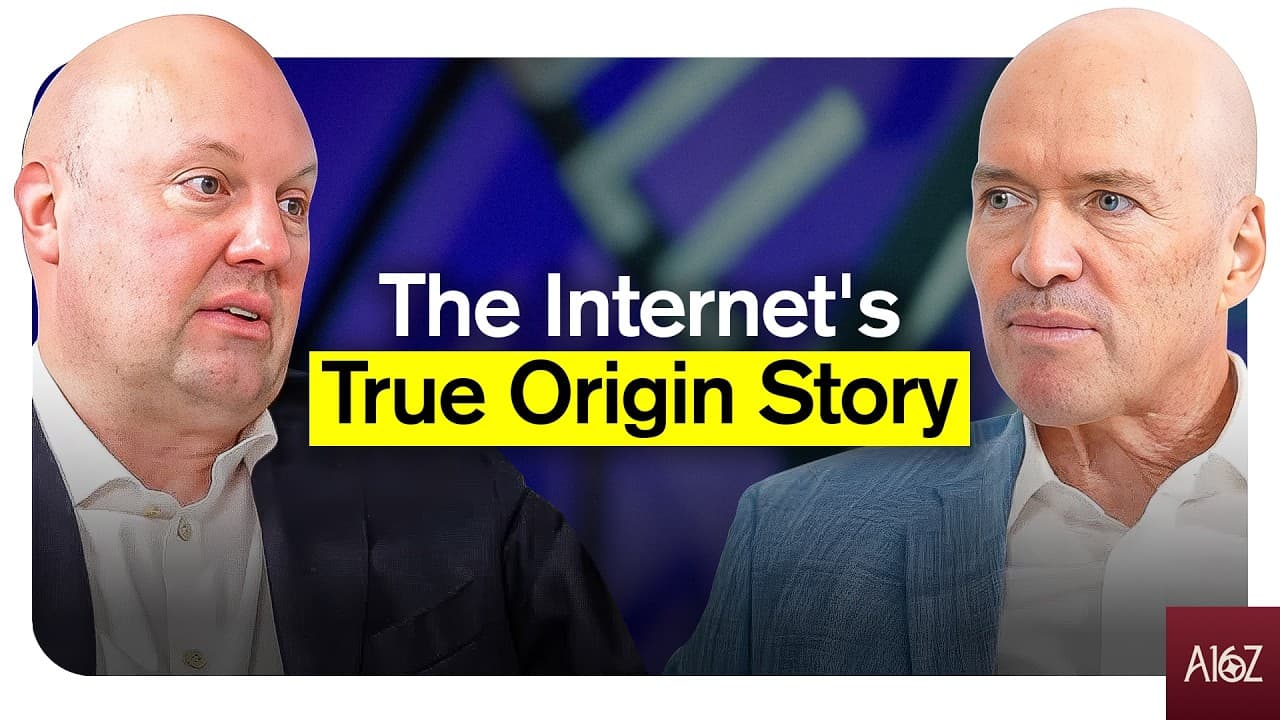
Marc Andreessen discusses the creation of the first web browser, Mosaic, and the founding of Netscape. He highlights the challenges and opportunities faced in the early days of the internet, including the lack of venture capital knowledge and the importance of open platforms. Andreessen's insights provide a historical perspective on how the internet evolved from a research network to a commercial platform.
Transcript
okay you idiot like this like Giant commercial opportunity is staring you in the face you you literally have like inbound sales leads like coming out of your ears like why don't you go raise venture capital and start a company yeah and of course the answer was because I had no idea that there was such a thing as Venture Capital venture capital I li... Read More
Key Insights
- Marc Andreessen co-created the Mosaic web browser, which was the first to popularize the graphical interface for the web.
- The internet was initially a non-commercial research network, with commercial activity banned until the early 1990s.
- Andreessen and his team assumed future internet speeds and graphical interfaces, designing Mosaic accordingly.
- The open platform nature of Mosaic allowed anyone to create web servers and content, spurring rapid internet growth.
- Early internet debates included whether to include images, as many believed the internet should remain text-based.
- Andreessen's team operated without commercial support, leading to unique challenges like handling all user support inquiries.
- The first e-commerce site was a small bookstore using a fax machine to process online orders, highlighting early internet innovation.
- Andreessen's experience reflects the broader transition from a research-focused internet to a commercial and consumer-driven platform.
Install to Summarize YouTube Videos and Get Transcripts
Explore YouTube Video Summarizer or Get YouTube Transcript Extractor
Questions & Answers
Q: How did Marc Andreessen contribute to the development of the web browser?
Marc Andreessen co-created the Mosaic web browser, which was the first to popularize a graphical interface for the internet. This innovation made the web accessible to a broader audience and catalyzed the transition from a text-based research network to a commercial platform. Andreessen's emphasis on an open platform allowed for widespread content creation and server development, significantly accelerating internet adoption.
Q: What challenges did Andreessen face in the early days of the internet?
Andreessen faced numerous challenges, including a lack of venture capital knowledge and the need to support a rapidly growing user base without commercial backing. The internet was initially a non-commercial research network, and Mosaic's team operated with limited resources. They had to handle all user support inquiries and navigate debates over content types, such as whether to include images in web pages.
Q: Why was the open platform nature of Mosaic important?
The open platform nature of Mosaic was crucial because it allowed anyone to create web servers and content easily. This inclusivity spurred rapid growth and innovation on the internet, as users worldwide could contribute to its expansion. The ability to view and replicate web page source code democratized web development, enabling a diverse range of content and applications to flourish.
Q: What was the significance of the first e-commerce site?
The first e-commerce site, a small bookstore using a fax machine to process online orders, highlighted early internet innovation. It demonstrated the commercial potential of the web by allowing international customers to purchase books remotely. This pioneering effort paved the way for future e-commerce platforms, illustrating the internet's capacity to transform traditional business models.
Q: How did Mosaic influence internet adoption?
Mosaic significantly influenced internet adoption by providing a user-friendly graphical interface that made the web accessible to non-technical users. Its open platform enabled widespread content creation, encouraging more people to get online. The browser's success helped catalyze the development of consumer ISPs and the transition from text-based systems to graphical interfaces, driving broader internet usage.
Q: What debates surrounded the early internet's development?
Early internet development was marked by debates over content types and network efficiency. Some argued against including images, believing the internet should remain text-based and scientific. Others feared mass-market content would attract the wrong users. However, Andreessen and his team advocated for a graphical, inclusive internet, believing it would maximize the web's potential and accessibility.
Q: How did Andreessen's team handle user support for Mosaic?
Andreessen's team handled user support for Mosaic by personally managing all inquiries, as they lacked commercial resources for a dedicated support staff. This responsibility extended to support for the entire internet, as many users were new to the web. Despite being overwhelmed, the team maintained an open communication channel with users, fostering a collaborative and responsive community.
Q: What role did commercial activity play in the internet's evolution?
Commercial activity played a pivotal role in the internet's evolution by transforming it from a research network to a consumer platform. The lifting of the acceptable use policy, which banned commercial use, allowed businesses to explore e-commerce opportunities. This shift encouraged investment in internet infrastructure and services, enabling the web to become a central part of global commerce and communication.
Summary & Key Takeaways
-
Marc Andreessen played a pivotal role in the development of the web browser, co-creating Mosaic, which introduced a graphical interface to the internet. This innovation helped transition the internet from a research tool to a commercial platform. Despite initial skepticism and resource constraints, Mosaic's open platform enabled widespread content creation, accelerating internet adoption.
-
The early internet faced significant challenges, including a lack of commercial infrastructure and debates over content types. Andreessen and his team chose to design Mosaic for future capabilities, betting on faster internet speeds and graphical interfaces. This foresight, combined with an open platform philosophy, allowed the web to flourish and laid the groundwork for the modern internet.
-
Andreessen's story underscores the importance of vision and adaptability in technology development. By embracing an open and inclusive approach, Mosaic empowered users worldwide to contribute to the web's growth. This democratization of content creation and access was crucial in overcoming the cold start problem and establishing the internet as a global communication and commerce platform.
Read in Other Languages (beta)
Share This Summary 📚
Summarize YouTube Videos and Get Video Transcripts with 1-Click
Try YouTube Summary with ChatGPT & Claude or YouTube Transcript Generator
Explore More Summaries from The Ben & Marc Show 📚






Summarize YouTube Videos and Get Video Transcripts with 1-Click
Try YouTube Summary with ChatGPT & Claude or YouTube Transcript Generator