Superhuman's Founder on How to Move Beyond Gamification
TL;DR
To move beyond gamification, design business software around concrete, achievable, and rewarding goals instead of adding points, levels, trophies, or badges. Superhuman makes inbox zero achievable through a one-to-one, 30-minute concierge onboarding call, fast workflows, and keyboard shortcuts. It also uses nuanced emotions, responsive controls, immediate feedback, balanced challenges, and playful exploration. Read on for the five game-design factors behind this approach.
Transcript
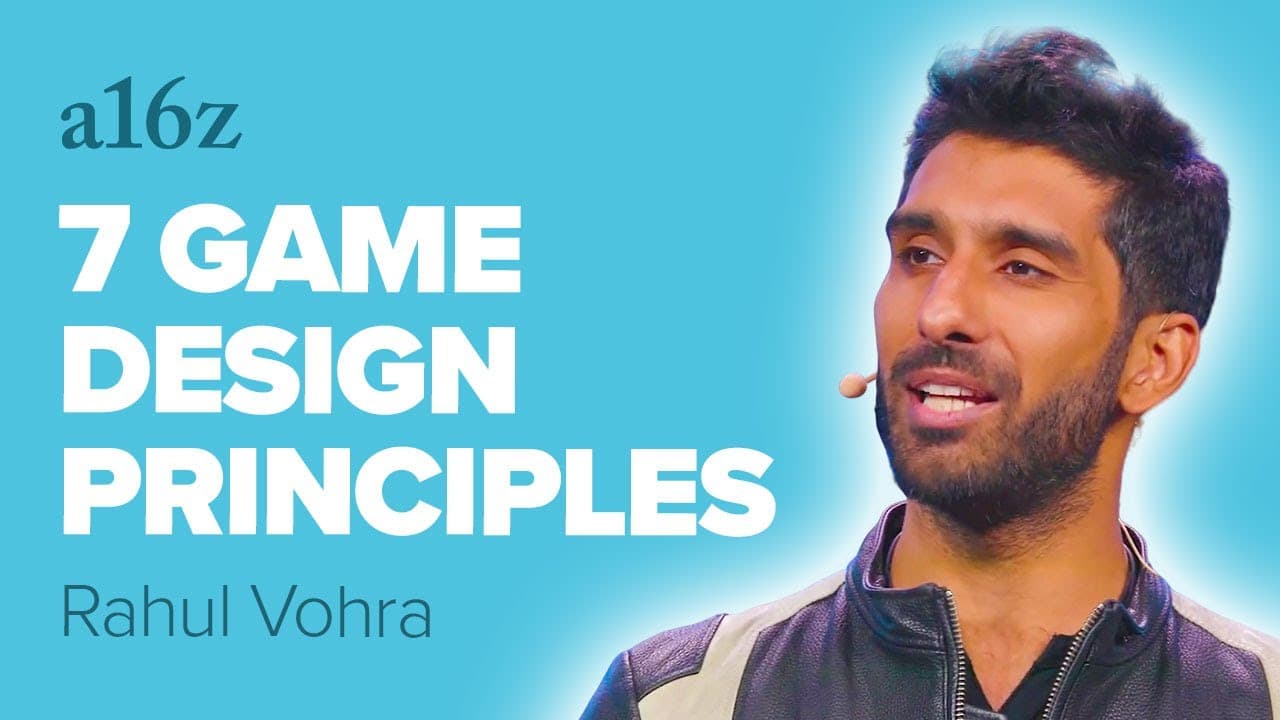
imagine you're playing a game like Street Fighter it would be incredibly frustrating if the game ignored half your inputs and your character flopped around and then you died but that is the status quo for business software today good afternoon everybody I'm Rahul I'm the founder and CEO of super human where we make the fastest email experience in t... Read More
Key Insights
- 😥 Gamification, adding points and badges, is not effective in increasing motivation in business software.
- 👤 Concrete, achievable, and rewarding goals can enhance the user experience in software design.
- 👤 Designing for nuanced emotions can create a more engaging and enjoyable user experience.
- 👨💼 Rapid and robust controls are crucial to prevent user frustration in business software.
- 💐 Flow, intense and focused concentration, can be achieved through clear and immediate feedback, minimizing distractions, and balancing challenge with skill.
- 👻 Creating fun toys and allowing for playful exploration can enhance the user experience.
Install to Summarize YouTube Videos and Get Transcripts
Explore YouTube Video Summarizer or Get YouTube Transcript Extractor
Questions & Answers
Q: How can product designers move beyond gamification?
Replace superficial rewards such as points, levels, trophies, and badges with an experience that is inherently satisfying and interesting. The five factors presented are goals, emotions, controls, flow, and fun toys that support playful exploration.
Q: What is the difference between game design and gamification?
Gamification adds external rewards such as points, levels, trophies, and badges to a product. Game design shapes the underlying experience through goals, emotions, controls, flow, and playful exploration.
Q: Why does Rahul say gamification does not work?
He argues that rewards can undermine intrinsic motivation, which comes from finding an activity inherently satisfying and interesting. In the cited study of 50 children aged 3 to 4, unrewarded children spent 17 percent of their time drawing afterward, while rewarded children spent 8 percent.
Q: What makes a good goal in game-inspired software design?
A good goal is concrete, achievable, and rewarding. Superhuman uses the concrete goal of inbox zero, helps users reach it through onboarding and faster workflows, and makes completion feel triumphant.
Q: How does Superhuman make inbox zero achievable?
Each new user receives a one-to-one, 30-minute live concierge onboarding call with an onboarding specialist. Users learn faster workflows and powerful shortcuts, and those far from inbox zero can have the slate wiped clean so the goal starts closer within reach.
Q: How can emotions improve a software experience?
Designers can identify specific emotions they want to create or remove, because emotions are described as the foundation of memory. Superhuman designs for enthusiasm, excitement, hopefulness, optimism, pride, and triumph, then shows striking imagery at inbox zero to evoke serenity, surprise, longing, amazement, and inspiration.
Q: How can software create a state of flow?
Users should always know what to do next and how to do it, with clear and immediate feedback after each action. Designers should also minimize distractions and balance perceived challenge with perceived skill.
Q: Why are rapid and robust controls important in business software?
Slow or unreliable controls create frustration, like a game that ignores inputs and causes the character to fail. Business software should respond rapidly and robustly so users feel that their actions are recognized and under their control.
Summary
In this video, Rahul, the founder and CEO of Superhuman, discusses how game design can be applied to business software to make it more engaging and enjoyable. He emphasizes that game design is different from gamification, which simply adds points or badges to a product. Rahul explores the principles of game design, including setting concrete and rewarding goals, designing for nuanced emotions, creating rapid and robust controls, making fun toys, and fostering flow. By following these principles, businesses can create software that is intrinsically motivating and enjoyable for users.
Questions & Answers
Q: What is the difference between game design and gamification?
Game design is not the same as gamification. Gamification involves adding points, levels, and badges to a product, but it often fails to motivate users in the long run. Game design, on the other hand, focuses on creating an engaging and enjoyable experience by setting concrete and rewarding goals, designing for nuanced emotions, and fostering flow.
Q: How can setting goals enhance the game design of business software?
Goals are a defining feature of games, and in game design, it is essential to set good goals that are concrete, achievable, and rewarding. For example, at Superhuman, their goal is to help users reach inbox zero. They make this goal achievable by providing live concierge onboarding, teaching faster workflows and powerful shortcuts. When users achieve the goal of inbox zero, they feel a sense of triumph and accomplishment.
Q: Why does gamification often fail to work in motivating users?
Gamification often fails because rewards can undermine intrinsic motivation. In a study, children who were given a reward for drawing spent less time drawing than those who were not given a reward. Intrinsic motivation, where we do things because we find them inherently satisfying and interesting, is much more powerful than extrinsic motivation driven by rewards. Therefore, adding points, levels, or badges to a product may not actually motivate users in the long run.
Q: How can software designers create games without a unifying theory of game design?
While there may not be a single unifying theory of game design, software designers can draw upon various disciplines such as psychology, mathematics, interaction design, and storytelling to create engaging and enjoyable games. It's a matter of combining the art and science of game design to create a compelling user experience.
Q: How can designers create nuanced emotions in their software?
Designers can create nuanced emotions by understanding human emotions and using them to enhance the user experience. Building upon existing emotion models such as Plutchik's wheel of emotions, designers can focus on specific emotions such as joy, enthusiasm, excitement, hopefulness, optimism, pride, and triumph. By incorporating elements that evoke these emotions, such as stunning imagery and moments of pleasant surprise, designers can create a more emotionally engaging experience.
Q: How can rapid and robust controls improve the game design of business software?
Business software often lacks rapid and robust controls, which can lead to frustration and distraction. In game design, it is essential to ensure that user inputs are not ignored and that actions are executed smoothly and accurately. For example, in Superhuman, pipeline keystrokes are used to prevent errors like sending an email to the wrong recipient. By incorporating such controls, designers can create a more seamless and enjoyable user experience.
Q: How can designers create fun toys that enhance the game design of their products?
Fun toys can add an extra layer of enjoyment to a product. Designers can create toys by providing features or interactions that inspire playful exploration and provide moments of pleasant surprise. For example, in Superhuman, the time autocomplete feature allows users to snooze their emails using natural language inputs, such as typing "3 D" to snooze for 3 days. This playful exploration and unexpected results can make the product more enjoyable and engaging for users.
Q: What is flow, and why is it important in game design?
Flow is a state of intense and focused concentration on the present. It is absorbing, demanding, and rewarding, and it can lead to intrinsic motivation. Flow is important in game design because it enhances the user experience and makes activities more engaging. In flow, users are fully immersed in the task at hand, free from distractions, and have a clear understanding of what to do next. By creating conditions that foster flow, designers can make their software more enjoyable and motivating for users.
Q: How can designers create flow in their software?
Designers can create flow in their software by ensuring that users always know what to do next, how to do it, and by minimizing distractions. For example, in Superhuman, when users archive an email, they immediately see the next one, eliminating the need to decide what to do next. Clear feedback and a balance between challenge and skill are also key in creating flow. By providing immediate feedback on user actions and adjusting the difficulty level to match the user's skill, designers can foster flow and enhance the user experience.
Q: Why might making a product harder to use actually enhance its game design?
Counterintuitively, making a product harder to use can enhance its game design by creating a greater sense of challenge and engagement. For users who are already highly skilled or find the product too easy, increasing the challenge level can help balance their perceived skill with the perceived challenge. This balance is crucial in fostering flow and creating an intrinsically motivating experience for users.
Q: What are the seven principles of game design discussed in the video?
The seven principles of game design are as follows:
- Set concrete, achievable, and rewarding goals.
- Design for nuanced emotions.
- Create rapid and robust controls.
- Make fun toys and combine them into games.
- Foster flow by ensuring users always know what to do next, how to do it, have freedom from distractions, receive clear and immediate feedback, and feel a balance between challenge and skill.
These principles can help designers create software that is delightful, magical, and fundamentally engaging.
Takeaways
By applying game design principles to business software, designers can create products that are more engaging, enjoyable, and intrinsically motivating for users. Setting concrete and rewarding goals, designing for nuanced emotions, creating rapid and robust controls, making fun toys, and fostering flow are key elements of game design that can enhance the user experience. By following these principles, businesses can transform their software into captivating games that users love to engage with.
Summary & Key Takeaways
-
Business software often feels like work, but game design principles can make it more enjoyable and engaging.
-
Gamification, adding points and badges to a product, is not effective in increasing motivation.
-
Designing software with concrete, achievable, and rewarding goals, as well as creating strong emotions and providing rapid and robust controls, can enhance the user experience.
Read in Other Languages (beta)
Share This Summary 📚
Summarize YouTube Videos and Get Video Transcripts with 1-Click
Try YouTube Summary with ChatGPT & Claude or YouTube Transcript Generator
Explore More Summaries from a16z 📚






Summarize YouTube Videos and Get Video Transcripts with 1-Click
Try YouTube Summary with ChatGPT & Claude or YouTube Transcript Generator