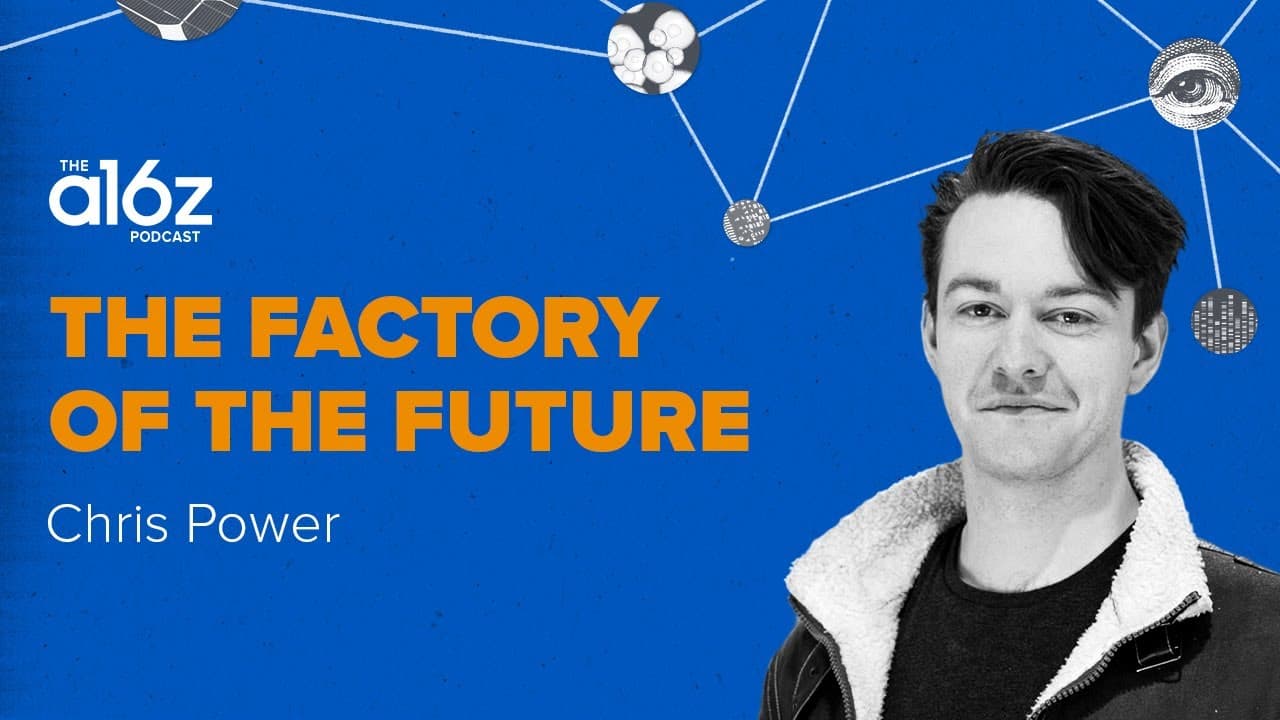
The Factory of the Future with Chris Power
TL;DR
Advanced manufacturing involves complex processes essential for industries like aerospace and defense, but it faces a critical talent shortage and an aging workforce. Hadrian aims to tackle these challenges by automating processes, simplifying tasks, and developing clear career pathways, which are vital for national security and economic stability.
Transcript
in some ways it's Manifest Destiny like humans are built to expand and explore and that is just like a core Drive of the species and with that sort of an argument it just comes down to like growth versus degrowth like that is the Eternal cultural fight and you can call it capitalism or communism or you can call it like the state versus the people o... Read More
Key Insights
- 🤕 The advanced manufacturing industry is facing a critical talent shortage due to an aging workforce and a lack of interest in manufacturing careers.
- ⛓️ The complexity of advanced manufacturing processes and the fragmented supply chain contribute to inefficiencies and delays.
- ❓ Hadrian's approach combines technology and talent development to address these challenges and revolutionize advanced manufacturing.
- 🤣 The success of advanced manufacturing solutions relies on clear communication and collaboration between software engineers and technicians on the factory floor.
- 🧑🏭 Implementing a robust factory data platform provides real-time visibility and helps identify areas for improvement and optimization.
- 📅 Reliability and predictability in manufacturing processes enable companies to compress schedules, reduce costs, and better meet customer demands.
- 🥺 Scaling too quickly without addressing underlying issues can lead to increased technical debt and negatively impact production.
Install to Summarize YouTube Videos and Get Transcripts
Explore YouTube Video Summarizer or Get YouTube Transcript Extractor
Questions & Answers
Q: What is the main issue driving the need for advanced manufacturing solutions?
The main issue is the impending retirement of skilled workers and the lack of a younger generation entering the manufacturing workforce. This creates a talent shortage and poses a significant risk to industries relying on advanced manufacturing.
Q: How does Hadrian plan to address the talent shortage in advanced manufacturing?
Hadrian aims to automate and simplify processes, making it easier for individuals without prior manufacturing experience to enter the industry. They provide training and career opportunities, incentivizing new talent to join and thrive in manufacturing roles.
Q: What are the key challenges faced by the advanced manufacturing industry?
The industry struggles with an outdated supply chain, unreliable parts delivery, lack of documentation, and the need for improved automation. These challenges hinder efficiency, increase costs, and pose risks to national security.
Q: How does Hadrian prioritize its projects and investments?
Hadrian focuses on identifying pain points and bottlenecks in advanced manufacturing processes. They prioritize projects that can automate complex tasks, simplify operations, and have a significant impact on cost reduction and time-to-market.
Summary
In this video, Chris from Hadrian discusses the concept of advanced manufacturing and the importance of solving the talent pipeline and automation issues in the industry. He explains the current challenges in the defense and space manufacturing sectors, including outdated processes, lack of documentation, and retiring workers. Chris emphasizes the need for a cultural shift to make manufacturing more attractive and rewarding for new talent. He also describes how Hadrian is using technology to simplify and automate manufacturing processes while training and incentivizing workers to adapt to the changing industry.
Questions & Answers
Q: What is advanced manufacturing?
Advanced manufacturing refers to the complex and high-precision side of various industries, such as semiconductors, aerospace, and defense. It involves using advanced technology and processes to achieve greater precision and efficiency in manufacturing.
Q: What are the current challenges in advanced manufacturing?
One major challenge is the outsourcing of manufacturing components, which leads to a complex and chaotic supply chain. Many defense products, such as fighter jets, are made up of multiple components produced by different suppliers. The lack of documentation and knowledge transfer poses a risk, as demonstrated by incidents of missing or undocumented parts. Another challenge is the aging workforce in manufacturing, with many skilled workers retiring and a lack of young talent entering the industry.
Q: How does the lack of documentation and knowledge transfer affect advanced manufacturing?
The lack of documentation and knowledge transfer in manufacturing can lead to delays, inefficiencies, and potential risks. For example, if a part or component is not properly documented, it becomes difficult to replicate or replace it. It may require reverse engineering or extensive research to recreate the part, leading to significant time and cost implications. Additionally, undocumented processes or changes in suppliers can cause unexpected issues and quality problems in the manufacturing process.
Q: What has happened in advanced manufacturing in the last few decades?
Over the last few decades, there has been a shift from domestic manufacturing to outsourcing to lower-cost countries. This has resulted in the loss of manufacturing skills and expertise in advanced industries. The focus on profit optimization has led to a fragmented supply chain and a lack of robustness in manufacturing processes. The absence of major conflicts or challenges has masked the underlying issues. However, as the need for advanced manufacturing capabilities increases, these challenges are becoming more apparent.
Q: How many companies are involved in advanced manufacturing?
The defense industrial base, which includes various advanced manufacturing sectors, consists of around 20,000 to 30,000 small businesses. These businesses often have 10 to 20 million dollars in revenue and around 15 to 20 employees. However, the average age of workers and small business owners in this sector is high, with an average of 55 for workers and 62 for owners. This poses a risk as these individuals retire without a new generation ready to take over their businesses or possess the same manufacturing knowledge and skills.
Q: What is the impact of retiring workers and the lack of knowledge transfer in advanced manufacturing?
The retirement of skilled workers in advanced manufacturing, coupled with the lack of new talent entering the industry, poses a significant risk. The knowledge and skills required for manufacturing complex components are often not documented or easily transferable. As a result, when experienced workers retire, there is a gap in expertise and the ability to reproduce critical components. This can lead to delays, quality issues, and inefficiencies in manufacturing processes. Without a new generation of skilled workers, the industry faces challenges in adapting to technological advancements and increasing demand.
Q: How can technology be used to solve the talent pipeline problem in advanced manufacturing?
Technology can play a crucial role in addressing the talent pipeline problem in advanced manufacturing. By automating repetitive and mundane tasks, technology frees up workers to focus on more complex and creative aspects of manufacturing. Software solutions can simplify processes and provide guidelines to less experienced workers, enabling them to contribute to manufacturing tasks within a relatively short period of time. Additionally, technology can aid in the documentation and preservation of manufacturing knowledge, ensuring that critical information is not lost when experienced workers retire.
Q: What is the role of cultural perception in solving the talent pipeline problem?
Cultural perception plays a significant role in attracting new talent to the manufacturing industry. Manufacturing needs to be seen as an attractive and rewarding career option. However, the perception of manufacturing as a low-skilled, manual labor job often discourages young talent from pursuing it. To address this, cultural change is necessary to highlight the importance and value of manufacturing in advancing technology, innovation, and national security. By showcasing the opportunities for growth, development, and financial success in the industry, more young talent can be encouraged to enter the manufacturing workforce.
Q: How is Hadrian using technology to transform advanced manufacturing?
Hadrian is utilizing technology to automate and simplify manufacturing processes. By developing software solutions and integrating them into different parts of the manufacturing workflow, the company aims to remove repetitive and low-value tasks. This allows workers to focus on higher-skilled and more complex aspects of manufacturing. Furthermore, Hadrian is creating a highly process-driven approach to ensure that even less experienced workers can contribute effectively within a short span of time. The goal is to streamline and optimize manufacturing processes while leveraging technology to close the talent gap.
Q: How do incentives play a role in convincing existing workers to share their knowledge?
Incentives are crucial in motivating existing workers to share their knowledge and contribute to the transformation of advanced manufacturing. Hadrian offers its workers equity in the company, giving them an opportunity to create generational wealth. This incentive not only fosters a sense of ownership and pride in their work but also encourages workers to actively participate in knowledge sharing and training programs. By aligning their incentives with the success of the company and the industry as a whole, workers are motivated to contribute and adapt to the changing manufacturing landscape.
Q: How does the simplification of processes in advanced manufacturing benefit the talent pipeline?
Simplifying processes in advanced manufacturing opens up opportunities for individuals with varying skill levels to contribute. By breaking down complex tasks into simpler components, it becomes easier to train and onboard new workers. This helps in expanding the talent pipeline and attracting individuals from different backgrounds who may not have extensive prior experience in manufacturing. The simplified processes also allow existing workers to transition into different roles within the manufacturing ecosystem, thereby ensuring a more flexible and adaptable workforce.
Summary & Key Takeaways
-
Hadrian is a company focused on advanced manufacturing, aiming to automate and simplify complex processes in industries such as aerospace, defense, and semiconductors.
-
The current state of advanced manufacturing is plagued by a lack of skilled talent, aging workforce, and a fragmented supply chain, which poses a significant risk to national security and economic stability.
-
Hadrian's approach involves using technology to solve the talent pipeline challenge, automating processes, simplifying tasks, and providing clear career pathways for individuals to thrive in manufacturing roles.
Read in Other Languages (beta)
Share This Summary 📚
Summarize YouTube Videos and Get Video Transcripts with 1-Click
Try YouTube Summary with ChatGPT & Claude or YouTube Transcript Generator
Explore More Summaries from The a16z Podcast 📚





Summarize YouTube Videos and Get Video Transcripts with 1-Click
Try YouTube Summary with ChatGPT & Claude or YouTube Transcript Generator