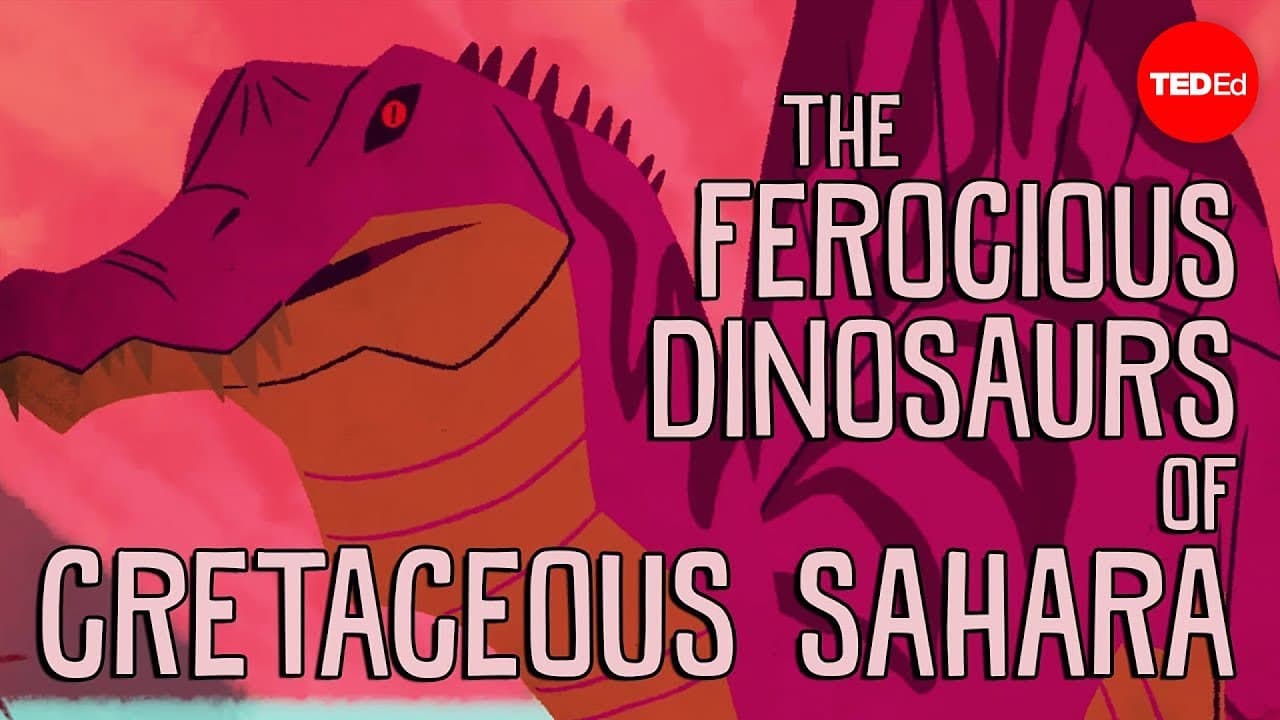
The ferocious predatory dinosaurs of Cretaceous Sahara - Nizar Ibrahim
TL;DR
Cretaceous Sahara supported many apex predators because its vast river system contained an extraordinary variety of aquatic prey, especially fish. Fossils from the Kem Kem Beds show how specialized hunters, including crocodile-like predators, flying reptiles, theropod dinosaurs, and the 15-meter Spinosaurus, exploited different prey while limiting direct competition. Read on to discover how these predators hunted and what ultimately erased their remarkable ecosystem.
Transcript
There are few places on Earth less hospitable to life than the bone-dry Sahara Desert. Yet it wasn't always this way. 100 million years ago, during a period known as the Mid-Cretaceous, a gargantuan river system flowed across the region from modern day Egypt to Morocco. The whole world at that time would look rather different to us. The continents... Read More
Key Insights
- 🛟 The Sahara Desert was once a thriving river system, teeming with life and dominated by predators.
- 👻 The unique ecosystem allowed for the coexistence of a large number of apex predators due to the abundance of aquatic prey.
- ❓ Fossils found in the Kem Kem Beds provide valuable insights into the adaptations and behaviors of prehistoric predators.
- 😉 Spinosaurus, with its large size and specialized jaws, was the king of the River of Giants.
Install to Summarize YouTube Videos and Get Transcripts
Explore YouTube Video Summarizer or Get YouTube Transcript Extractor
Questions & Answers
Q: Why could so many apex predators coexist in Cretaceous Sahara?
The river ecosystem contained an extraordinary variety of aquatic prey, giving its dominant predators abundant food. Their different head and body shapes also helped them hunt different kinds and sizes of prey, reducing direct competition.
Q: What was the Sahara like during the Mid-Cretaceous period?
The region was crossed by an immense river system extending from modern Egypt to Morocco. It was a hot, unpredictable world inhabited by dinosaurs, pterosaurs, giant marine reptiles, sharks, and small mammals.
Q: What do fossils from the Kem Kem Beds reveal?
The fossils reveal an ecosystem unusually rich in large predators. They also show that many predators had distinctive head and body shapes adapted for catching aquatic prey.
Q: Which predators lived in the River of Giants?
The ecosystem included flying reptiles, crocodile-like hunters, and several meat-eating theropod dinosaurs comparable in size to T. rex. Spinosaurus occupied the top of this predator-rich food web.
Q: How was Spinosaurus adapted to catch aquatic prey?
Spinosaurus had short, powerful hind legs, a flexible tail, broad feet, and long, narrow jaws. Its jaws contained conical teeth suited to quickly seizing slippery aquatic prey.
Q: How large was Spinosaurus?
Spinosaurus reached 15 meters in length and was longer than T. rex. It also carried a sail about two meters tall, which displayed its imposing size and may have helped attract mates.
Q: How did flying and crocodile-like predators hunt in this ecosystem?
The flying reptile Alanqa saharica had a wingspan reaching nine meters and slender jaws for catching fish and small land animals. The waterways also held crocodile-like predators such as Elosuchus, which grew to nearly ten meters long.
Q: What happened to the Cretaceous Sahara ecosystem?
Around 93 million years ago, rising sea levels submerged the Kem Kem region beneath a shallow sea. Tens of millions of years later, an asteroid impact, volcanic eruptions, and related climate changes eliminated dinosaurs, pterosaurs, many other organisms, and their distinctive ecosystems.
Summary & Key Takeaways
-
The Sahara Desert was once a massive river system during the Mid-Cretaceous period, hosting a diverse range of predators and prey.
-
Fossils found in the Kem Kem Beds provide evidence of the unique adaptations of predators to hunt aquatic prey.
-
The apex predator of this ecosystem was Spinosaurus, a massive dinosaur with a sail on its back and long jaws specialized for catching fish.
Read in Other Languages (beta)
Share This Summary 📚
Summarize YouTube Videos and Get Video Transcripts with 1-Click
Try YouTube Summary with ChatGPT & Claude or YouTube Transcript Generator
Explore More Summaries from TED-Ed 📚





Summarize YouTube Videos and Get Video Transcripts with 1-Click
Try YouTube Summary with ChatGPT & Claude or YouTube Transcript Generator