What Is Homeopathy and How Does It Work?
TL;DR
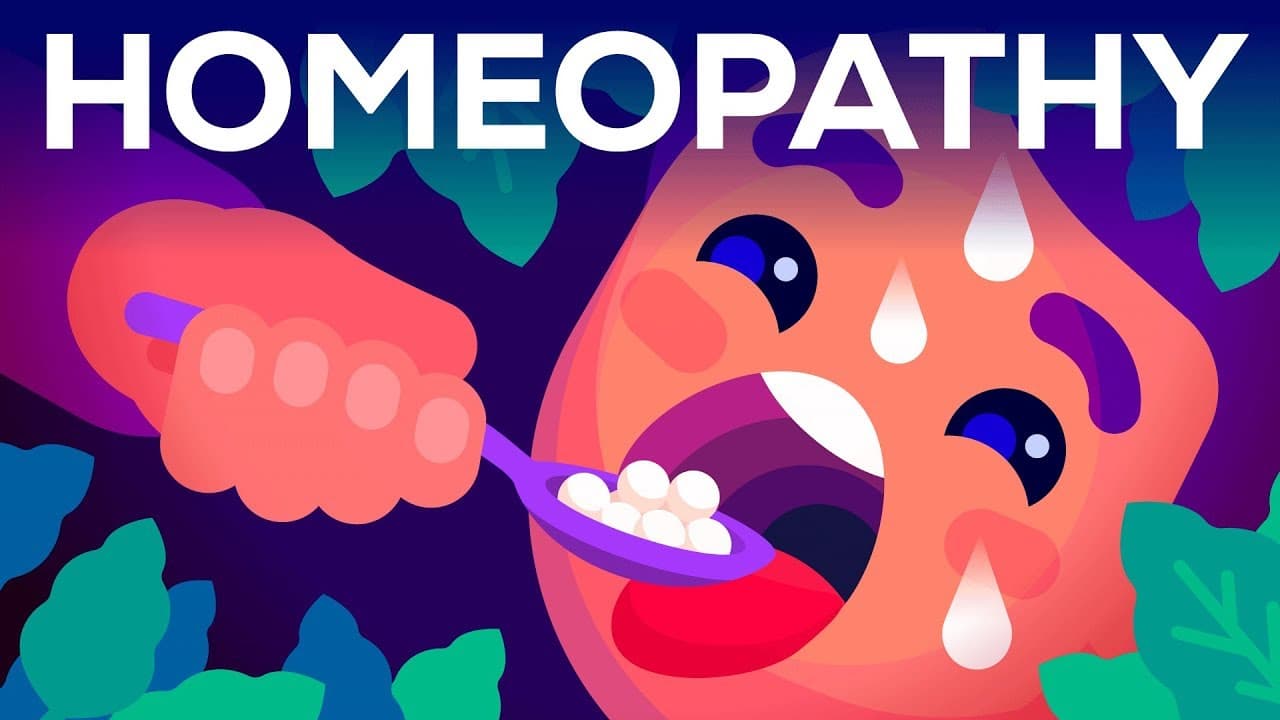
Homeopathy is based on the principle of 'like cures like,' using highly diluted remedies that often contain no active ingredients. While scientific studies show it works no better than a placebo, its appeal lies in personal attention and the psychological effects of belief, which can lead to perceived health improvements.
Transcript
Homeopathy may be the most controversial but also the most popular alternative medicine. While some argue against it, others swear by its great power and effectiveness. How does homeopathy work? How did it become what it is today, and what can modern medicine learn from it? The first principle of homeopathy is "like cures like." Remedies use ingred... Read More
Key Insights
- 🤝 Homeopathy follows the principle of "like cures like" and employs potentization through extreme dilution and shaking.
- 🤨 Extreme dilution raises skepticism about the effectiveness of homeopathic remedies.
- 🖐️ The placebo effect plays a significant role in the perceived effectiveness of homeopathy.
- 🪡 Personal attention and empathy in homeopathic consultations fulfill a human need often unmet in modern medicine.
- ☢️ Homeopathic remedies have no active ingredients due to their extreme dilution.
- ❓ The homeopathy industry is financially lucrative and has its own lobby organizations.
- 🥺 Belief in homeopathy can lead to skepticism about vaccinations, potentially impacting public health.
Install to Summarize YouTube Videos and Get Transcripts
Explore YouTube Video Summarizer or Get YouTube Transcript Extractor
Questions & Answers
Q: How does homeopathy work?
Homeopathy works based on the principle of "like cures like," using ingredients that cause the symptoms you want to cure. Remedies are prepared through a process called potentization, involving extreme dilution and shaking.
Q: Are homeopathic remedies truly effective?
Scientific studies and reviews have conclusively shown that homeopathy has no effect beyond placebo. However, the placebo effect can have a genuine impact on a person's well-being, creating the perception of effectiveness.
Q: Why did homeopathy become popular in the past?
In the 18th century, when homeopathy was developed, medicine had limited treatment options, many of which were harmful. Homeopathy provided a non-invasive, natural alternative, leading to its initial success.
Q: Is homeopathy bad for public health?
Critics argue that the homeopathic industry, with its profits and lobby organizations, can create distrust in proven medicine and correlate with skepticism about vaccinations. This can deter individuals from receiving necessary medical help.
Summary & Key Takeaways
-
Homeopathy follows the principle of "like cures like," using ingredients that cause the symptoms they aim to cure.
-
Remedies are prepared through a process of potentization, which involves extreme dilution and shaking.
-
Most homeopathic remedies are so diluted that no measurable amount of the active ingredient remains.
Read in Other Languages (beta)
Share This Summary 📚
Summarize YouTube Videos and Get Video Transcripts with 1-Click
Try YouTube Summary with ChatGPT & Claude or YouTube Transcript Generator
Explore More Summaries from Kurzgesagt – In a Nutshell 📚





Summarize YouTube Videos and Get Video Transcripts with 1-Click
Try YouTube Summary with ChatGPT & Claude or YouTube Transcript Generator