How Can Defenders Slow Automated Cyberattacks?
TL;DR
Defenders can slow accelerating cyberattacks by replacing largely manual kill chain defenses with agile, automated responses, threat intelligence sharing, and deception techniques that dilute the attack surface. Offensive automation already compresses reconnaissance and exploit selection, while future swarm intelligence and artificial intelligence could reduce attack latency further, requiring security teams to move quickly and confidently.
Transcript
Uh, thanks for coming to my talk. I think this is really, uh, uh, interesting stuff. It's building on some material that I, I started talking about about a year and a half ago, uh, with swarm intelligence, um, swarm attacks. Um, this year I'm gonna be building on that, talking about the concept of a flash war. We're not there yet right now, thankfu... Read More
Key Insights
- Cyberattack latency is decreasing because automation removes repetitive human work from reconnaissance, target discovery, and exploit selection. Complex attacks once could take years from reconnaissance to exploitation, while automated tools are making portions of that process possible within minutes.
- The accelerated attack chain is the attacker's progression through planning, weaponization, gaining a foothold, moving inside the network, collecting information, and extracting it. Time to breach covers the sequence leading from initial planning through access to the targeted information.
- Cybercrime is organized as a business rather than merely an individual technical activity. A typical criminal enterprise can involve 30 to more than 40 people across hacking, social engineering, money laundering, and other specialized functions, supported by affiliate arrangements.
- Ransomware affiliate programs can pay middlemen commissions of 40 to 60 percent for infecting systems. These incentives support a broader cybercrime economy and encourage participants to accelerate operations, infect more targets, and generate profits more quickly.
- AutoSploit automates portions of attack planning and weaponization by combining Shodan, described as a blueprint of the Internet, with Metasploit. Using about four commands, an operator can download target lists and intelligently align available exploits with those targets.
- Automation is distinct from artificial intelligence because automation is a human-directed tool rather than an intelligent system. Its immediate value to attackers is eliminating routine work and freeing human operators to guide technology or make higher-level decisions.
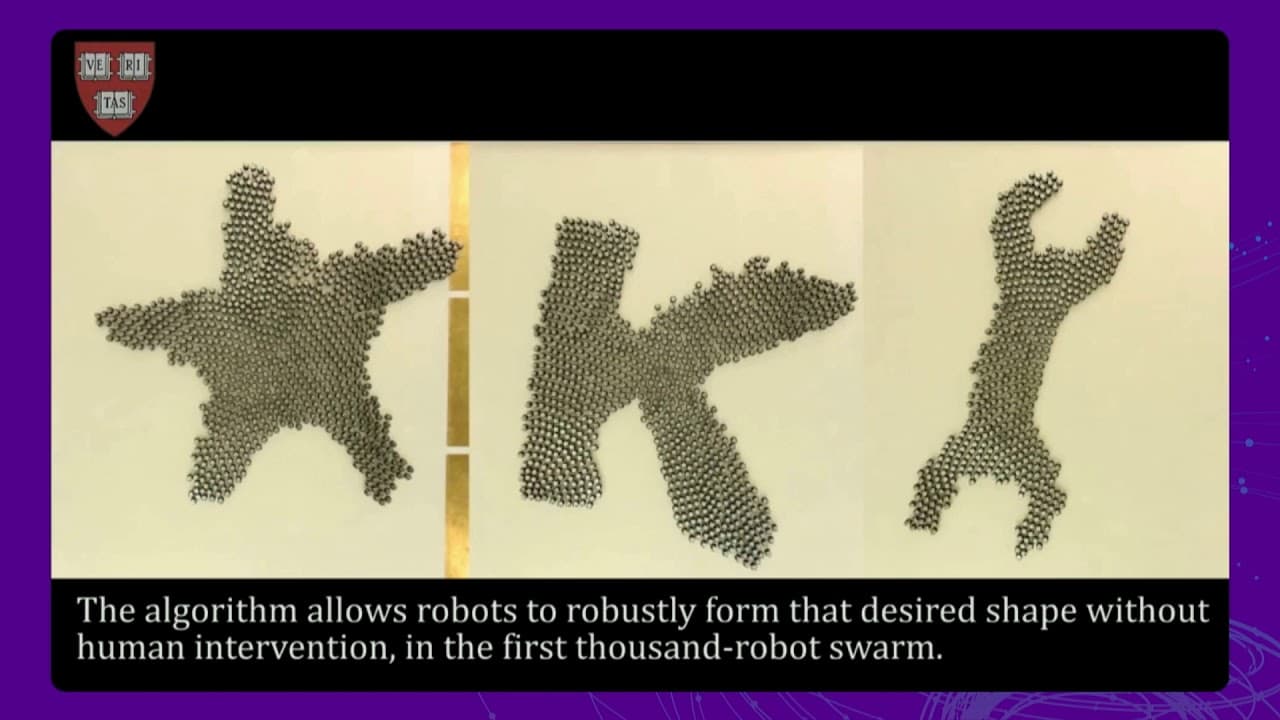
- Swarm intelligence uses multiple self-organized agents that communicate and cooperate to complete a complex task without continuous direction from a human or outside agent. Its strength comes from coordinated numbers, resembling collective behavior observed in flocks of birds.
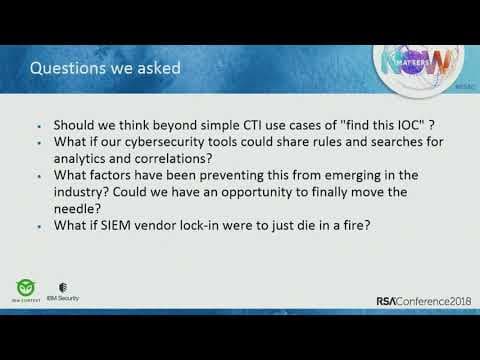
- Effective defense requires greater agility because a large human security team alone cannot scale against rapidly accelerating attacks. Automated response, trusted threat intelligence sharing, CTA STIX use cases, and mirror-based deception are presented as ways to taper the attack chain.
Install to Summarize YouTube Videos and Get Transcripts
Explore YouTube Video Summarizer or Get YouTube Transcript Extractor
Questions & Answers
Q: What is an accelerated cyberattack chain?
An accelerated cyberattack chain is the increasingly rapid sequence through which an attacker plans an operation, identifies weaknesses, selects or creates a weapon, gains a foothold, moves through a network, gathers targeted information, and extracts it. Automation reduces the human effort and latency within these phases, allowing portions of an attack that previously required extensive work to occur within minutes.
Q: How does offensive automation speed up cyberattacks?
Offensive automation speeds attacks by performing repetitive tasks that human operators would otherwise complete manually. It can identify exposed systems, determine operating systems, applications, servers, ports, and versions, then match susceptible targets with suitable exploits. Removing this day-to-day work lets attackers establish a foothold faster, progress through the attack chain more quickly, and pursue profits at a higher pace.
Q: How does AutoSploit automate reconnaissance and exploitation?
AutoSploit combines Shodan, described as a blueprint of the Internet, with the Metasploit exploitation framework. With an enterprise API key and about four commands, it can quickly download a list of targets and intelligently align exploits with those targets. This makes the first two attack-chain phases, planning and weaponization, nearly completely automated and removes substantial manual effort from an attacker's workflow.
Q: What is the difference between automation and artificial intelligence in cyberattacks?
Automation is a human-driven tool that executes predefined work, while artificial intelligence is presented as a separate prospect involving more intelligent offensive capabilities. Automation does not independently possess intelligence, but it can relieve attackers of time-consuming operational tasks. Humans remain necessary to guide the technology and make executive decisions, even as software assumes more of the routine work involved in attacks.
Q: What is swarm intelligence in cybersecurity?
Swarm intelligence is the concept of multiple agents communicating and working together to accomplish a task that would otherwise be complex. The agents are self-organized and can act on their own accord without a human or outside agent continuously directing them. The concept draws from collective behavior in nature, such as flocks of birds, and has applications in areas including computer routing and robotics.
Q: Why can manual cybersecurity defenses struggle against automated attacks?
Manual defenses can struggle because human teams do not scale at the same speed as automated attack tools. FortiGuard's security operations center is described as having more than 230 personnel, yet the presentation argues that staffing alone cannot solve the problem. When attackers compress activities into minutes and potentially even shorter intervals, defenders need technology that supports rapid, confident, and trusted responses.
Q: How can organizations slow an accelerating cyberattack chain?
Organizations can taper the attack chain by moving beyond largely manual kill chain defense toward strategic, agile, and automated responses. The presentation identifies automated response solutions, CTA STIX use cases, threat alliances, and mirror-based deception techniques as relevant approaches. Deception can dilute a large attack surface, while trusted coordination helps defenders act quickly enough to address increasingly automated threats.
Q: Which organizational weaknesses are most exposed to automated attacks?
Weaknesses exposed to automated attacks include discoverable operating systems, applications, servers, open ports, outdated versions, and other conditions that can be matched with known exploits. Attackers must normally inventory these details before breaking in, but automated frameworks can accelerate that process. Organizations should therefore examine the points that expose technical information or allow tools to rapidly identify exploitable systems.
Summary & Key Takeaways
-
Cyberattacks are evolving from human-driven operations into increasingly automated processes. Criminal enterprises use specialized groups, affiliate programs, and reusable tools to improve speed and profitability. As humans leave more day-to-day tasks to software, the time required to progress from reconnaissance through exploitation and data theft can shrink dramatically.
-
The accelerated attack chain reverses the defensive perspective of the Cyber Kill Chain. Attackers plan their operation, identify weak points, create or select an exploit, establish a foothold, move through the network, collect valuable information, and remove it. Automation can compress several of these stages from lengthy processes into minutes.
-
AutoSploit illustrates how existing technologies can automate early attack phases by combining Shodan's Internet blueprint with Metasploit. It can obtain target lists and align exploits with those targets using about four commands. Defenders therefore need agile automated responses, intelligence sharing, and deception techniques designed to dilute a large attack surface.
Read in Other Languages (beta)
Share This Summary 📚
Summarize YouTube Videos and Get Video Transcripts with 1-Click
Try YouTube Summary with ChatGPT & Claude or YouTube Transcript Generator
Explore More Summaries from RSAC Cybersecurity 📚




Summarize YouTube Videos and Get Video Transcripts with 1-Click
Try YouTube Summary with ChatGPT & Claude or YouTube Transcript Generator