How Can Hackers Improve Aviation Cybersecurity?
TL;DR
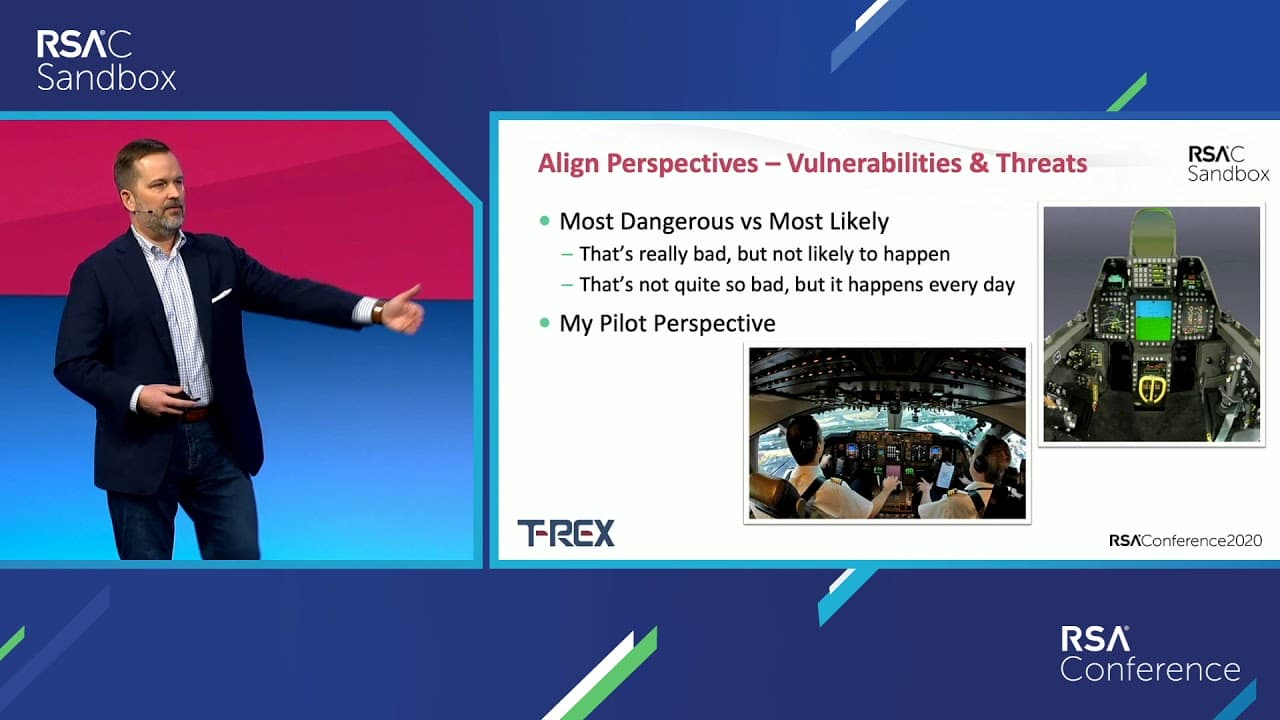
Aviation organizations can strengthen cybersecurity by treating ethical hackers as valuable partners who help identify and address weaknesses across a highly interconnected aerospace ecosystem. Government, industry, and security researchers must reduce misconceptions, share fuller context, and cooperate on practical risks, especially communication or navigation failures that could compound emergencies, bad weather, crowded airspace, and cockpit workload.
Transcript
Okay, good morning, Sandbox. Time for the second presentation of the morning. Uh, it's always great when you're able to introduce a good friend onto the stage. Um, uh, he's made an extra effort to get dressed up this morning, so when he comes on stage, please give him a big round of applause. Uh, he's gonna be talking about aviation cybersecurity a... Read More
Key Insights
- Aviation cybersecurity is an ecosystem-wide challenge involving parts, devices, suppliers, manufacturers, aircraft, airports, air traffic control, communications, and space-dependent services. Every connected node may introduce vulnerabilities, so protecting aviation requires more than securing individual aircraft or isolated computer systems.
- The most dramatic aircraft-hacking scenario is not necessarily the most likely cybersecurity concern. An attack requiring exceptionally advanced skills may attract public attention, but disruptions to communications or navigation can create more realistic operational problems that deserve sustained attention from defenders.
- Communication and navigation failures are especially concerning when they compound existing cockpit pressures. Pilots may already be responding to an emergency, bad weather, crowded airspace, or multi-crew coordination demands, so an added technical disruption can increase complexity and worsen the potential consequences.
- Pilots train to use backups and handle aircraft problems, but training does not eliminate cybersecurity risk. The central concern is that malicious or accidental disruption adds difficulty to an already demanding situation, increasing severity even when crews have procedures for responding to failures.
- Security researchers generally seek to present vulnerabilities they have discovered, but their disclosures can sometimes appear sensational or incomplete. Media reporting may further emphasize the most attention-grabbing elements, creating public perceptions that do not reflect the complete technical or operational context.
- Government communications can also create misconceptions when officials present factually correct pieces without explaining the full situation. Partial accounts may alarm the flying public unnecessarily, which makes complete context important for discussing aviation vulnerabilities while preserving confidence in air travel.
- Public trust is a shared objective for government, aviation industry participants, and the hacker community. These groups can improve safety more effectively when they acknowledge problems publicly, reduce mutual suspicion, and direct skilled security researchers toward finding and helping resolve weaknesses.
- Public strategies and research reports show that aviation cybersecurity is becoming a recognized policy and industry concern. The United States published a new National Strategy for Aviation Security in 2018, ten years after its 2008 predecessor, and ICAO published an aviation cybersecurity strategy in 2019.
Install to Summarize YouTube Videos and Get Transcripts
Explore YouTube Video Summarizer or Get YouTube Transcript Extractor
Questions & Answers
Q: How can hackers improve aviation cybersecurity?
Hackers can improve aviation cybersecurity by applying their technical talent to finding vulnerabilities across the aerospace ecosystem and helping relevant organizations understand and address them. Their contribution becomes more effective when government and industry treat security researchers as partners, researchers present findings responsibly and with adequate context, and all parties focus on preserving safe operations and public trust.
Q: Why is aviation cybersecurity an ecosystem problem?
Aviation cybersecurity is an ecosystem problem because safe flight depends on interconnected parts, devices, manufacturers, suppliers, airports, air traffic control systems, communications, aircraft, and space-related services. Each element represents a node that can have vulnerabilities. A weakness or disruption in one area may affect other participants, so security work must extend beyond the aircraft itself.
Q: What aviation cyber risks deserve the most attention?
Communication and navigation disruptions deserve significant attention because they can add complexity during demanding flight conditions. A crew might already be handling an aircraft emergency, bad weather, crowded airspace, or coordination within a multi-crew cockpit. A cyber-related failure does not need to resemble a dramatic aircraft takeover to increase workload and make an existing situation more severe.
Q: Why can media coverage distort aircraft hacking risks?
Media coverage can distort aircraft hacking risks because sensational claims naturally attract attention. Security researchers may disclose genuine findings but present them in a dramatic or limited way, while reporters may emphasize the most alarming aspects. The resulting account can contain factual information yet omit context needed to judge feasibility, likelihood, operational safeguards, and the actual significance for passengers.
Q: Do trained pilots eliminate the danger of cyber disruption?
Pilot training reduces risk because crews practice backup procedures and learn to manage aircraft problems, but it does not remove the danger. A communication or navigation issue can arrive while pilots are already dealing with weather, congested airspace, an emergency, or complex crew coordination. The added burden can increase the difficulty and potential severity of the overall situation.
Q: Who are the main stakeholders in aviation cybersecurity?
The three principal stakeholder groups identified are government, the aviation industry, and security researchers or hackers. Each group contributes a different perspective and capability, yet all share an interest in maintaining the flying public's trust. Their collective effectiveness depends on cooperation, open acknowledgment of problems, accurate communication, and constructive use of specialized security talent.
Q: How does public trust relate to aviation cybersecurity?
Public trust depends on passengers believing that air travel is safe, reliable, and trustworthy. Aviation stakeholders must demonstrate that they can discover problems, assess them accurately, and fix them. Incomplete or sensational statements can weaken confidence, while coordinated work among government, industry, and researchers can show that vulnerabilities are being addressed responsibly and that safety remains the shared objective.
Q: What evidence shows governments recognize aviation cybersecurity?
The United States published a National Strategy for Aviation Security at the end of 2018, ten years after the earlier strategy issued in 2008. The newer document gave greater attention to aviation cybersecurity and indicated government willingness to engage with the issue publicly. Internationally, ICAO also published an aviation cybersecurity strategy at the end of 2019.
Summary & Key Takeaways
-
Aviation cybersecurity covers an interconnected ecosystem of components, suppliers, manufacturers, aircraft, airports, air traffic control, communications, and space-dependent services. Each node can contain vulnerabilities, making the challenge much broader than protecting an airplane alone. Effective security therefore requires attention across the entire aerospace system and cooperation among its many stakeholders.
-
Public perceptions often focus on dramatic scenarios in which an exceptionally skilled attacker takes control of an aircraft. The speaker considers operational disruption more likely and practically important. Communication or navigation problems can increase danger when pilots are already managing an aircraft emergency, poor weather, congested airspace, or the demands of a multi-crew cockpit.
-
Government agencies, aviation companies, and security researchers share an interest in preserving public trust in safe, reliable air travel. Industry reports and government strategies have brought cybersecurity discussions into public view. Further progress depends on dispelling myths about hackers, presenting discoveries with proper context, and using security researchers' talent to find and fix difficult problems.
Read in Other Languages (beta)
Share This Summary 📚
Summarize YouTube Videos and Get Video Transcripts with 1-Click
Try YouTube Summary with ChatGPT & Claude or YouTube Transcript Generator
Explore More Summaries from RSAC Cybersecurity 📚



Summarize YouTube Videos and Get Video Transcripts with 1-Click
Try YouTube Summary with ChatGPT & Claude or YouTube Transcript Generator