How Does Cellular Energy Loss Drive Dementia?
TL;DR
Cellular energy loss may drive dementia by leaving neurons without enough ATP to function and keep amyloid precursor peptide in solution. The proposed pathway begins when reactive oxygen species suppress mitochondrial ATP generation while cortisol increases energy use, creating a neuronal energy crisis that promotes protein aggregation, inflammation, damage, and cell death. Read on to understand each step and the potentially manageable contributors identified in the discussion.
Transcript
One of the things that was one of the most popular parts of our conversation last time, Robert, was there a section where we talked about the different types of sugar and diet cokes and Coke zeros and all these kinds of things. You know, I if I can see a couple of cans on the desk over there where where Jack is um in the darkness that I can vaguely... Read More
Key Insights
- Mitochondria are cellular structures that convert food energy into ATP, the chemical energy that powers cells. The discussion presents insufficient ATP within neurons as an immediate cause of impaired brain function, with possible symptoms ranging from brain fog and difficulty concentrating to irritability and depression.
- Reactive oxygen species are byproducts generated during mitochondrial ATP production and can damage cells unless antioxidants neutralize them. Glutathione, vitamins E and C, and flavonoids are identified as compounds that help quench these reactive chemicals and allow cellular energy production to continue.
- Aspartame and sucralose are described as major non-nutritive sweeteners associated with substantial reactive oxygen species generation. The speaker says a recent paper correlated diet sweetener consumption with dementia, while also acknowledging that he could not find equivalent data for monk fruit extract, stevia, or allulose.
- Inadequate antioxidant capacity is presented as a brake on mitochondrial energy metabolism. When reactive oxygen species cannot be cleared, glucose is diverted away from ATP production and toward storage pathways such as glycogen or fat, reducing the neuron’s capacity to generate usable energy.
- Cortisol is described as increasing neuronal metabolism and ATP consumption. Stress, sleep deprivation, fever, autoimmune disease, and externally administered glucocorticoids are therefore presented as factors that can raise cellular energy demand while other metabolic problems simultaneously reduce the available ATP supply.
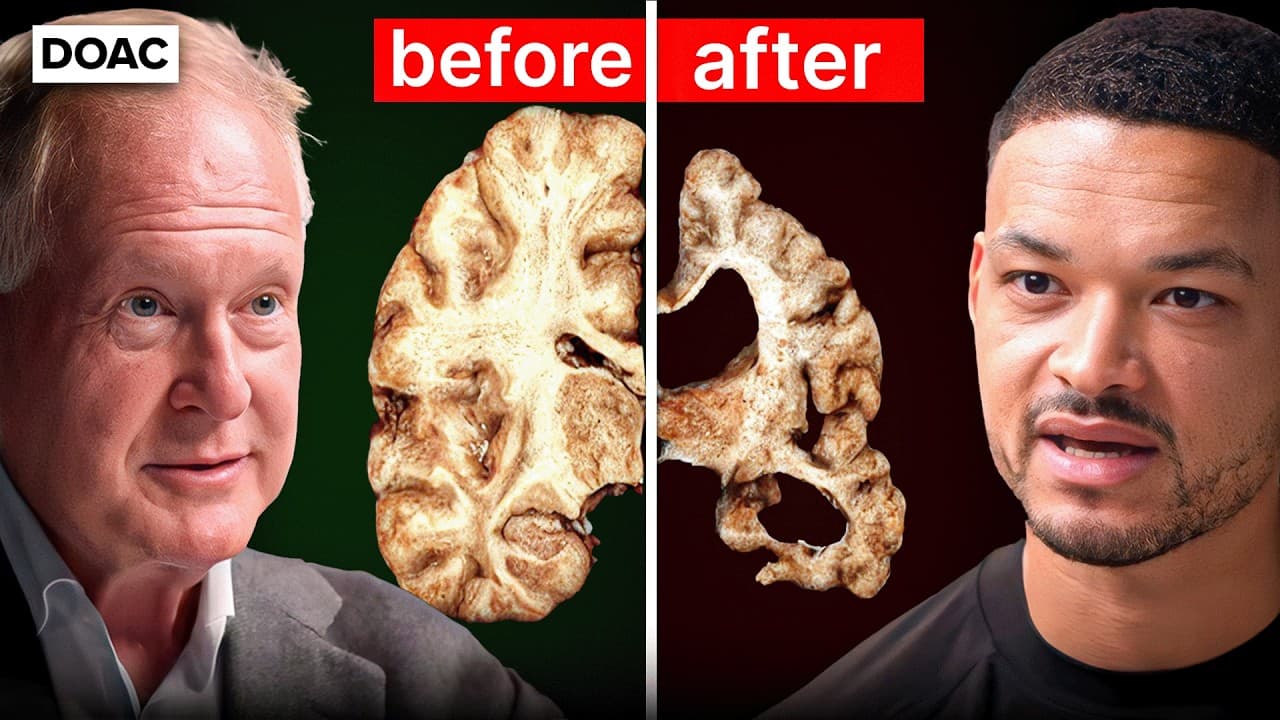
- Amyloid precursor peptide is described as a normal cellular protein that requires energy to remain in solution. According to the proposed mechanism, falling ATP allows it to aggregate into plaques, which damage cells, activate inflammatory microglia, and contribute to neuronal death.
- APOE4 is presented as a genuine but limited genetic risk factor for Alzheimer’s disease. The speaker states that two copies raise risk to nine times that of the general population, but also claims the genetic component represents only 5% of Alzheimer’s cases and that diet can mitigate risk.
- Ultra-processed food is linked in the discussion to weakened antioxidant defenses and greater reactive oxygen species exposure. Fructose, low omega-3 intake, insufficient fiber, emulsifiers, and deficiencies in vitamins B6, B12, and folate are identified as manageable dietary factors that may impair mitochondrial function.
Install to Summarize YouTube Videos and Get Transcripts
Explore YouTube Video Summarizer or Get YouTube Transcript Extractor
Questions & Answers
Q: How does cellular energy loss drive dementia?
The proposed mechanism begins when mitochondria produce less ATP while neurons consume energy more rapidly, creating a cellular energy crisis. As ATP falls, amyloid precursor peptide can aggregate into plaques, followed by cellular damage, microglial inflammation, neuronal death, and the progression described as dementia.
Q: What role do mitochondria and ATP play in brain function?
Mitochondria convert food energy into ATP, the chemical energy that powers cells. When a neuron lacks sufficient ATP, it cannot function normally, potentially producing brain fog, difficulty concentrating, irritability, depression, and further neuronal dysfunction.
Q: How do reactive oxygen species reduce neuronal energy production?
Mitochondria generate reactive oxygen species during ATP production, and antioxidants must neutralize them to prevent cellular damage. When antioxidant defenses are inadequate, glucose is diverted away from mitochondrial ATP production toward storage pathways such as glycogen or fat, reducing the neuron's energy capacity.
Q: Which antioxidants help neutralize reactive oxygen species?
The discussion identifies glutathione, vitamins E and C, and flavonoids as antioxidants that quench reactive oxygen species. Clearing these reactive compounds allows cellular energy production to continue instead of signaling the cell to suppress mitochondrial processing.
Q: How can stress and sleep deprivation worsen a neuronal energy crisis?
Stress and sleep deprivation can raise cortisol, which is described as increasing neuronal metabolism and ATP consumption. When this higher energy demand occurs alongside reduced ATP generation, neurons may develop an energy deficit associated with brain fog, irritability, depression, and more serious dysfunction.
Q: How are amyloid plaques connected to low ATP levels?
Amyloid precursor peptide is described as a normal cellular protein that requires energy to remain in solution. When ATP levels decline, it can aggregate into plaques that damage neurons, activate inflammatory microglia, and contribute to neuronal death.
Q: Are all non-nutritive sweeteners linked to reactive oxygen species?
The discussion specifically identifies aspartame and sucralose as generating large amounts of reactive oxygen species and cites a paper correlating diet-sweetener consumption with dementia. It does not make the same claim for every substitute because the speaker says he could not find data on monk fruit extract, stevia, or allulose.
Q: Which potentially manageable factors are presented as dementia risks?
The discussion names sleep-disordered breathing, medications, ultra-processed food, fructose, low omega-3 intake, inadequate fiber, emulsifiers, and insufficient vitamins B6, B12, and folate. These factors are presented as possible contributors to reactive oxygen species, inflammation, impaired mitochondrial function, or reduced ATP generation.
Summary & Key Takeaways
-
The proposed model begins with mitochondria, which convert food energy into ATP, the chemical energy used by cells. Mitochondrial activity also produces reactive oxygen species. When antioxidants cannot neutralize these compounds adequately, energy metabolism is redirected, ATP production falls, and neurons become vulnerable to impaired concentration, irritability, depression, and further dysfunction.
-
Stress, sleep deprivation, illness, and glucocorticoid medications can raise cortisol and increase neuronal energy consumption. When this higher ATP demand coincides with reduced ATP production, an energy crisis develops. The account presented connects that crisis to amyloid aggregation, neighboring microglial inflammation, cellular damage, neuronal death, and the clinical progression described as dementia.
-
The discussion argues that environmental factors account for much of dementia risk and identifies several potentially manageable contributors. These include sleep-disordered breathing, medications, ultra-processed food, fructose, low omega-3 intake, inadequate fiber, emulsifiers, and insufficient vitamins B6, B12, and folate. Improving diet and mitochondrial function is presented as a strategy for reducing risk.
Read in Other Languages (beta)
Share This Summary 📚
Summarize YouTube Videos and Get Video Transcripts with 1-Click
Try YouTube Summary with ChatGPT & Claude or YouTube Transcript Generator
Explore More Summaries from The Diary Of A CEO Clips 📚






Summarize YouTube Videos and Get Video Transcripts with 1-Click
Try YouTube Summary with ChatGPT & Claude or YouTube Transcript Generator