Optical finish for acrylic -- vapor polishing and other techniques
TL;DR
This video explores different techniques for polishing acrylic, including sanding, plastic polishing, flame polishing, and vapor polishing.
Transcript
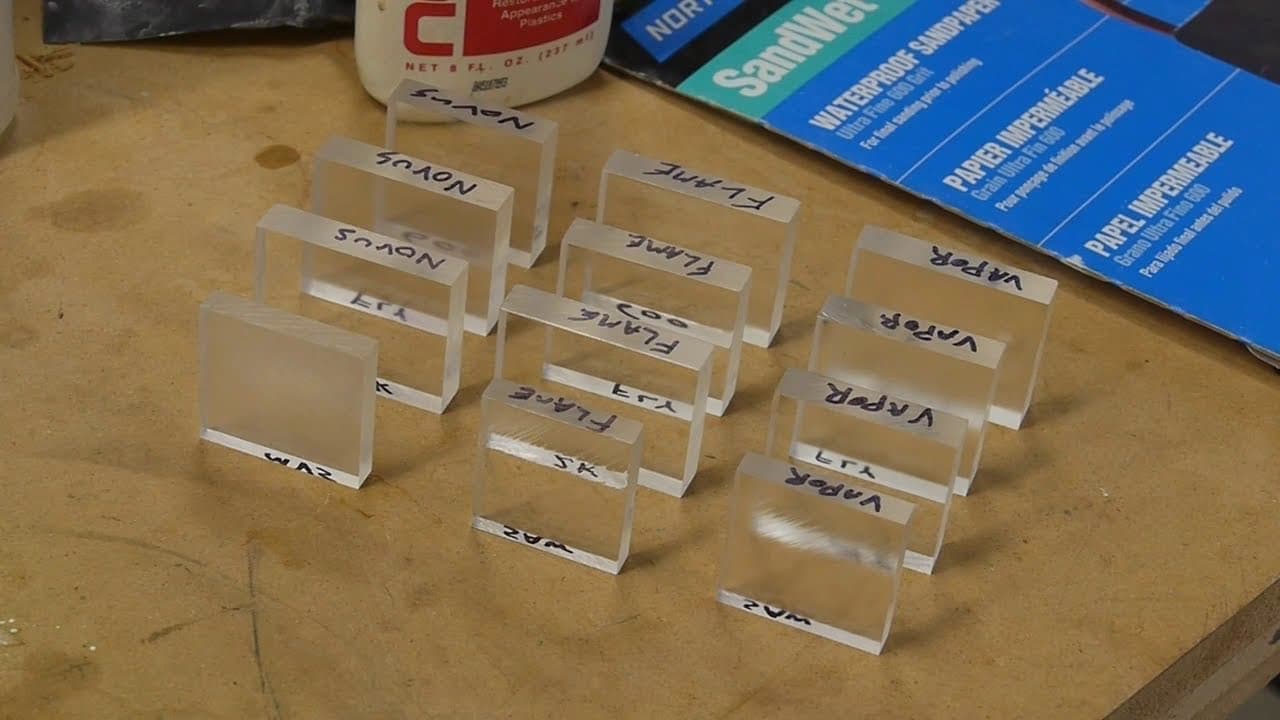
hey everyone I wanted to talk about polishing acrylic today so I've got these two lenses here and uh these were cut on a CNC lathe and didn't have an optical finish when they came off the lathe so let me tell you what I found today before starting on the lenses themselves I wanted to have a few test coupons to see uh what these techniques would act... Read More
Key Insights
- 🫓 Cellcast acrylic with a flat surface is the preferred material for optical applications.
- 👋 Sanding with 2,000 grit sandpaper combined with plastic polishing yields the best optical quality.
- 💅 Flame polishing is more suitable for polishing the edge of acrylic pieces.
- 💿 Vapor polishing has limitations and may not achieve the same optical quality as other techniques.
- 💿 Creating an optical junction between two acrylic pieces does not require polishing to an optical finish. A sanded or finely machined surface is sufficient for solvent welding.
Install to Summarize YouTube Videos and Get Transcripts
Explore YouTube Video Summarizer or Get YouTube Transcript Extractor
Questions & Answers
Q: What are the different techniques for polishing acrylic discussed in the video?
The video discusses sanding with water, plastic polishing, flame polishing, and vapor polishing as different techniques for polishing acrylic.
Q: Which technique produces the best optical quality?
The combination of sanding with 2,000 grit sandpaper and using a plastic polish yields the best optical quality, according to the results shown in the video.
Q: Can flame polishing be used for achieving an optical finish on acrylic?
While flame polishing can be used for polishing the edge of acrylic pieces, it is not known for producing a great optical finish on the surface.
Q: What are the advantages of using the vapor polishing technique?
Vapor polishing, although not as effective as traditional polishing techniques, can still smoothen the surface of acrylic by dissolving and melting it. However, it has some limitations and may not reach full optical quality.
Summary & Key Takeaways
-
The video compares different techniques for polishing acrylic, such as sanding with water, plastic polishing, flame polishing, and vapor polishing.
-
The presenter tests these techniques on cast acrylic coupons before applying them to actual lenses.
-
The results show that using 2,000 grit sandpaper produces the best optical quality in combination with a plastic polish.
Read in Other Languages (beta)
Share This Summary 📚
Summarize YouTube Videos and Get Video Transcripts with 1-Click
Try YouTube Summary with ChatGPT & Claude or YouTube Transcript Generator
Explore More Summaries from Applied Science 📚

Summarize YouTube Videos and Get Video Transcripts with 1-Click
Try YouTube Summary with ChatGPT & Claude or YouTube Transcript Generator