How to Fuel Sports Performance and Fat Loss
TL;DR
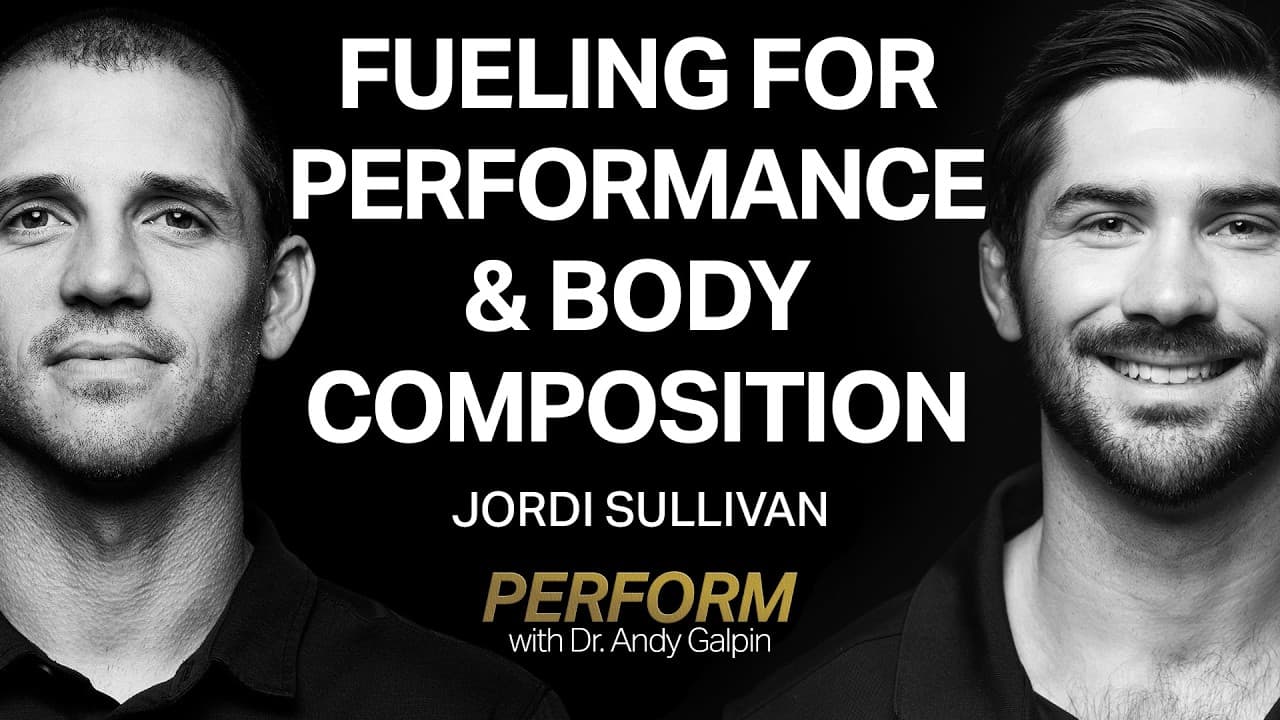
Match calories, macronutrients, hydration, and meal timing to the athlete’s goal, training load, schedule, and competition demands. Sustainable body-fat loss should occur during the training camp, while short-term UFC weight cutting strategically shifts body water through macronutrient changes. Effective plans also preserve food enjoyment, recovery, health, and mental readiness instead of relying on repetitive restriction.
Transcript
the science and practice of enhancing human performance for sport play and life Welcome to perform I'm Dr Andy Galpin I'm a professor and scientist and the executive director of the human performance center at Parker University today I'm talking to Jordie Sullivan Jordie is a dietician who has worked with many of the best athletes in the world in a... Read More
Key Insights
- Performance nutrition is an individualized strategy that must align food intake with personal goals, lifestyle factors, training schedules, exercise intensity, training volume, and meal frequency. Sullivan applies this approach to elite competitors and non-athletes rather than prescribing one universal plan for everyone.
- Pre-competition fueling is a deliberate experiment involving food selection, calories, macronutrient distribution, and timing. Sullivan tested his Hyrox plan personally because consuming large carbohydrate-rich meals before running, wrestling, or rolling may feel very different from recommending those meals to another athlete.
- Carbohydrates are prominent in Sullivan’s Hyrox preparation through foods including rice, oatmeal, dates, bananas, berries, honey, and a sports drink. The day also included mixed meals and multiple eating occasions, showing that competition preparation can use varied foods rather than one isolated fuel source.
- UFC weight management is a two-part process separating body-fat reduction from short-term fluid manipulation. The fight camp addresses body fat across eight weeks, while the later phase changes macronutrients to shift water weight from different compartments before the contracted weigh-in.
- Fight-camp training is highly demanding, with Sullivan describing mixed martial arts athletes completing between 1 and 4 hours of training per day. Nutrition during this period must support intense work while strategically reducing as much as 5 to 10% of body weight.
- Fight-week meals can remain varied and enjoyable while serving a strict weight target. One example included protein mousse, almond butter, berries, salmon, pineapple salsa, chocolate almond mud cake, jelly beans, parmesan chicken, coconut cookies, and chocolate within a planned macronutrient structure.
- Food enjoyment is a practical component of adherence and mental preparation. Repetitive meals of chicken breast, nuts, and water may quickly become unpleasant, while carefully designed alternatives can give fighters meals to anticipate without abandoning the intended body-water strategy.
- Hydration is essential to both physical and mental performance, and the episode states that dehydration as small as 1% can reduce output. The discussion also emphasizes that hydration involves electrolytes, not water alone, particularly when an athlete is sweating heavily.
Install to Summarize YouTube Videos and Get Transcripts
Explore YouTube Video Summarizer or Get YouTube Transcript Extractor
Questions & Answers
Q: How should athletes build a performance nutrition plan?
Athletes should build nutrition around their individual goals, lifestyle, training schedule, exercise intensity, training volume, and preferred meal frequency. The plan should provide enough fuel for training and recovery while addressing body composition or competition requirements. Sullivan’s examples show that effective planning combines scientific principles with foods the athlete can tolerate, enjoy, and consistently eat.
Q: What foods can support pre-competition fueling for Hyrox?
Sullivan’s Hyrox preparation included yogurt with berries and honey, chicken with rice and avocado, tiramisu dates with oatmeal, a lobster roll, a sports drink, a lamb rice bowl, and a banana with honey. These choices supplied varied meals and carbohydrate sources across the day, with their quantities, macronutrient distribution, and timing selected as part of his competition strategy.
Q: Why should practitioners test competition fueling personally?
Personal testing helps a practitioner understand how a recommended amount and timing of food actually feels during demanding movement. Sullivan noted that eating multiple carbohydrate-rich servings before wrestling or rolling can seem difficult because the athlete must exercise with that food in the stomach. His Hyrox preparation therefore served as self-experimentation as well as intentional fueling.
Q: How do UFC fighters lose weight before a contracted weigh-in?
Sullivan describes a two-part process. During an eight-week fight camp, the athlete trains intensely and strategically loses body fat, potentially reducing body weight by 5 to 10%. A second phase then changes the macronutrient pattern to move fluid from different body compartments, allowing another substantial short-term shift before the contracted fight weigh-in.
Q: What is the difference between fight-camp fat loss and fight-week weight cutting?
Fight-camp fat loss targets body fat across eight weeks of intense mixed martial arts training, which may involve 1 to 4 hours of daily work. Fight-week cutting has a different purpose. It rearranges macronutrients to reduce fluid stored in different body compartments. Treating these phases separately allows each nutritional strategy to address a distinct source of body weight.
Q: Can fighters eat enjoyable food while cutting weight?
Fighters can eat enjoyable food when meals are designed around the required nutritional targets. Sullivan’s example included protein mousse, berries, almond butter, grilled salmon, pineapple salsa, chocolate almond mud cake, jelly beans, parmesan chicken, coconut cookies, and chocolate. Variety can make the process mentally easier than repeatedly eating plain chicken, nuts, and water while maintaining the planned strategy.
Q: Why does food enjoyment matter during a weight cut?
Food enjoyment matters because an unpleasant, repetitive plan can become difficult to follow after only a few meals. Sullivan aims to make meals something fighters can anticipate while still applying the required nutritional principles. Better adherence and a more positive experience support the broader goal of entering the cage in strong physical condition and strong mental condition.
Q: How important are water and electrolytes for performance?
Hydration is critical for physical and mental performance, and the episode states that dehydration as small as 1% can decrease physical output and mental performance. It also emphasizes that water alone does not provide complete hydration because electrolytes are required. Electrolyte intake becomes particularly relevant during heavy sweating, when the athlete is losing both fluid and dissolved minerals.
Summary & Key Takeaways
-
Jordan Sullivan approaches performance nutrition as an individualized process shaped by goals, lifestyle, training schedules, intensity, volume, and meal frequency. His work spans UFC champions, Olympians, ultra-endurance competitors, and non-athletes, showing that the same core principles must be adjusted for different performance demands, body-composition targets, and practical circumstances.
-
Pre-competition fueling requires deliberate choices about carbohydrate quantity and type, hydration, electrolytes, meal timing, and gastrointestinal comfort. Sullivan tested these variables before his first Hyrox competition, eating foods such as rice, oatmeal, dates, fruit, honey, sports drink, and several mixed meals while evaluating how the strategy felt during competition.
-
UFC weight management uses two distinct phases. During an eight-week fight camp involving intense mixed martial arts training, athletes strategically reduce body fat. During fight week, macronutrients are rearranged to move fluid from different body compartments. Palatable meals help athletes follow the plan while supporting physical condition, mental readiness, and food enjoyment.
Read in Other Languages (beta)
Share This Summary 📚
Summarize YouTube Videos and Get Video Transcripts with 1-Click
Try YouTube Summary with ChatGPT & Claude or YouTube Transcript Generator
Explore More Summaries from Andy Galpin 📚
Summarize YouTube Videos and Get Video Transcripts with 1-Click
Try YouTube Summary with ChatGPT & Claude or YouTube Transcript Generator